NCB trains 54 NDPS officers in Kolkata in five-day programme with West Bengal ANTF
Synopsis
The NCB wrapped up a five-day Training of Trainers programme in Kolkata, putting 54 Inspector-rank officers through modules on darknet cases, CDR analysis, synthetic drugs, and financial investigations — a targeted capacity push in one of India's most vulnerable drug-trafficking corridors.
Key Takeaways
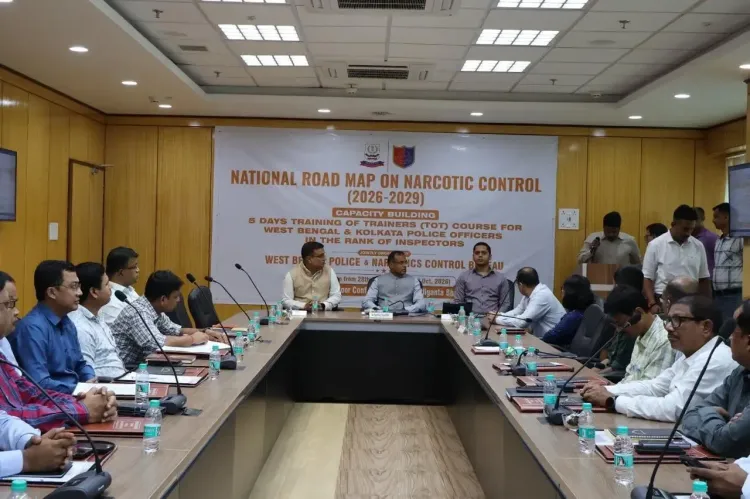
The NCB and West Bengal ANTF jointly conducted a five-day Training of Trainers Programme in Kolkata from 28 September to 2 October 2026 .
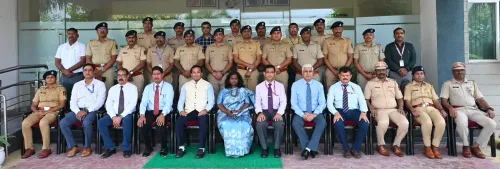
A total of 54 Inspector-rank officers from West Bengal ANTF, West Bengal Police, and Kolkata Police participated.
Training covered search and seizure , digital evidence , CDR/IPDR analysis , darknet cases , synthetic drugs , and financial investigations .
Officers were trained as trainers to further disseminate knowledge across their respective departments.
The programme concluded with a mock test ; top scorers were felicitated by the Director General of Police, West Bengal .
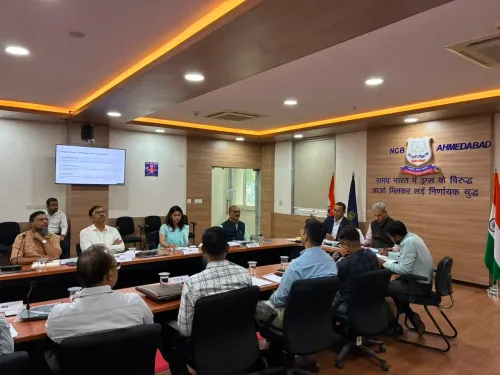
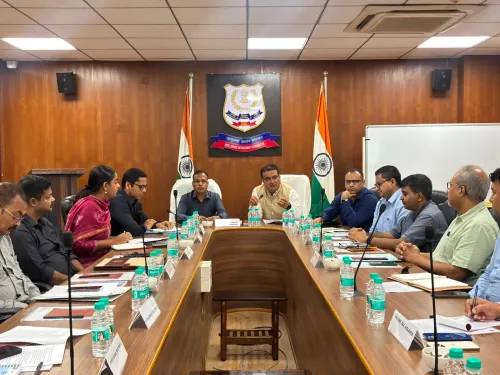
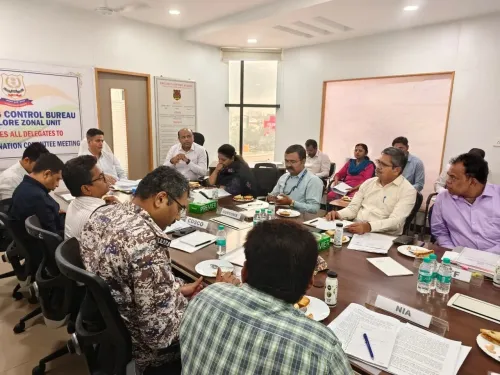
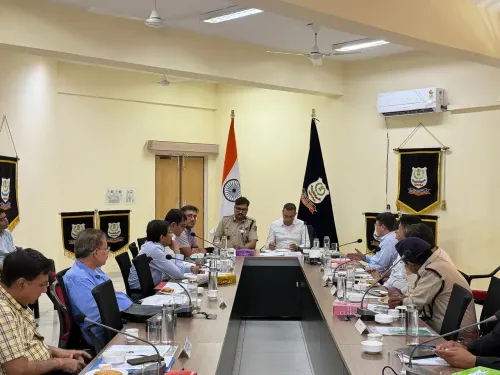
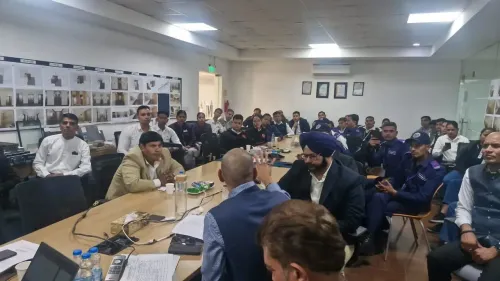
The Narcotics Control Bureau (NCB), in collaboration with the West Bengal Anti-Narcotics Task Force (ANTF), concluded a five-day Training of Trainers (ToT) Programme in Kolkata from 28 September to 2 October 2026, aimed at reinforcing the operational and legal expertise of narcotics investigating officers across the state. The programme targeted 54 Inspector-rank officers drawn from the West Bengal ANTF, West Bengal Police, and Kolkata Police.
Scope and Structure of the Programme
The ToT format was deliberately chosen so that trained officers can subsequently disseminate specialised knowledge within their respective departments, creating a multiplier effect across enforcement units. The curriculum covered a broad spectrum of narcotics investigation disciplines, including search and seizure procedures, sampling and documentation, and the Prevention of Illicit Traffic in Narcotic Drugs and Psychotropic Substances (PITNDPS) Act.
Officers also received instruction in digital evidence handling, the analysis of Call Detail Records (CDR) and Internet Protocol Detail Records (IPDR), and financial investigation techniques — areas that have become increasingly critical as drug networks adopt technology-driven operations.
Emerging Threat Areas Addressed
The training programme addressed several complex and evolving challenges in narcotics enforcement. These included the diversion of precursor chemicals, investigations into darknet-linked drug cases, the proliferation of synthetic drugs, and the detection and handling of clandestine laboratories. Additional modules covered illicit cultivation, trial monitoring, and the disposal of case property — procedural areas where lapses have historically undermined prosecutions.
This is significant given the increasing volume of NDPS cases in West Bengal, where law enforcement agencies have faced growing pressure from both cross-border trafficking routes and domestic synthetic drug markets.
Assessment and Valedictory Session
The five-day programme concluded with a mock test to evaluate participants' grasp of the subjects covered. The Director General of Police, West Bengal, felicitated top scorers and delivered the valedictory address at the concluding session, underscoring the institutional importance placed on the initiative.
The NCB noted that the programme was designed not merely as a training exercise, but as a capacity-building measure to support the systematic dissemination of specialised narcotics enforcement knowledge across police and enforcement departments in the state.
Broader Context
The NCB has been ramping up regional training collaborations as part of a wider national effort to standardise NDPS investigation protocols and improve conviction rates in narcotics cases. West Bengal, given its proximity to trafficking corridors linking Myanmar and Bangladesh, has been identified as a priority zone for enforcement capability upgrades. The Kolkata ToT programme represents one of the more structured inter-agency training efforts undertaken in the eastern region in recent years.
Point of View
The programme punches well above its direct headcount. West Bengal sits at a geographically exposed junction of trafficking routes from Myanmar and Bangladesh, and the inclusion of darknet and synthetic drug modules signals that the NCB is no longer treating narcotics enforcement as purely a street-level seizure operation. The harder question is whether institutional follow-through — dedicated training time within departments, updated SOPs, and independent audit of trial outcomes — will be built into the system, or whether this remains a well-designed exercise whose impact fades once participants return to daily caseloads.
NationPress
3 Oct 2026
Frequently Asked Questions
What was the NCB's Training of Trainers Programme in Kolkata about?
The NCB's five-day Training of Trainers Programme, held from 28 September to 2 October 2026 in Kolkata, was designed to strengthen NDPS investigation and enforcement skills among 54 Inspector-rank officers from West Bengal ANTF, West Bengal Police, and Kolkata Police. Participants were trained to subsequently disseminate this specialised knowledge within their own departments.
Who participated in the NCB training programme in Kolkata?
A total of 54 Inspector-rank investigating officers participated, drawn from the West Bengal Anti-Narcotics Task Force, West Bengal Police, and Kolkata Police. The programme was conducted jointly by the NCB and the West Bengal ANTF.
What subjects were covered in the five-day NDPS training?
The programme covered search and seizure procedures, sampling and documentation, the PITNDPS Act, digital evidence, CDR and IPDR analysis, financial investigation, diversion of precursor chemicals, darknet cases, synthetic drugs, clandestine laboratories, illicit cultivation, trial monitoring, and disposal of case property.
How was the training programme assessed?
The programme concluded with a mock test to evaluate participants' understanding of all subjects covered. The Director General of Police, West Bengal, felicitated the top scorers and delivered the valedictory address at the closing session.
Why is this training significant for West Bengal?
West Bengal's proximity to cross-border trafficking routes linking Myanmar and Bangladesh makes it a high-priority zone for narcotics enforcement. The ToT format is intended to multiply the programme's impact by enabling trained officers to spread specialised knowledge across their respective departments.