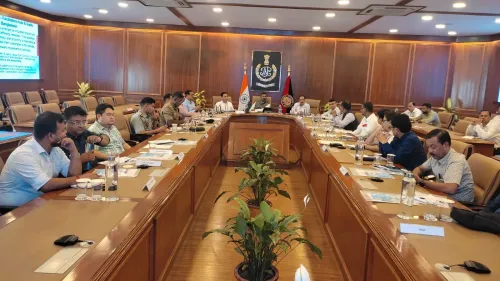
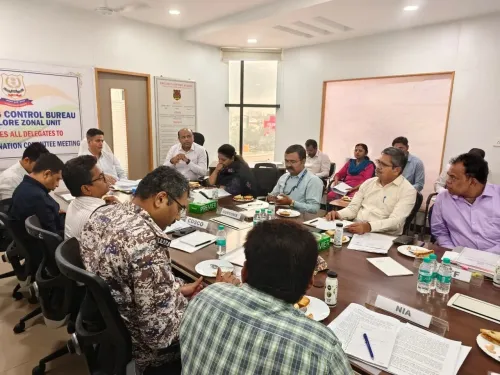
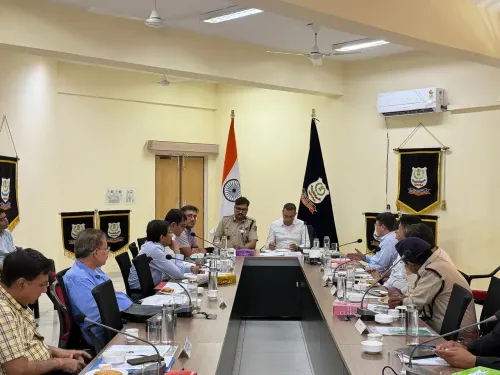
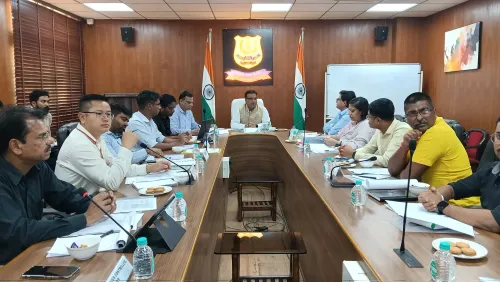
NCB chairs West Bengal drug trafficking meet in Kolkata, July 2026
Synopsis
Ten-plus central and state agencies gathered in Kolkata on 30 July under NCB's quarterly coordination framework — not for a single bust, but to systematically close the enforcement gaps that drug traffickers exploit. With clandestine lab detection and financial investigations newly on the agenda, West Bengal's anti-narcotics machinery is moving beyond seizures toward network dismantling.
Key Takeaways
The NCB convened West Bengal's Second Quarter JCC Meeting in Kolkata on 30 July 2026 .
More than 10 agencies participated, including BSF , NIA , DRI , Kolkata Police , and State Excise .
The meeting opened with a presentation on the anti-narcotics vision document launched by Union Home Minister Amit Shah .
50 identified NDPS cases are being monitored for early disposal; PIT-NDPS proposals are being expedited.
NCB briefed agencies on red flag indicators of clandestine drug laboratories and precursor chemical diversion.
Each agency presented two major recent NDPS cases , focusing on traffickers' modus operandi and financial investigations.
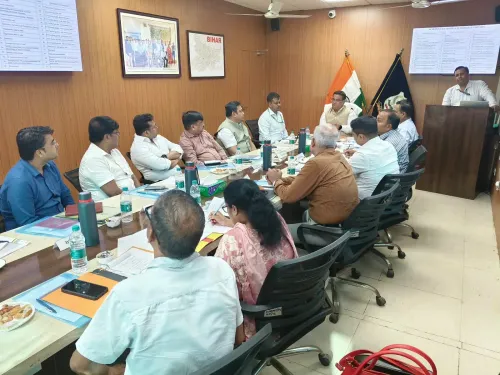
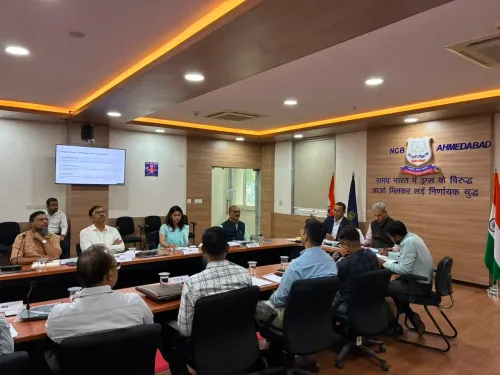
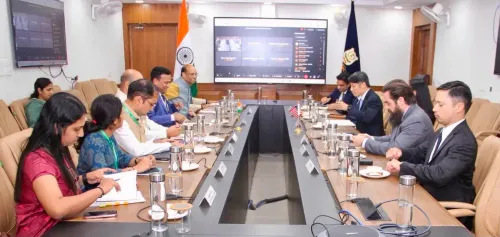
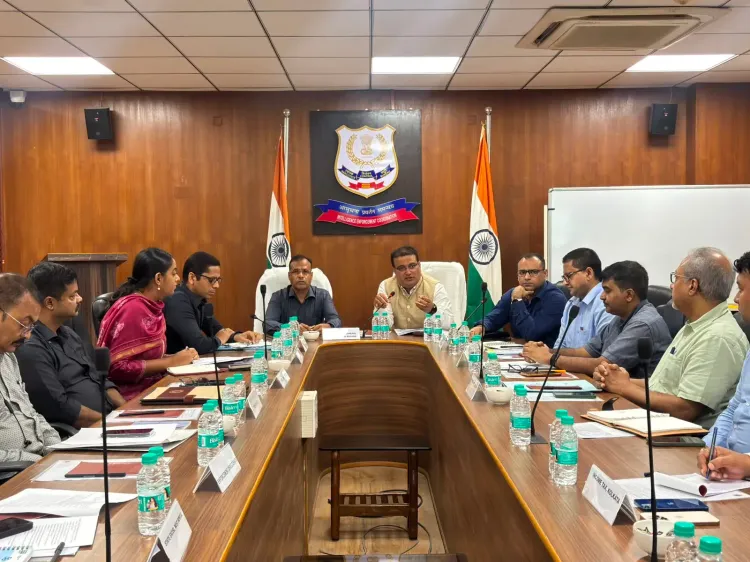
The Narcotics Control Bureau (NCB) convened the Second Quarter State-Level Joint Coordination Committee (JCC) Meeting for West Bengal in Kolkata on 30 July 2026, bringing together multiple central and state enforcement agencies to sharpen coordinated action against drug trafficking and reinforce inter-agency intelligence sharing. The meeting is part of a structured quarterly mechanism to align anti-narcotics enforcement across jurisdictions.
Who Was at the Table
The session was jointly chaired by the Deputy Director General (Eastern Region), NCB and the Inspector General of West Bengal's Anti-Narcotics Task Force (ANTF). Participating agencies included Customs, the Directorate of Revenue Intelligence (DRI) — covering Air Intelligence Unit, Preventive, and Port wings — the Border Security Force (BSF), the National Investigation Agency (NIA), the West Bengal Special Investigation Branch, Income Tax, Drugs Controller, State Excise, and Kolkata Police.
Key Agenda Items
Proceedings opened with a presentation on the vision document launched by Union Home Minister Amit Shah, which lays out strategic priorities for dismantling narco-networks and strengthening coordinated enforcement. Discussions then covered emerging drug trafficking trends in West Bengal, monitoring of 50 identified NDPS cases earmarked for early disposal, and expediting proposals under the Prevention of Illicit Traffic in Narcotic Drugs and Psychotropic Substances (PIT-NDPS) Act.
Financial investigations and the dismantling of organised trafficking networks through enhanced inter-agency coordination were also on the agenda. Each participating agency — including NCB, ANTF, DRI, Kolkata Police, West Bengal Excise, and Customs — presented two major recent NDPS cases, focusing on traffickers' modus operandi and best enforcement practices.
Clandestine Labs and Precursor Chemicals
A notable addition to this quarter's agenda was an NCB presentation on red flag indicators of clandestine drug laboratories and the diversion of controlled substances and precursor chemicals. Officials said the briefing was aimed at enhancing the operational preparedness of all agencies for early detection of emerging narcotics threats — a signal that synthetic drug manufacturing is increasingly on the radar of West Bengal's enforcement ecosystem.
Broader Context
This comes amid heightened national focus on drug trafficking routes through West Bengal, which shares borders with Bangladesh, Nepal, and Bhutan, making it a strategically sensitive corridor for narcotics movement. The JCC mechanism, convened quarterly by the NCB, is designed precisely to prevent jurisdictional gaps that traffickers routinely exploit. The emphasis on financial investigations signals a shift toward targeting trafficking networks at the economic layer, not just at the point of seizure.
The next coordination review is expected in the third quarter of 2026, with agencies expected to report progress on the 50 monitored NDPS cases and PIT-NDPS proposals flagged at this meeting.
Point of View
Nepal, and Bhutan — makes it a perennial weak link in India's narcotics containment strategy. The real measure of this meeting will be whether the 50 flagged NDPS cases move to disposal and whether PIT-NDPS detentions, a powerful but underused tool, actually accelerate. Without published outcome metrics, these quarterly gatherings risk becoming procedural exercises rather than enforcement multipliers.
NationPress
16 Sept 2026
Frequently Asked Questions
What was the NCB's JCC meeting in Kolkata about?
The Second Quarter State-Level Joint Coordination Committee Meeting for West Bengal, convened by the Narcotics Control Bureau on 30 July 2026, brought together over 10 central and state agencies to coordinate action against drug trafficking, share intelligence, and review major NDPS cases. It also covered emerging trafficking trends and clandestine drug laboratory detection.
Which agencies participated in the West Bengal JCC meeting?
Participating agencies included the NCB, West Bengal's Anti-Narcotics Task Force, Customs, Directorate of Revenue Intelligence, Border Security Force, National Investigation Agency, West Bengal Special Investigation Branch, Income Tax, Drugs Controller, State Excise, and Kolkata Police.
What is the PIT-NDPS Act and why was it discussed?
The Prevention of Illicit Traffic in Narcotic Drugs and Psychotropic Substances Act allows for the preventive detention of drug traffickers without trial for up to one year. The meeting discussed expediting proposals under this law to act more swiftly against identified trafficking networks in West Bengal.
Why is West Bengal a focus for anti-narcotics coordination?
West Bengal shares borders with Bangladesh, Nepal, and Bhutan, making it a strategically sensitive corridor for narcotics movement into and through India. The quarterly JCC mechanism is designed to prevent the jurisdictional gaps that traffickers routinely exploit across these borders.
What new threat was highlighted at the July 2026 meeting?
The NCB presented red flag indicators for detecting clandestine drug laboratories and the diversion of controlled substances and precursor chemicals, signalling that synthetic drug manufacturing is an emerging enforcement priority in West Bengal.