NCB holds Q2 JCC meets in Bhopal, Guwahati to sharpen drug trafficking strategy
Synopsis
The NCB brought together agencies ranging from the NIA and ED to Assam Rifles and ITBP for its Q2 JCC meetings in Bhopal and Guwahati — reviewing a haul of 80,000 Yaba tablets and 669 kg of ganja at Guwahati airport while charting a sharper financial-investigation-first approach to dismantling drug syndicates in two high-pressure states.
Key Takeaways
NCB held Second Quarter JCC Meetings for Madhya Pradesh (Bhopal) and Assam (Guwahati) on 31 July 2026 .
The Bhopal meeting prioritised monitoring of 50 identified NDPS cases , expediting PIT-NDPS proposals, and clandestine lab busts.
The Guwahati meeting reviewed the seizure of 80,000 Yaba tablets in Sribhumi District ( 3 arrested ) and 669.734 kg of ganja at LGBI Airport ( 5 arrested ).
Assam session chaired by R.
Sudhakar , DDG (NER), NCB, with over 14 agencies participating.
Both meetings emphasised strengthening financial investigations and dismantling drug syndicate infrastructure through a whole-of-government approach.
A presentation on handheld baggage screening technology and upgrading ANTF on the NCB model was also presented at the Assam meeting.
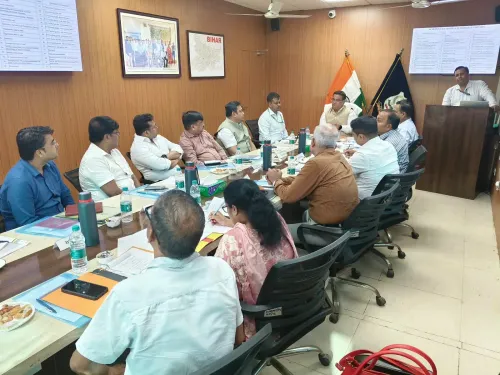
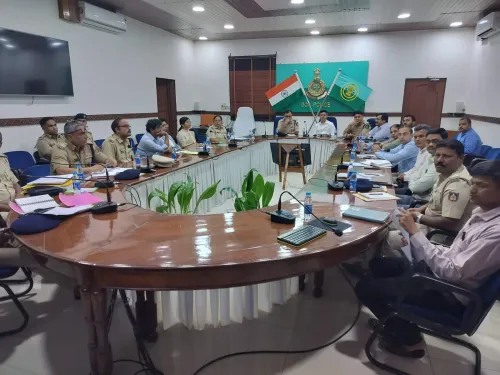
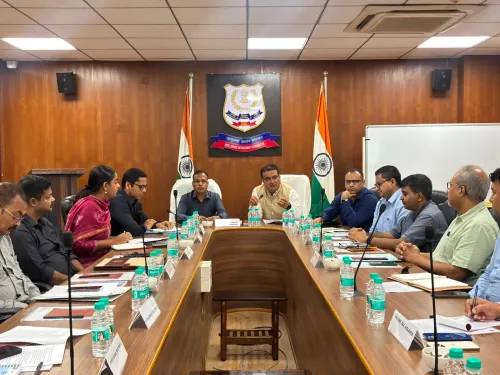
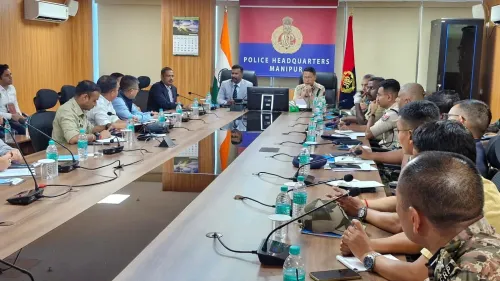
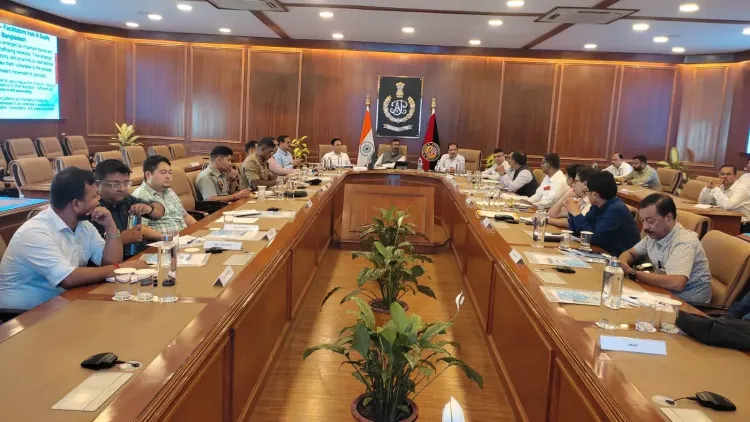
The Narcotics Control Bureau (NCB) convened its Second Quarter State-Level Joint Coordination Committee (JCC) Meetings for Madhya Pradesh and Assam on Thursday, 31 July 2026, bringing together over a dozen enforcement agencies to tighten coordinated action against drug trafficking and reinforce intelligence-sharing protocols. Both meetings reaffirmed the participating agencies' commitment to a Drug-Free India vision.
Madhya Pradesh Meeting: Key Priorities
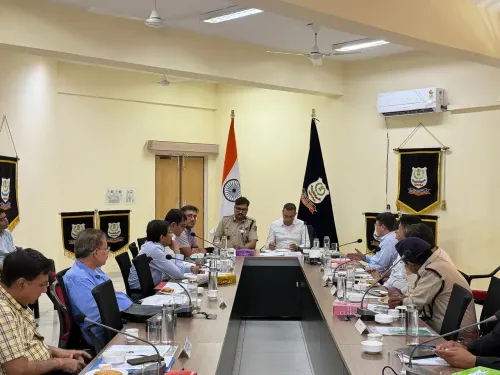
The Bhopal meeting was jointly chaired by the NCB Deputy Director General (Western Region) and the Additional Director General, Anti-Narcotics Task Force (ANTF), Madhya Pradesh. Agencies represented included the National Investigation Agency (NIA), State Intelligence Bureau (SIB), Income Tax, Customs, Central Bureau of Narcotics (CBN), Railway Protection Force (RPF), the State Prosecution Department, Food and Drug Administration, and State Excise.
Officials firmed up plans to implement the Vision Document on Narcotics Control and address emerging drug trafficking trends in the state. The agenda also covered monitoring of 50 identified NDPS cases for early disposal, expediting Prevention of Illicit Traffic in Narcotic Drugs and Psychotropic Substances (PIT-NDPS) proposals, and dismantling drug trafficking networks through enhanced inter-agency coordination.
Significant seizures and cases were reviewed, with particular emphasis on clandestine laboratory busts, intelligence-led joint operations, and joint interrogations. Strengthening financial investigations was also flagged as a priority for the coming quarter.
Assam Meeting: Trafficking Trends and Major Seizures
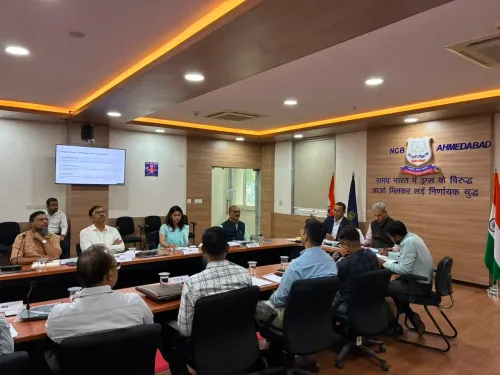
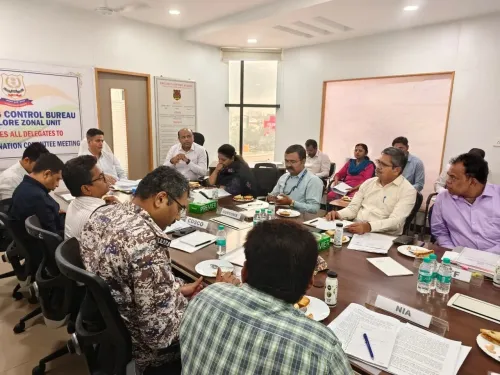
The Guwahati session was chaired by R. Sudhakar, Deputy Director General (North East Region), NCB, with participation from ANTF, Customs, Central Goods and Services Tax (CGST), Income Tax, Directorate General of GST Intelligence (DGGI), SIB, NIA, Enforcement Directorate (ED), Directorate of Revenue Intelligence (DRI), Drug Controller, Assam Rifles, Border Security Force (BSF), Indo-Tibetan Border Police (ITBP), and District Superintendents of Police.
Deliberations centred on strengthening financial investigations as an integral component of NDPS probes, implementing intelligence-led enforcement, and dismantling the financial infrastructure of drug trafficking syndicates through a whole-of-government approach.
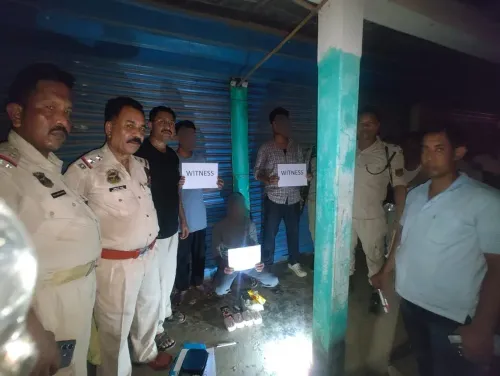
Among the significant cases reviewed were the seizure of 80,000 Yaba tablets in Sribhumi District, resulting in the arrest of three accused, and the recovery of 669.734 kg of ganja concealed in 111 cargo parcels at Lokpriya Gopinath Bordoloi International (LGBI) Airport, Guwahati, leading to the arrest of five accused.
Evolving Trafficking Patterns and Technology
A dedicated presentation at the Assam meeting highlighted evolving trafficking patterns and logistics-based delivery mechanisms being exploited by syndicates. The session also covered handheld baggage screening technology for railway enforcement and proposals to strengthen the Assam Narcotics Task Force (ANTF) on the NCB model — a structural upgrade aimed at improving the state's operational capacity.
What Comes Next
Both meetings signalled a sharper inter-agency focus heading into the second half of 2026, with financial investigations and cartel dismantling emerging as the twin pillars of the next phase of enforcement. The NCB's emphasis on whole-of-government coordination across border-sensitive states like Assam reflects the Bureau's recognition that trafficking networks increasingly exploit jurisdictional seams between agencies.
Point of View
And the Yaba and airport ganja seizures reviewed at Guwahati reflect live trafficking pressure, not historical data. The push to model ANTF on the NCB structure is worth watching: if it gets budget and personnel backing, it could meaningfully close the capacity gap that trafficking networks currently exploit. The real test will be conviction rates on the 50 NDPS cases being tracked in MP — enforcement statistics without judicial outcomes rarely dent cartel operations.
NationPress
15 Sept 2026
Frequently Asked Questions
What were the NCB JCC meetings held in Bhopal and Guwahati about?
The NCB's Second Quarter State-Level Joint Coordination Committee meetings, held on 31 July 2026, focused on strengthening coordinated action against drug trafficking, improving intelligence sharing, and advancing financial investigations across Madhya Pradesh and Assam. They brought together over a dozen enforcement agencies in each state.
What major drug seizures were reviewed at the Assam JCC meeting?
The Guwahati meeting reviewed two significant cases: the seizure of 80,000 Yaba tablets in Sribhumi District with three arrests, and the recovery of 669.734 kg of ganja hidden in 111 cargo parcels at LGBI Airport, Guwahati, leading to five arrests.
Who chaired the JCC meetings in Madhya Pradesh and Assam?
The Bhopal meeting was jointly chaired by the NCB Deputy Director General (Western Region) and the ADG of ANTF Madhya Pradesh. The Guwahati meeting was chaired by R. Sudhakar, Deputy Director General (North East Region), NCB.
What is the significance of financial investigations being emphasised at these meetings?
Targeting the financial infrastructure of drug syndicates — through money-laundering probes and asset tracing — is considered a more effective long-term deterrent than seizures alone. Both meetings stressed integrating financial investigations as a core component of all NDPS cases, not an afterthought.
What is the plan for NDPS case disposal in Madhya Pradesh?
Officials at the Bhopal meeting committed to monitoring 50 identified NDPS cases for early disposal and expediting PIT-NDPS proposals, aimed at speeding up judicial outcomes and reducing pendency in narcotics prosecutions.