Moody's sees Brent crude at $90-110 in 2026 as Hormuz closure drags on

Synopsis
Moody's has stopped calling the Hormuz blockade a temporary shock — it is now a structural supply constraint. With Brent crude locked in a $90-110 range, bilateral workarounds replacing open transit, and India's inflation forecast revised sharply upward, the ripple effects on monetary policy, household costs, and sovereign credit are only beginning to be priced in.
Key Takeaways
Moody's projects Brent crude at $90-110 per barrel for much of 2026 , with significant volatility expected.
The Strait of Hormuz disruption is classified as a structural supply constraint, not a temporary shock, with disruptions expected through autumn.
Major importers — China , India , Japan , and Korea — are expected to negotiate bilateral transit corridors with Iran .
India's inflation forecast has been revised up to 4.5% in 2026, from an earlier estimate of 3.5% .
Persistently higher energy prices will raise production costs, erode household purchasing power, and tighten financing conditions globally.
Moody's has projected Brent crude to trade in the $90 to $110 per barrel range for much of 2026, citing 'little prospect of a swift and durable settlement between the US and Iran' and the continued closure of the Strait of Hormuz. The warning comes in a global geopolitical risk report released on 17 May, flagging structural — not temporary — damage to global energy supply chains.
Why the Strait of Hormuz Remains Shut
Moody's characterised the disruption to shipping through the Strait as a 'structural supply constraint to global energy flows rather than a temporary supply shock,' expecting disruptions to persist through autumn. Even if safe passage were to resume within the next six months, the ratings agency said the oil market would remain supply-constrained, with persistently higher and more volatile energy prices.
The report noted that transit flows will improve gradually — but through bilateral channels rather than a general reopening. Moody's described the process as 'slow, opaque and subject to interruption.'
Bilateral Workarounds for Major Oil Importers
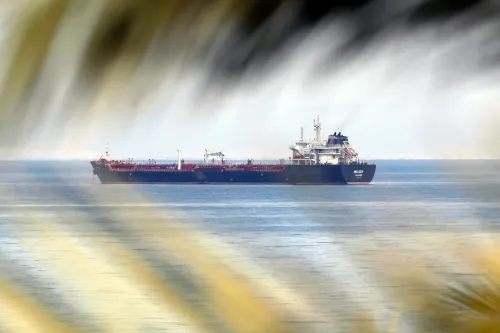
Moody's expects major oil importers — specifically China, India, Japan, and Korea — to negotiate passage individually with Iran, potentially through coordinated transit corridors reportedly emerging near Larak Island and through Omani territorial waters. However, the agency cautioned that a return to pre-conflict traffic volumes in 2026 is unlikely.
Inflation Outlook: India in the Crosshairs
Moody's revised its inflation forecast for India upward to 4.5 per cent in 2026, compared with its earlier estimate of 3.5 per cent. The agency attributed the revision directly to persistently elevated energy costs feeding into both headline and core inflation.
'This will complicate the path for monetary policy across major economies, raise production costs across energy-intensive sectors, erode household purchasing power and tighten financing conditions for exposed borrowers,' the report stated.
Broader Economic Knock-On Effects
Beyond inflation, Moody's warned of cascading effects across costs, demand, and financing conditions for borrowers exposed to energy price volatility. The agency flagged that occasional fluctuations outside the $90-110 range are likely in response to new geopolitical developments, underscoring the fragility of the current equilibrium.
This is the first time Moody's has formally categorised the Hormuz disruption as a structural constraint rather than a transient shock — a significant shift in how global credit markets may price sovereign and corporate risk in energy-dependent economies going forward.
Point of View
The revised inflation forecast of 4.5% directly complicates the Reserve Bank of India's rate-cut calculus at a time when growth support is needed. The bilateral-corridor workaround is pragmatic but fragile: it hands Iran leverage over individual importers rather than a multilateral framework, making supply more opaque and political. Markets pricing in a Hormuz resolution may be the bigger risk than the disruption itself.
NationPress
26 Sept 2026
Frequently Asked Questions
What is Moody's oil price forecast for 2026?
Moody's expects Brent crude to trade in the $90 to $110 per barrel range for much of 2026, with significant volatility and occasional fluctuations outside this range. The forecast is driven by the continued closure of the Strait of Hormuz and the absence of a durable US-Iran settlement.
Why is the Strait of Hormuz still closed?
According to Moody's, there is little prospect of a swift and durable settlement between the US and Iran, keeping the Strait effectively closed. The agency now classifies the disruption as a structural supply constraint rather than a temporary shock, with disruptions expected to continue through autumn 2026.
How will high oil prices affect India?
Moody's has revised India's inflation forecast upward to 4.5% in 2026, from an earlier estimate of 3.5%, directly citing elevated energy costs. Higher energy prices will also raise production costs in energy-intensive sectors, erode household purchasing power, and complicate monetary policy decisions.
How are major oil importers like India coping with the Hormuz closure?
Moody's expects China, India, Japan, and Korea to negotiate bilateral transit agreements with Iran, potentially using corridors near Larak Island and through Omani territorial waters. However, the agency cautioned this process will be slow, opaque, and subject to interruption, with pre-conflict traffic volumes unlikely to return in 2026.
What are the broader economic risks from sustained high oil prices?
Moody's warns that persistently high energy prices will feed into both headline and core inflation globally, complicate monetary policy across major economies, raise production costs in energy-intensive industries, and tighten financing conditions for exposed borrowers — creating cascading risks well beyond the energy sector.