MP Assembly Passes Uniform Civil Code Bill: CM Mohan Yadav

Synopsis
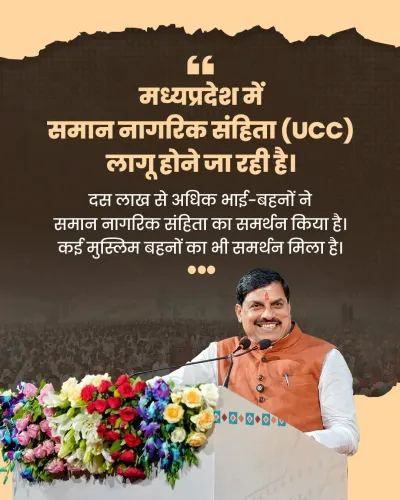
The Madhya Pradesh Legislative Assembly passed the Uniform Civil Code Bill on 21 July 2026. CM Dr. Mohan Yadav said the law will criminalise polygamy after Presidential assent, strengthening rights for women and making MP only the second Indian state to enact such legislation after Uttarakhand.
Key Takeaways
The Madhya Pradesh Legislative Assembly passed the Uniform Civil Code Bill on 21 July 2026 .
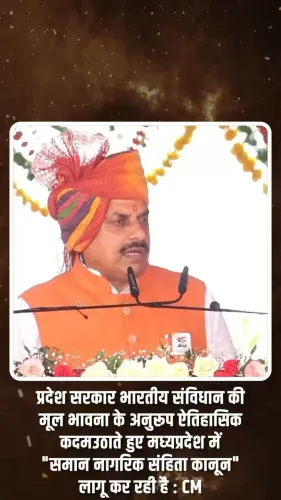
Mohan Yadav called it a historic step toward good governance, social justice, and equality.
Once Presidential assent is granted, polygamy will become a punishable offence in Madhya Pradesh.
The bill aims to provide stronger legal protection to women — described as 'half the population' of the state.
Madhya Pradesh follows Uttarakhand , which passed India's first state UCC statute in February 2024 .
The law will face scrutiny over implementation rules and potential constitutional challenges in higher courts.
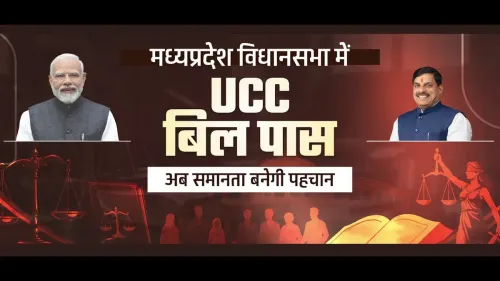
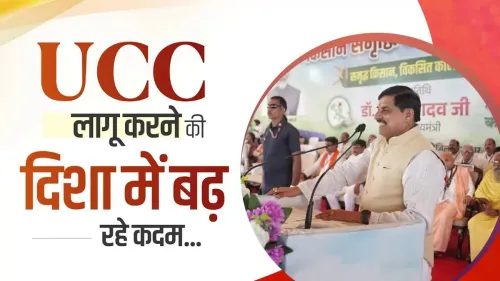
The Madhya Pradesh Legislative Assembly passed the Uniform Civil Code (UCC) Bill on Tuesday, 21 July 2026, making the state the second in India to legislate a common personal law framework. Chief Minister Dr. Mohan Yadav hailed the passage as a historic step toward good governance, social justice, and equality for all citizens of the state.
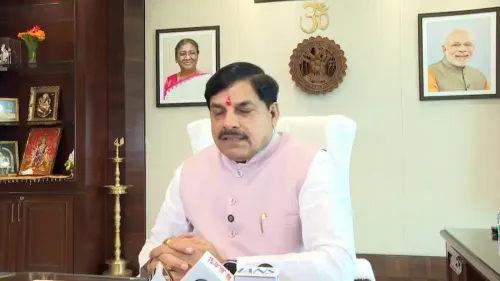
Posting on X, CM Dr. Mohan Yadav described the bill's passage as 'ek aitihasik evam mahatvapurn kadam' (a historic and important step), adding that the decision would provide 'new strength to good governance, social justice, and equality in the state.' He extended his 'heartfelt congratulations to all citizens of the state' on what he called a significant achievement.
Context
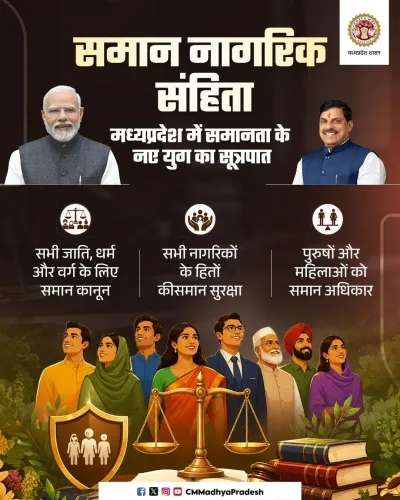
The Uniform Civil Code seeks to replace religion-specific personal laws governing marriage, divorce, inheritance, and adoption with a single set of rules applicable to all citizens regardless of faith. Article 44 of the Indian Constitution, a Directive Principle of State Policy since 1950, directs the state to endeavour to secure such a code for all citizens.
CM Yadav specifically highlighted the bill's provision criminalising polygamy. He stated that once Presidential assent is received, Madhya Pradesh will join the category of states where 'marrying more than once will be a punishable offence,' reducing hardships faced by women due to polygamy and providing 'more effective protection to the rights of half the population of the state.'
Policy Backdrop
Uttarakhand became the first Indian state to pass a UCC statute in February 2024, setting a legislative precedent for other BJP-governed states. The Bharatiya Janata Party has included UCC implementation in its national election manifestos of both 2019 and 2024, framing it as a matter of gender justice and constitutional uniformity.
Dr. Mohan Yadav assumed office as Chief Minister of Madhya Pradesh in December 2023. The UCC Bill's passage represents one of the most significant legislative moves of his tenure, aligning the state with the BJP's broader national policy agenda on personal law reform.
Stakeholders and Impact
The bill's most immediate stated impact is on women citizens of Madhya Pradesh, particularly those affected by polygamous marriages. By making polygamy a criminal offence post-assent, the law aims to strengthen legal protections for women who have historically had limited recourse under religion-specific personal laws.
Minority communities whose personal laws currently govern marriage and succession practices are among the key stakeholders who will see the most direct change under a unified code. Civil society groups and legal experts are expected to scrutinise the bill's provisions closely once the full text is formally notified.
What's Next
The bill now awaits Presidential assent before it can be enforced as law. The timeline for that assent, and the subsequent framing of rules for registration and enforcement, will determine when the code becomes operational on the ground.
Legal challenges before the Madhya Pradesh High Court or the Supreme Court of India are widely anticipated once the law is notified, as questions around its constitutional validity — particularly regarding the balance between uniformity and religious freedom — remain subjects of active judicial and academic debate. The state's experience will be closely watched as a test case for potential national codification.
Point of View
The party frames a politically contested reform in the language of gender justice — making opposition harder to articulate without appearing to defend a practice widely seen as harmful. Following Uttarakhand's 2024 precedent, Madhya Pradesh's move signals that BJP-governed states are now functioning as legislative test beds, with each enactment building political and legal precedent for a potential national UCC. The real test, however, will come at the Presidential assent stage and in the courts, where the balance between constitutional uniformity and religious freedom guarantees will be argued in earnest.
NationPress
20 Oct 2026
Frequently Asked Questions
What is the Uniform Civil Code Bill passed by Madhya Pradesh?
The Uniform Civil Code Bill passed by the Madhya Pradesh Legislative Assembly on 21 July 2026 seeks to replace religion-specific personal laws on marriage, divorce, inheritance, and adoption with a single set of rules applicable to all citizens of the state, regardless of their religion.
Will polygamy be banned in Madhya Pradesh after the UCC Bill?
Yes. CM Dr. Mohan Yadav has stated that once the bill receives Presidential assent, marrying more than once will become a punishable criminal offence in Madhya Pradesh.
Which was the first Indian state to pass a Uniform Civil Code?
Uttarakhand was the first Indian state to pass a Uniform Civil Code statute, doing so in February 2024. Madhya Pradesh is now the second state to pass such legislation.
When will the Madhya Pradesh UCC come into effect?
The Madhya Pradesh UCC Bill will come into effect only after it receives the formal assent of the President of India. The timeline for Presidential assent and the framing of enforcement rules has not yet been announced.
Can the Madhya Pradesh UCC Bill be challenged in court?
Yes. Legal experts widely anticipate constitutional challenges before the Madhya Pradesh High Court or the Supreme Court of India once the law is notified, particularly on questions relating to religious freedom and the scope of state power to legislate on personal laws.