MP CM Mohan Yadav Pitches State's Green Energy Vision at IRCE 2026
Synopsis
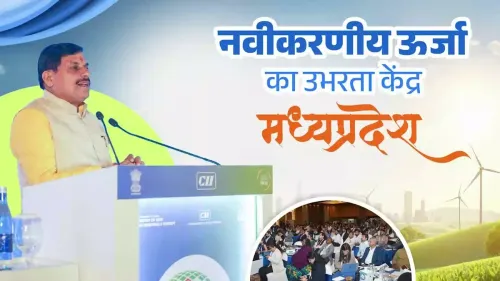
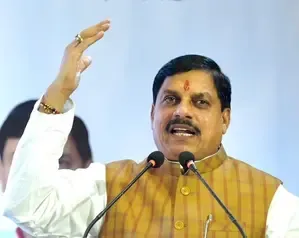
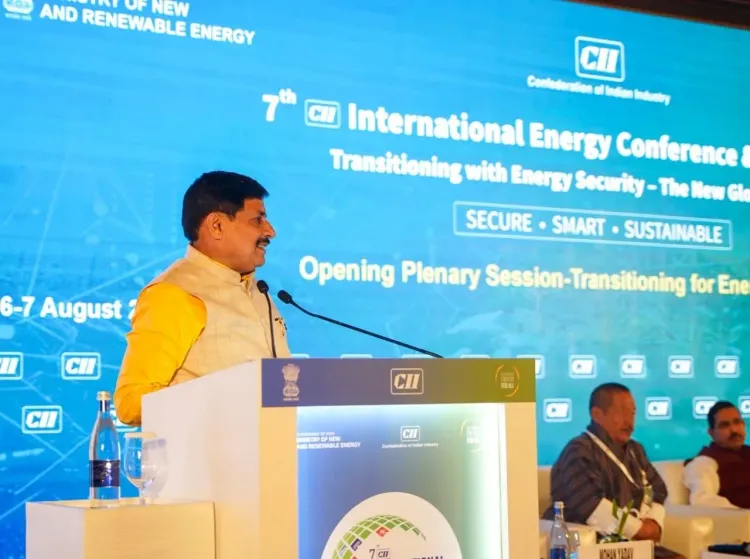
Chief Minister Dr. Mohan Yadav joined Union Minister Prahlad Joshi at the 7th International Renewable Energy Conference in New Delhi on August 6, presenting Madhya Pradesh's Green Energy Vision, clean energy achievements, and future energy strategy to national and international stakeholders.
Key Takeaways
Mohan Yadav represented Madhya Pradesh at IRCE 2026 in New Delhi on August 6, 2026 .
He participated alongside Union Minister for New and Renewable Energy Prahlad Joshi .
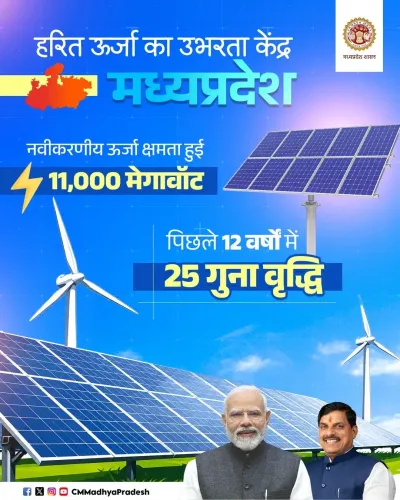
The state formally presented its Green Energy Vision , current clean energy progress, and future energy strategy at the conference.
IRCE 2026 is the seventh edition of the annual conference organised by the Ministry of New and Renewable Energy (MNRE) .
The event reflects the central-state coordination model underpinning India's national renewable energy targets.
New Delhi, August 6: In the capital's biggest annual gathering of clean-energy policymakers, Madhya Pradesh Chief Minister Dr. Mohan Yadav stepped onto a national stage on Thursday to make the case that his state is not just keeping pace with India's renewable energy revolution — it is helping lead it.
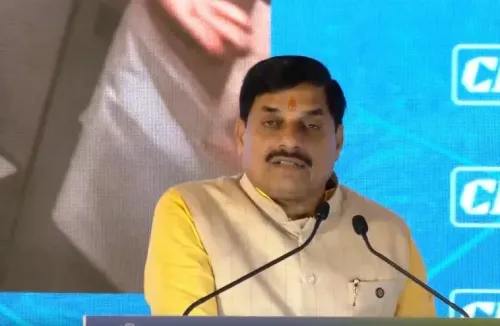
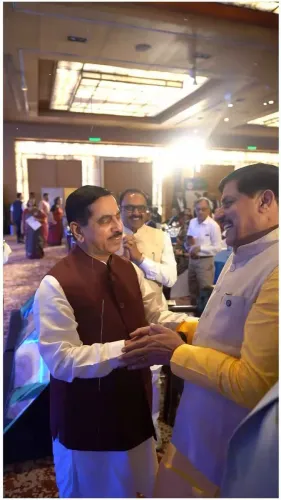
The Chief Minister's Office of Madhya Pradesh confirmed that Dr. Yadav participated in the 7th International Renewable Energy Conference and Exhibition-2026 (IRCE 2026), held in New Delhi, alongside Union Minister for New and Renewable Energy Shri Prahlad Joshi. At the event, a formal presentation was made showcasing Madhya Pradesh's Green Energy Vision, the state's notable progress in the clean energy sector, and its forward-looking energy strategy.
What MP Put on the Table at IRCE 2026
The presentation covered three distinct pillars: where Madhya Pradesh stands today in renewable capacity, the scale of its ambition going forward, and how it intends to get there. The state's participation was coordinated with the Ministry of New and Renewable Energy (MNRE) — the central body that convenes IRCE annually to align state-level action with India's national non-fossil fuel targets.
Madhya Pradesh, a large landlocked state in central India, has been expanding its footprint in solar and wind power generation, positioning itself as a significant contributor to India's broader clean energy build-out. The IRCE platform gave the state government a direct line to national policymakers and international stakeholders in a single room.
The Federal Energy Compact at Work
India's renewable energy story is fundamentally a federal one. The Ministry of New and Renewable Energy sets the national framework — targets, incentives, grid integration policy — while states like Madhya Pradesh are the ones who actually build the capacity on the ground. IRCE is, in effect, the annual checkpoint where that compact gets renewed and tested publicly.
This dynamic traces back to India's Jawaharlal Nehru National Solar Mission, launched in 2010, which first formalised the central-state partnership on clean energy scale-up. More than a decade later, that architecture now underpins India's commitments on the global stage, and state showcases at forums like IRCE are a direct expression of it.
With Dr. Yadav and Minister Joshi sharing the platform, Thursday's session signalled active coordination between Bhopal and New Delhi on the renewable energy agenda — the kind of alignment that determines whether national targets translate into megawatts on the ground.
Point of View
The optics of alignment are deliberate — but the substance matters: Madhya Pradesh's ability to demonstrate measurable clean energy progress directly influences how central funds and targets are allocated. In the broader arc of India's energy transition, state-level political ownership of the green agenda is increasingly what converts national targets into actual grid capacity. The presentation format — vision, progress, strategy — also mirrors the structured accountability frameworks MNRE has been pushing states to adopt, suggesting Bhopal is playing by the rules that unlock central support.
NationPress
20 Sept 2026
Frequently Asked Questions
What is IRCE 2026 and where was it held?
IRCE 2026, or the 7th International Renewable Energy Conference and Exhibition, was held in New Delhi . It is an annual event organised by India's Ministry of New and Renewable Energy (MNRE) to align national and state-level clean energy strategies.
Why did MP CM Mohan Yadav attend the renewable energy conference?
Dr. Mohan Yadav attended to present Madhya Pradesh's Green Energy Vision, highlight the state's progress in clean energy, and outline its future energy strategy before national policymakers and international stakeholders.
Who is Prahlad Joshi in the context of renewable energy?
Prahlad Joshi is India's Union Minister for New and Renewable Energy, responsible for national renewable energy policy, targets, and programmes under the central government.
What is Madhya Pradesh's Green Energy Vision?
Madhya Pradesh's Green Energy Vision is the state government's strategic roadmap for expanding clean energy capacity — covering solar, wind, and other renewables — aligned with national targets set by the Ministry of New and Renewable Energy.
How does India coordinate renewable energy between the Centre and states?
India uses a federal model where the Ministry of New and Renewable Energy sets national targets and policy frameworks, while individual states implement capacity addition on the ground. Forums like IRCE serve as annual checkpoints for this coordination.