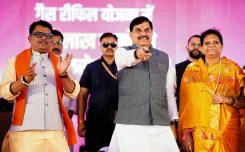
MP CM Mohan Yadav: 50 Lakh Registrations to Be Free
Synopsis
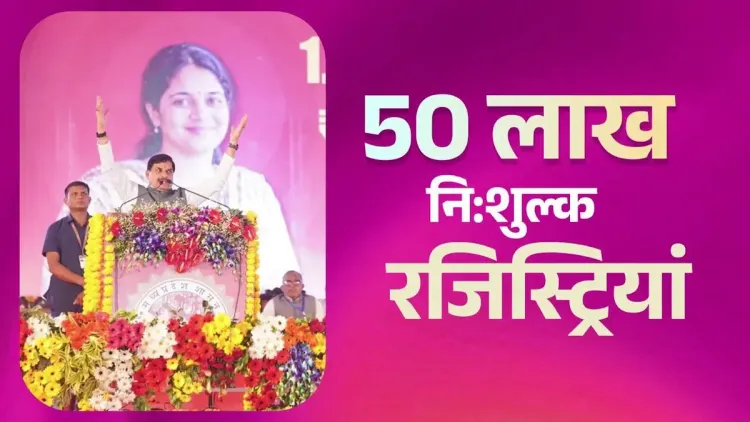
Chief Minister Dr. Mohan Yadav has announced that 50 lakh registrations in Madhya Pradesh will be made completely free under the Ladli Behna Yojana umbrella, aiming to remove financial barriers and expand welfare coverage to millions of low-income residents.
Key Takeaways
50 lakh (five million) registrations in Madhya Pradesh will be made free of cost, as announced by CM Dr.
Mohan Yadav on October 14, 2026 .
The announcement is linked to Ladli Behna Yojana , the state's flagship scheme providing Rs 1,000 per month to eligible women aged 21–60 from low-income families.
Ladli Behna Yojana was originally launched in March 2023 under then-CM Shivraj Singh Chouhan and has been continued and expanded under Dr.
The fee waiver targets last-mile enrollment — reaching eligible women who have not yet registered due to the cost of documentation and registration processes.
Madhya Pradesh has consistently paired scheme enrollment drives with fee removals to expand direct benefit transfer coverage.
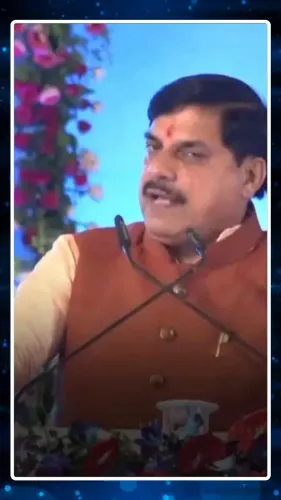
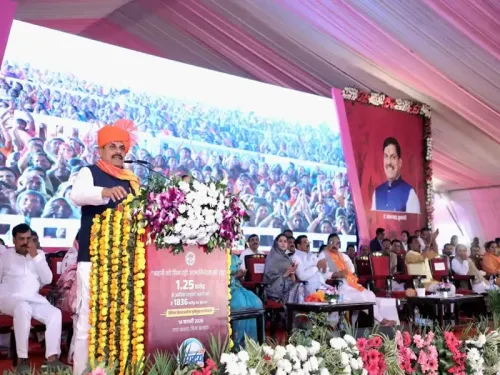
Fifty lakh registrations in Madhya Pradesh will be made completely free of cost — that is the headline announcement from Chief Minister Dr. Mohan Yadav, made on Wednesday, October 14, 2026, in a declaration that could reshape access to welfare benefits for millions of low-income residents across the state.
What CM Yadav announced
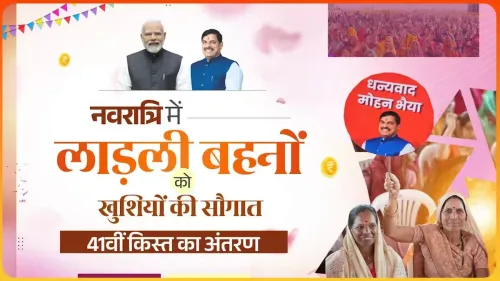
The Chief Minister's Office posted on X quoting Dr. Mohan Yadav directly: 'Madhya Pradesh mein 50 lakh registriyan nihshulk ki jaengi' — 'In Madhya Pradesh, 50 lakh registrations will be made free of charge.' The announcement was tagged under #LadliBehnaYojana, linking the fee waiver explicitly to the state's flagship women's welfare scheme.
The scale is striking. 50 lakh — five million — registrations represent a massive administrative push to bring eligible residents into the formal fold of state benefits without the friction of fees that often deter the poorest households from enrolling.
Ladli Behna Yojana and the push to widen coverage
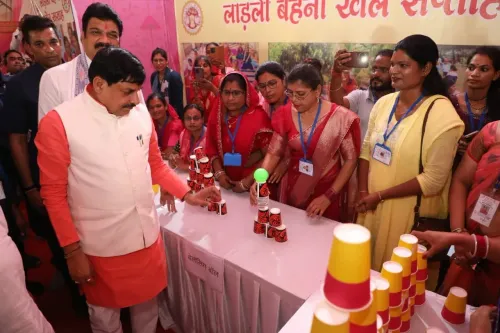
Ladli Behna Yojana was launched in March 2023 by the Madhya Pradesh government, originally under then-CM Shivraj Singh Chouhan, to provide direct monthly cash transfers of Rs 1,000 to eligible women aged 21 to 60 from low-income families. The scheme rapidly became one of the most politically visible welfare programmes in the state.
When Dr. Mohan Yadav took charge as Chief Minister in December 2023, his BJP-led government inherited — and continued building on — that welfare architecture. Today's announcement fits a pattern the state has been running: pairing scheme enrollment drives with fee waivers to remove barriers that keep the most vulnerable households off the beneficiary list.
Why the registration waiver matters
Registration fees and documentation costs, however modest they appear on paper, function as real barriers for families earning at subsistence level. A fee-free window for 50 lakh registrations signals intent to saturate coverage — to find the last-mile beneficiary who has not yet enrolled, not because she was ineligible, but because the process cost money she did not have.
The specifics of which registration categories are covered and the implementation timeline are yet to be detailed publicly. But the political and administrative signal is clear: Madhya Pradesh is pushing hard to broaden its direct-benefit transfer base ahead of what continues to be a high-stakes welfare delivery environment across India's heartland states.
Five million free registrations. The window is open — now comes the test of whether the machinery can match the ambition.
Point of View
Ladli Behna Yojana has been a central plank of its political identity since 2023, and expanding its registered base deepens that bond with women voters in a state where gender-targeted welfare has proved electorally decisive. The move also fits the broader national pattern of state governments competing to demonstrate welfare saturation — the race is no longer just to launch a scheme, but to prove every eligible household is inside it. The real test will be administrative: whether the state apparatus can process five million registrations efficiently and convert them into active monthly transfers.
NationPress
14 Oct 2026
Frequently Asked Questions
What is the free registration announcement in Madhya Pradesh?
Chief Minister Dr. Mohan Yadav announced on October 14, 2026 that 50 lakh (five million) registrations in Madhya Pradesh will be made completely free of charge, linked to the Ladli Behna Yojana welfare scheme.
What is Ladli Behna Yojana in Madhya Pradesh?
Ladli Behna Yojana is a state welfare scheme launched in March 2023 that provides a monthly financial transfer of Rs 1,000 to eligible women aged 21 to 60 from low-income families in Madhya Pradesh.
Who is Dr. Mohan Yadav?
Dr. Mohan Yadav is the Chief Minister of Madhya Pradesh, representing the BJP. He has held the post since December 2023.
Who benefits from the 50 lakh free registrations in MP?
The free registration drive primarily targets low-income women who are eligible for Ladli Behna Yojana but have not yet enrolled, removing registration fee barriers that prevent last-mile beneficiaries from accessing the scheme.
When was Ladli Behna Yojana launched and by whom?
Ladli Behna Yojana was launched in March 2023 by the Madhya Pradesh government under then-Chief Minister Shivraj Singh Chouhan. It has been continued and expanded under CM Dr. Mohan Yadav.