CM Majhi slams BJD era as BJP turns investment pledges real
Synopsis
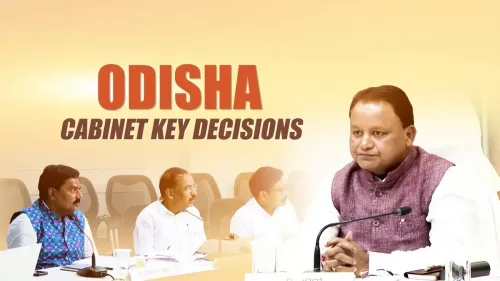
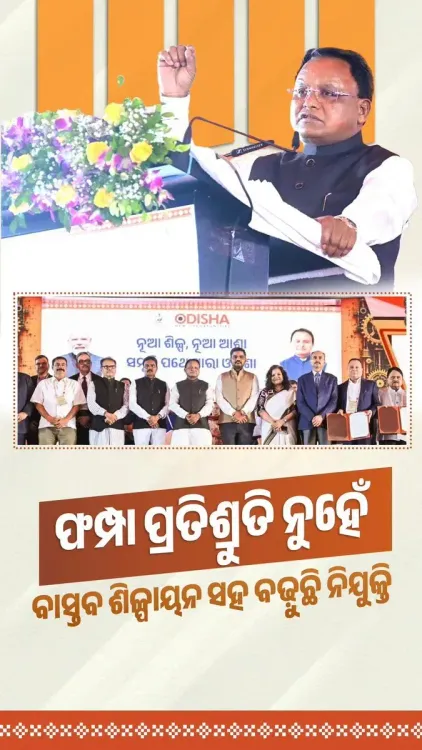
Odisha Chief Minister Mohan Charan Majhi took aim at the outgoing BJD's 24-year record on Wednesday, asserting that his BJP government is giving industrial projects real form in a short time — a contrast to what he called an era of empty promises and propaganda.
Key Takeaways
CM Mohan Charan Majhi posted in Odia on 14 October 2026 , contrasting his government's industrial delivery with the previous administration's record.
He accused the BJD government , which held power for 24 years (2000–2024) , of limiting investment and employment to 'promises and propaganda'.
The BJP formed its first Odisha state government after the June 2024 elections, ending Naveen Patnaik 's unbroken tenure.
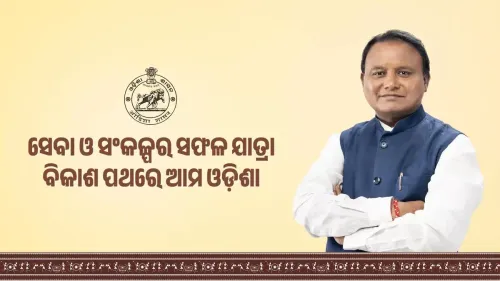
Majhi described his administration as 'ଲୋକଙ୍କ ସରକାର' ('the people's government'), framing it as a decisive break from the past.
Odisha 's mineral wealth makes industrial investment a high-stakes political metric; independent data on actual project implementation is being closely watched.
Where Odisha's previous government left promises on paper, Chief Minister Mohan Charan Majhi says his administration is putting steel in the ground — and he wants the contrast on record. On Wednesday, 14 October 2026, the BJP leader posted a pointed message in Odia, drawing a sharp line between what he called two decades of announcement culture and what his government claims is actual delivery.
Posting in Odia, CM Majhi wrote: 'ପୂର୍ବ ସରକାର ସମୟରେ ନିବେଶ ଓ ନିଯୁକ୍ତି କେବଳ ପ୍ରତିଶ୍ରୁତି ଏବଂ ପ୍ରଚାରରେ ସୀମିତ ରହିଥିଲା' — 'During the previous government's tenure, investment and employment remained confined to promises and propaganda. But the people's government is giving industrial projects real shape in a short time.'
The shadow of 24 BJD years
The target is unmistakable. Naveen Patnaik and his Biju Janata Dal governed Odisha for an unbroken 24 years — from 2000 to 2024 — and regularly hosted investment summits that attracted headline-grabbing pledge figures. Critics, including the then-opposition BJP, argued that many of those announced projects never left the stage. That critique has now shifted from election rally to government communication.
The BJP formed its first-ever state government in Odisha after the June 2024 assembly elections, ending a quarter-century of BJD dominance. Majhi became Chief Minister, inheriting both the mineral-rich state's industrial potential and the pressure to prove that BJP governance translates faster from announcement to implementation.
A 'people's government' frames its early report card
The phrase Majhi uses — 'ଲୋକଙ୍କ ସରକାର', or 'the people's government' — is deliberate branding, positioning the BJP administration as a clean break rather than a continuation. By invoking it alongside concrete industrial delivery, the message is stitched to a promise made at the ballot box in 2024.
Odisha sits on some of India's richest reserves of iron ore, bauxite, and coal, making it a perennial target for industrial investment. The gap between announced intent and ground-level execution has long been a flashpoint in the state's political conversation, and new governments across India routinely use early months to signal a pace-change to investors and job seekers alike.
The proof, though, will live in official project data — ground-breakings, employment numbers, factory commissions — that independent watchers are now tracking against the previous administration's own benchmarks. The government's credibility on industry is being written one project at a time.
Point of View
Claim momentum for your own tenure, and do it before official scorecards arrive. For the BJP, which spent 24 years in opposition in Odisha, converting that critique into governance credibility is existential. The framing of 'people's government' also signals an attempt to occupy the populist space previously owned by Patnaik's BJD. Whether the rhetoric holds will depend entirely on verifiable project delivery data over the next 12–18 months, and that data will become the battlefield for the 2029 state election cycle.
NationPress
14 Oct 2026
Frequently Asked Questions
What did Odisha CM Mohan Majhi say about industrial investment?
CM Majhi said the previous BJD government kept investment and employment confined to promises and propaganda, while his BJP government is giving industrial projects real shape in a short time.
Which government is CM Majhi criticising in his post?
He is criticising the BJD government led by Naveen Patnaik, which governed Odisha for 24 years from 2000 to 2024.
When did BJP come to power in Odisha?
The BJP formed its first state government in Odisha in June 2024 after winning the state assembly elections, ending 24 years of BJD rule.
What is CM Majhi's phrase 'people's government' about?
Majhi uses the Odia phrase 'ଲୋକଙ୍କ ସରକାର' (the people's government) as a brand for his BJP administration, positioning it as a clean break from the previous regime focused on actual delivery.
Why is industrial investment important for Odisha?
Odisha holds some of India's largest reserves of iron ore, bauxite, and coal, making it a major destination for industrial projects. Converting investment pledges into real factories and jobs is a key political and economic benchmark for any Odisha government.