MP CM Mohan Yadav clears six NDPS special courts

Synopsis
Madhya Pradesh CM Dr. Mohan Yadav has approved six new special courts under the NDPS Act to fast-track illegal drug trade and trafficking cases in Indore, Mandsaur, Neemuch, Singrauli, Bhopal and Rewa, targeting a drug-free state by 2029 under PM Modi's national anti-drug campaign.
Key Takeaways
Six new special NDPS courts approved for Indore, Mandsaur, Neemuch, Singrauli, Bhopal and Rewa .
Approval granted by CM Dr.
Mohan Yadav at the Gandhi Sagar cabinet meeting on 18 November 2026 .
Courts aim to fast-track illegal drug trade and trafficking cases under the NDPS Act, 1985 .
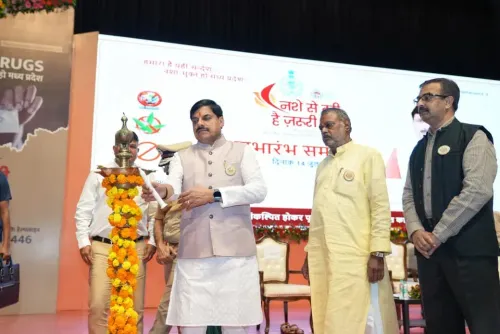
The move is linked to the Nasha Mukt Bharat Abhiyan , the central anti-drug campaign launched in August 2020 .
Neemuch and Mandsaur are located in MP's legal opium cultivation belt, making them high-priority sites for dedicated judicial infrastructure.
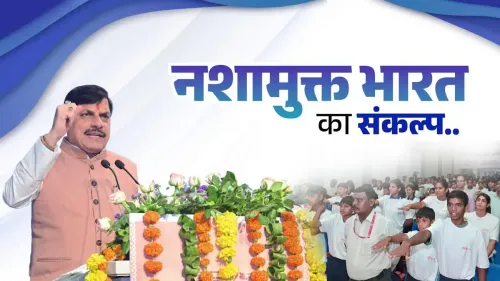
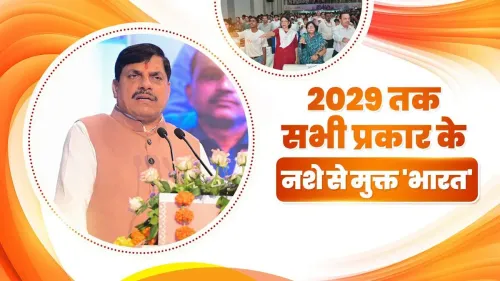
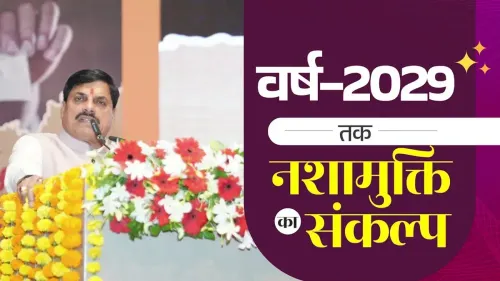
The state has set a drug-free target for 2029 , with the courts forming the judicial pillar of that goal.
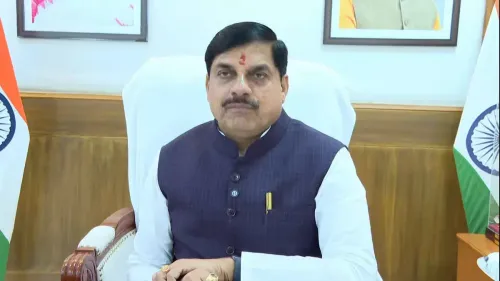
Six new special courts targeting illegal drug trade and trafficking are coming to Madhya Pradesh — a sharp judicial push the state says is built around a 2029 nasha-mukti (drug-free) target. The Chief Minister's Office of Madhya Pradesh announced on Wednesday, 18 November 2026, that Chief Minister Dr. Mohan Yadav has cleared the creation of the courts, placing them in six districts where the illegal narcotics problem is most acute.
The post, shared from the Gandhi Sagar cabinet meeting, quotes CM Dr. Mohan Yadav directly: 'indore, mandsaur, neemuch, singrauli, bhopal aur rewa mein kholne wale in vishesh court se in mamlon ka teji se nirakaran sunishchit hoga' — 'these special courts opening in Indore, Mandsaur, Neemch, Singrauli, Bhopal and Rewa will ensure fast disposal of these cases.' The approval is framed explicitly under Prime Minister Narendra Modi's guidance through the national anti-drug campaign.
Why these six districts, and why now
The geography is deliberate. Neemuch and Mandsaur sit inside Madhya Pradesh's legal opium cultivation belt — an area where the gap between licensed cultivation and illegal diversion has historically fed trafficking networks. Courts in both districts signal that the state is targeting the supply chain at its most sensitive point. Singrauli and Rewa in the east, and commercial capital Indore, bring in a cross-state trafficking dimension, while Bhopal — the state capital — anchors administrative oversight.
The legal foundation is the Narcotic Drugs and Psychotropic Substances (NDPS) Act, 1985, which explicitly allows for special courts to fast-track drug offences. Several Indian states have activated dedicated NDPS courts in recent years specifically to cut case pendency — a persistent bottleneck where arrests pile up but convictions lag months or years behind. Madhya Pradesh's move follows that pattern but with a tighter geographic logic tied to known trafficking corridors.
The national anti-drug architecture behind the order
The approval is nested within the Nasha Mukt Bharat Abhiyan, the central government campaign launched in August 2020 that combines awareness drives, state-level enforcement and rehabilitation infrastructure. Madhya Pradesh's addition of a dedicated judicial tier — fast-disposal courts rather than relying on regular sessions courts — is a meaningful escalation. It shifts the state from enforcement-heavy response to a full-chain model: arrest, prosecution, and verdict, all accelerated.
The question that follows approval is always staffing: judges, public prosecutors, and support staff will need to be in place before the courts can function. Progress on NDPS case disposal rates in these six districts will be the clearest early measure of whether the structure delivers on the speed it promises. The next cabinet meeting — and any state-level review of the 2029 target — will be worth watching closely.
Madhya Pradesh has drawn the map. Now it has to fill the courts.
Point of View
Mandsaur) and along trafficking corridors, the state signals awareness that judicial speed, not just police action, determines deterrence. The move also gives CM Mohan Yadav a concrete, verifiable deliverable under the Nasha Mukt Bharat umbrella ahead of the 2029 benchmark, turning a national campaign slogan into measurable state infrastructure. Whether this model migrates to other vulnerable districts will depend entirely on how quickly these six courts are staffed and how fast disposal rates improve.
NationPress
18 Nov 2026
Frequently Asked Questions
Which districts are getting new special NDPS courts in Madhya Pradesh?
The six districts are Indore, Mandsaur, Neemuch, Singrauli, Bhopal and Rewa. These were chosen for their links to illegal drug trade and trafficking routes in the state.
What is the purpose of special NDPS courts in Madhya Pradesh?
Special NDPS courts are dedicated judicial bodies established under the Narcotic Drugs and Psychotropic Substances Act, 1985, to ensure faster trials and disposal of drug offence cases, reducing the backlog in regular courts.
What is the Nasha Mukt Bharat Abhiyan?
Nasha Mukt Bharat Abhiyan is a central government campaign launched in August 2020 to combat substance abuse through awareness, enforcement, and rehabilitation programmes across Indian states.
What is Madhya Pradesh's drug-free target year?
Madhya Pradesh has set 2029 as its nasha-mukti (drug-free) target year, under which the six new special courts are being established to accelerate legal action against illegal drug trade.
Why are Neemuch and Mandsaur included in the new NDPS court locations?
Neemuch and Mandsaur are situated in Madhya Pradesh's legal opium cultivation belt, where illegal diversion of opium and cross-border trafficking have historically been significant concerns, making dedicated courts particularly important there.