MP CM Mohan Yadav launches Sugam Parivahan Seva with 351 buses
Synopsis
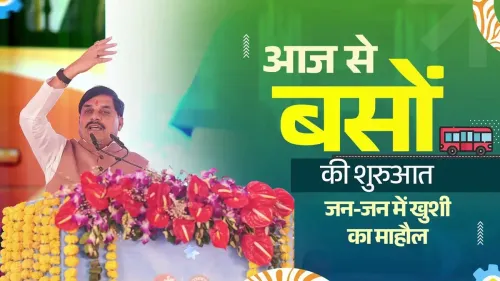
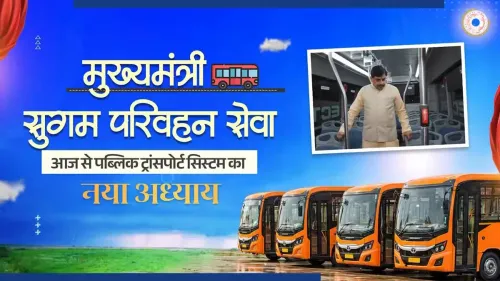
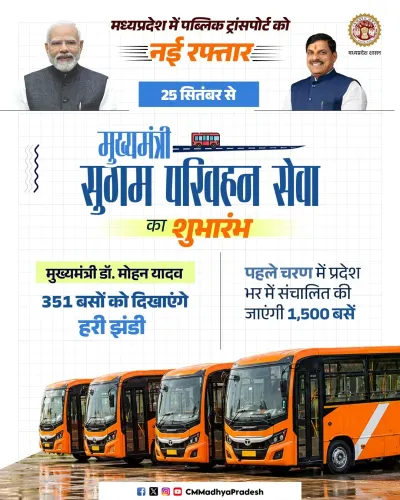
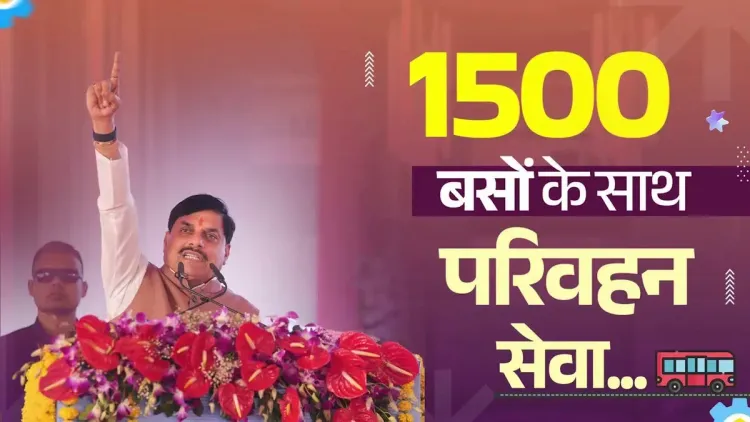
Madhya Pradesh Chief Minister Dr. Mohan Yadav launched the Mukhyamantri Sugam Parivahan Seva on September 25, 2026, deploying 351 buses in the first tranche of a 1,500-bus phase-one fleet to connect villages and cities across the state.
Key Takeaways
The Mukhyamantri Sugam Parivahan Seva was formally launched on September 25, 2026 by CM Dr.
Operations began with 351 buses on day one, under the Seva Sankalp Abhiyan governance campaign.
Phase 1 targets a total fleet of 1,500 buses on Madhya Pradesh's road network.
Routes are designed to run from villages to cities , prioritising rural-urban last-mile connectivity.
The Madhya Pradesh Transport Department is the implementing agency for the scheme.
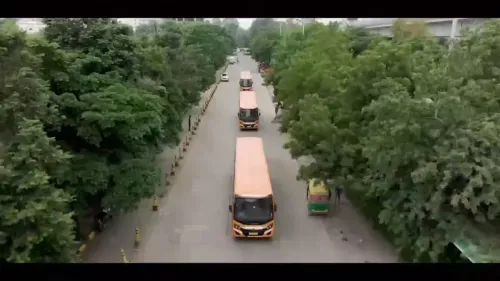
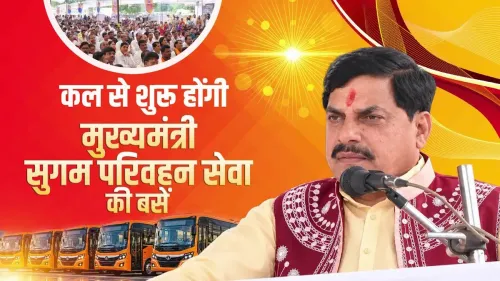
A fleet of 351 buses rolled onto Madhya Pradesh's roads on Friday, September 25, 2026 — marking the launch of the Mukhyamantri Sugam Parivahan Seva, a state-run public transport initiative that Chief Minister Dr. Mohan Yadav and the Chief Minister's Office of Madhya Pradesh say will stitch villages and cities together with reliable, affordable connectivity.
351 buses today, 1,500 on the horizon
The scheme debuts under the state government's broader 'Seva Sankalp Abhiyan' — a pledge-driven governance campaign framed around public service and state development. Today's rollout of 351 buses is explicitly the opening move of a phased plan: the first stage targets a fleet of 1,500 buses operating across Madhya Pradesh's road network. CM Yadav described the launch as 'janta ki seva aur pradesh ke vikas ka sankalp' — 'a commitment to public service and the development of the state.'
The Madhya Pradesh Transport Department (@mptransportdept) is the operational spine of the service. By deploying in phases rather than staging a single mass rollout, the government is managing logistics incrementally — a model that several Indian states have used to reduce the risk of early operational failures in large fleet launches.
Filling the rural-urban connectivity gap
Madhya Pradesh is a vast, landlocked state where the distance between a village and a district town can translate directly into lost income, missed hospital appointments, and limited access to education. State-run bus services have historically been the cheapest bridging mechanism for those gaps. Previous administrations in Bhopal have attempted periodic fleet expansions, but coverage in semi-urban and rural corridors has remained uneven.
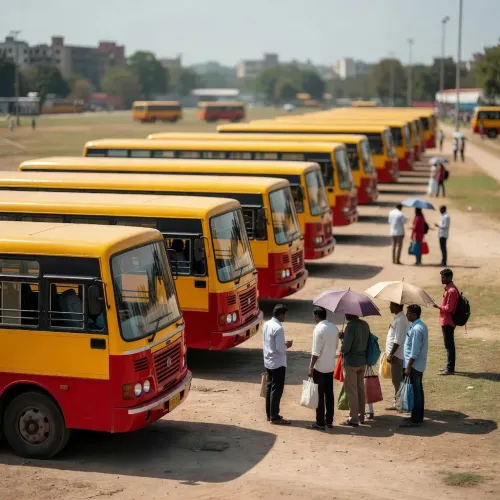
The Sugam Parivahan Seva is positioned as a structural fix rather than a stopgap. Routes are designed to run from villages to cities, prioritising last-mile reach — a detail the CMO's announcement specifically highlighted. For rural commuters who depend on irregular private vehicles or overcrowded shared transport, a scheduled, government-operated service can be transformative.
Where the full 1,500-bus phase lands
The number to watch now is the progression from today's 351 to the stated Phase 1 target of 1,500 buses. The transport department will be under pressure to announce timelines, routes, and ticketing structures for the expanded fleet. Whether subsequent phases are announced — and how quickly frequency and coverage scale — will determine whether this becomes a durable infrastructure upgrade or a well-publicised first day.
For a state that accounts for a significant share of India's rural population, getting this right matters well beyond Bhopal's press circuit.
Point of View
Who took office in December 2023, phased infrastructure rollouts of this kind serve a dual purpose — demonstrating administrative momentum and building a tangible voter-facing record ahead of the electoral cycle. The rural-urban connectivity framing is also strategically significant: Madhya Pradesh's semi-urban and rural populations are historically sensitive to last-mile transport access, making this the kind of scheme that compounds politically if it scales as promised. The real test, as always, lies in whether the 1,500-bus Phase 1 target translates from announcement to operational timetable.
NationPress
25 Sept 2026
Frequently Asked Questions
What is the Mukhyamantri Sugam Parivahan Seva in Madhya Pradesh?
The Mukhyamantri Sugam Parivahan Seva is a state-run public bus service launched by the Madhya Pradesh government on September 25, 2026, aimed at improving connectivity between villages and cities across the state.
How many buses were launched on day one of the Sugam Parivahan Seva?
The service launched with 351 buses on September 25, 2026, as the opening tranche of a planned Phase 1 fleet of 1,500 buses.
Who launched the Mukhyamantri Sugam Parivahan Seva?
Chief Minister Dr. Mohan Yadav launched the scheme, with the announcement made through the official Chief Minister's Office of Madhya Pradesh.
What is the Seva Sankalp Abhiyan in Madhya Pradesh?
The Seva Sankalp Abhiyan is a governance campaign of the Madhya Pradesh government centred on public service and state development, under which the Sugam Parivahan Seva was launched.
What is the total bus fleet target under Phase 1 of the Sugam Parivahan Seva?
Phase 1 of the Mukhyamantri Sugam Parivahan Seva aims to deploy 1,500 buses on Madhya Pradesh's roads, with 351 already operational from the launch date.