CM Madhya Pradesh Office Hails India's AI and Drone Push
Synopsis
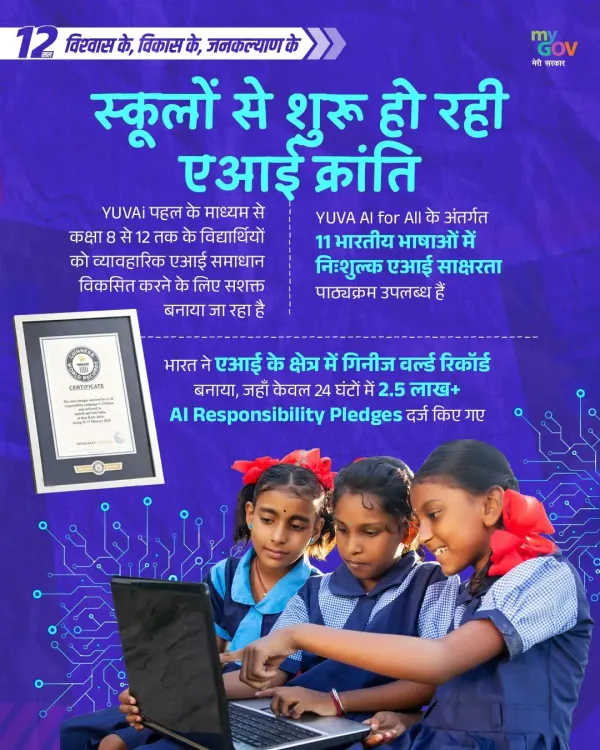
The Chief Minister's Office of Madhya Pradesh on 13 June 2026 underscored India's accelerating push in AI education and drone technology, framing it as a leap toward innovation, skilling, and technological leadership under national frameworks including NEP 2020, Drone Rules 2021, and Atmanirbhar Bharat.
Key Takeaways
The Chief Minister's Office of Madhya Pradesh posted on 13 June 2026 highlighting India's momentum in AI education and drone technology.
India's National Education Policy 2020 mandates integration of AI and coding skills from school level, forming the backbone of the AI education push.
NITI Aayog's National Strategy for AI , published in 2018 , established the foundational roadmap for India's AI ambitions.
Drone Rules 2021 liberalised licensing and operations, replacing the more restrictive 2018 framework to spur commercial and defence drone use.
A dedicated PLI scheme for drones announced in 2021 aims to scale domestic manufacturing and reduce import dependence.
Key stakeholders include students, tech startups, drone manufacturers, and defence forces, all poised to benefit from the twin policy push.
The Chief Minister's Office of Madhya Pradesh on Saturday, 13 June 2026 highlighted India's accelerating momentum in artificial intelligence education and drone technology, calling it a decisive stride toward innovation, skilling, and technological leadership.
Posting on X, the office stated: 'AI शिक्षा के विस्तार और ड्रोन तकनीक में बढ़ती क्षमता के साथ भारत नवाचार, कौशल और तकनीकी नेतृत्व की दिशा में तेजी से आगे बढ़ रहा है' — ('With the expansion of AI education and growing capability in drone technology, India is rapidly advancing toward innovation, skill and technological leadership.')
Context
The post reflects a broader national conversation about India's twin-track push: modernising educational curricula to embed digital and AI literacy, and building a robust indigenous drone ecosystem. The statement, though brief, aligns with a series of central government policy interventions that have been reshaping both sectors over the past several years.
India's technology ambitions have been anchored in the larger Atmanirbhar Bharat and Digital India frameworks, which seek to reduce import dependence in strategic sectors while cultivating domestic human capital capable of driving next-generation industries.
Policy Backdrop
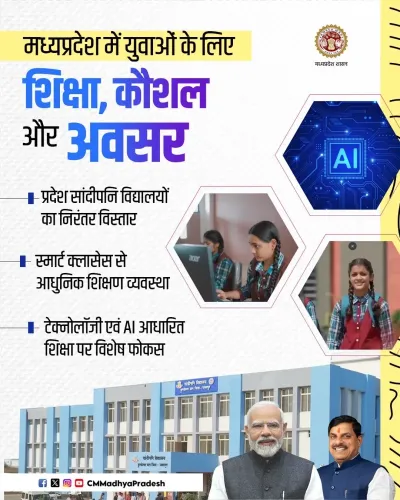
On the education front, the National Education Policy (NEP) 2020 mandated the integration of coding, AI literacy, and multidisciplinary digital skills from school level onward. The policy represented the most sweeping overhaul of India's education architecture in decades, with technology competency placed at its core.
NITI Aayog had earlier laid the strategic groundwork with its National Strategy for Artificial Intelligence, published in 2018, which identified key sectors for AI adoption and called for building a pipeline of AI-ready talent across the country.
On the drone side, Drone Rules 2021 replaced a more restrictive 2018 framework, significantly easing licensing requirements and opening airspace for commercial and civilian applications. A dedicated Production Linked Incentive (PLI) scheme for drones, announced in 2021, further incentivised domestic manufacturing, aiming to reduce dependence on imported unmanned systems.
Stakeholders and Impact
The beneficiaries of these converging policy streams span a wide spectrum: students at school and college level gaining exposure to AI tools, tech startups building AI-powered products, drone manufacturers scaling production under PLI incentives, and defence forces integrating unmanned platforms into operational planning.
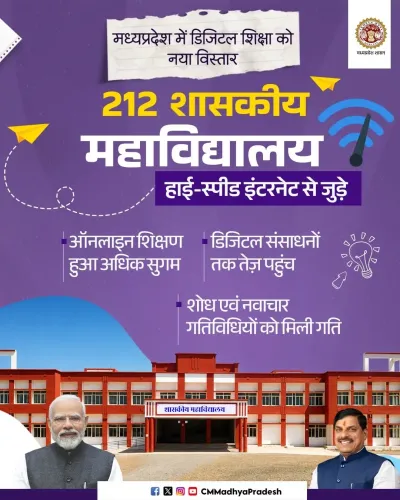
For a state like Madhya Pradesh, which has been expanding its digital infrastructure and skill-development initiatives, the national policy architecture provides a scaffolding that state governments can leverage to accelerate local capability-building in both AI and drone applications.
What's Next
Attention will now turn to how state governments, including Madhya Pradesh, translate national frameworks into on-ground curriculum changes and industrial clusters. The integration of AI modules into school syllabi at the state level and any revisions to drone PLI incentives or airspace corridors in the next central budget will be key markers of progress.
As India positions itself as a global technology hub, the alignment between state-level enthusiasm — as signalled by posts such as this — and concrete budgetary and regulatory follow-through will determine the real pace of the country's rise in AI and unmanned systems.
Point of View
Both to signal ideological consonance and to attract investment and talent. The post arrives at a moment when the gap between policy articulation and on-ground delivery — particularly in school-level AI curricula and drone manufacturing clusters — is under scrutiny. For Madhya Pradesh, a land-locked state historically dependent on agriculture, staking a visible claim in the technology leadership story carries real economic signalling value. Whether the enthusiasm translates into measurable state-level interventions will be the more consequential test.
NationPress
13 Sept 2026
Frequently Asked Questions
What did the Chief Minister's Office of Madhya Pradesh say about AI and drones?
The office stated on 13 June 2026 that India is rapidly advancing toward innovation, skill, and technological leadership through the expansion of AI education and growing drone technology capability.
What is India's policy on AI education in schools?
The National Education Policy 2020 mandates integration of AI, coding, and digital literacy into school and higher education curricula across India, forming the primary policy basis for AI education expansion.
What are India's Drone Rules 2021?
Drone Rules 2021 replaced the earlier 2018 regulations, significantly easing licensing requirements and opening airspace for commercial and civilian drone operations to accelerate the domestic drone ecosystem.
What is the PLI scheme for drones in India?
The Production Linked Incentive scheme for drones, announced in 2021, provides financial incentives to domestic drone manufacturers to scale production and reduce India's dependence on imported unmanned systems.
How is Madhya Pradesh involved in India's technology push?
The Chief Minister's Office of Madhya Pradesh has publicly endorsed India's national AI education and drone technology drive, signalling the state's alignment with central frameworks such as Atmanirbhar Bharat and Digital India.