MP CM Office Reaffirms Commitment to Child Rights Protection
Synopsis
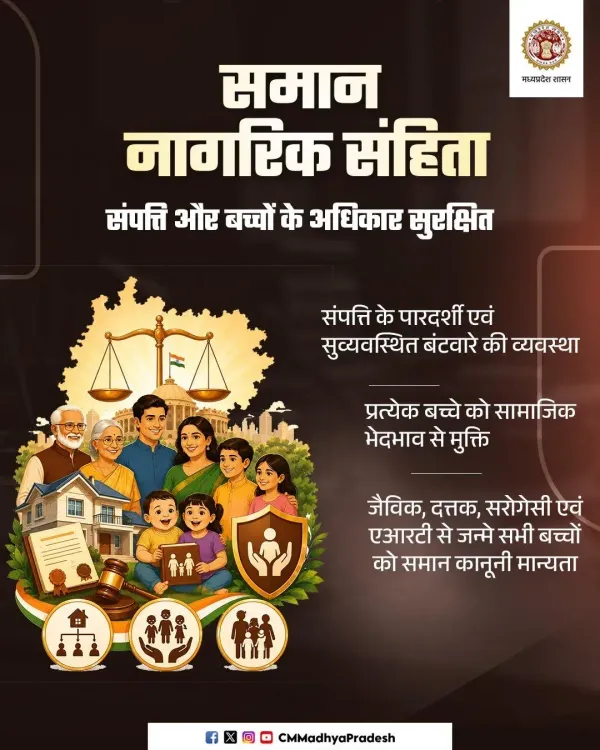
The Chief Minister's Office of Madhya Pradesh posted on X on 25 July 2026 reaffirming that every child's rights will be protected, echoing the state's long-standing child welfare commitments under schemes like Ladli Laxmi Yojana and national frameworks including POCSO and the Right to Education Act.
Key Takeaways
The Chief Minister's Office of Madhya Pradesh posted on 25 July 2026 pledging that every child's rights will be protected.
Madhya Pradesh launched the Ladli Laxmi Yojana in 2007 , one of India's earliest financial incentive schemes for the girl child.
The Right of Children to Free and Compulsory Education Act, 2009 guarantees free schooling for children aged 6 to 14 across India.
The Protection of Children from Sexual Offences Act, 2012 provides a dedicated legal framework against child sexual exploitation.
The National Commission for Protection of Child Rights , established in 2007 , monitors child rights implementation across all Indian states.
Follow-up policy announcements or budgetary moves may emerge during the Madhya Pradesh assembly's monsoon session.
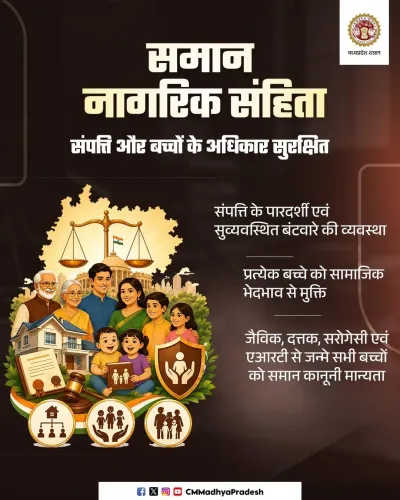
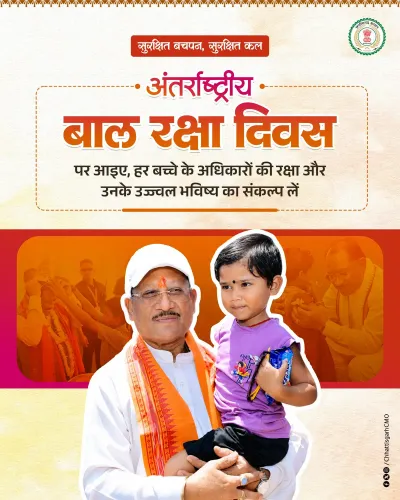
The Chief Minister's Office of Madhya Pradesh on Friday, 25 July 2026, reaffirmed the state government's commitment to safeguarding the rights of every child, posting on X with the message 'हर बच्चे के अधिकार होंगे सुरक्षित' ('Every child's rights will be protected').
Context
The post, brief but pointed, signals Madhya Pradesh's continued public positioning on child welfare — an area where the state has historically been both a pioneer and a subject of scrutiny. The Hindi phrase translates directly as a guarantee: every child's rights will be secured. While no specific scheme or event was named in the post, such declarations from the Chief Minister's Office typically accompany or precede policy-level activity around child protection and girl-child welfare.
Child rights in India are governed by a layered framework. The Right of Children to Free and Compulsory Education Act, 2009 guarantees schooling for children aged 6 to 14. The Protection of Children from Sexual Offences Act, 2012 (POCSO) provides a dedicated legal shield against sexual assault and exploitation. Madhya Pradesh is bound by both, alongside state-level welfare architecture.
Policy Backdrop
Madhya Pradesh launched the Ladli Laxmi Yojana in 2007 — one of India's earliest state-level financial incentive programmes targeting the girl child. The scheme links monetary support to educational milestones and delayed marriage, directly addressing two of the most persistent threats to girl children in central India. It has since been replicated or adapted by several other states.
At the national level, the Beti Bachao Beti Padhao programme has worked to address skewed child sex ratios and promote girls' education and empowerment across districts. The National Commission for Protection of Child Rights, a statutory body established in 2007, monitors implementation of child rights protections across all states, including Madhya Pradesh. Together, these frameworks form the scaffolding within which state-level commitments like Friday's post are made.
Through the 2010s, Madhya Pradesh expanded child protection services and ran awareness drives under its state child welfare programmes, aligning with central mandates while building local delivery capacity.
Stakeholders and Impact
The primary beneficiaries of any strengthened child rights framework in Madhya Pradesh are its school-going children, girl children in rural and semi-urban areas, and children from economically vulnerable households. Child welfare organisations operating in the state — both government-linked and civil society — are key implementation partners who translate such commitments into on-ground action.
For families, particularly in districts with historically poor indicators on child health, education enrolment, and sex ratio, reaffirmations of this kind matter as signals of administrative intent. They can precede budgetary allocations, revised guidelines, or intensified scheme outreach — all of which have direct bearing on children's access to entitlements.
What's Next
Observers of Madhya Pradesh governance will watch for follow-up action in the coming weeks, particularly during the state assembly's monsoon session. Any revised child protection guidelines, enhanced allocations under Ladli Laxmi Yojana, or new welfare announcements would give this commitment concrete form. The state's alignment with national child rights bodies and central schemes will also be a measure of how this reaffirmation translates into policy.
As Indian states compete on welfare delivery benchmarks, Madhya Pradesh's public positioning on child rights keeps it in a conversation that is increasingly tied to both electoral optics and measurable developmental outcomes.
Point of View
Particularly through Ladli Laxmi Yojana, as a flagship identity marker, and such posts often precede or accompany budgetary or legislative action. The timing around a monsoon assembly session adds weight to the possibility that this is not purely ceremonial. For a state that has oscillated between strong welfare delivery and persistent challenges on child health and sex-ratio indicators, the real test will be whether this reaffirmation is followed by measurable policy movement.
NationPress
22 Oct 2026
Frequently Asked Questions
What did the Madhya Pradesh Chief Minister's Office post about child rights?
The Chief Minister's Office of Madhya Pradesh posted on X on 25 July 2026 stating 'हर बच्चे के अधिकार होंगे सुरक्षित' — meaning every child's rights will be protected — reaffirming the state's commitment to child welfare.
What is the Ladli Laxmi Yojana in Madhya Pradesh?
Ladli Laxmi Yojana is a financial incentive scheme launched by Madhya Pradesh in 2007 to support girl children through monetary benefits linked to education milestones and delayed marriage, and it has since been adopted in adapted forms by other Indian states.
What laws protect child rights in India?
The Right of Children to Free and Compulsory Education Act, 2009 guarantees free schooling for children aged 6 to 14, while the Protection of Children from Sexual Offences Act, 2012 provides legal protection against sexual assault and exploitation of children.
What is the National Commission for Protection of Child Rights?
The National Commission for Protection of Child Rights is a statutory body established in 2007 that monitors and enforces child rights protections across all Indian states, including Madhya Pradesh.
What is Beti Bachao Beti Padhao?
Beti Bachao Beti Padhao is a national programme aimed at addressing the declining child sex ratio and promoting the education and empowerment of girl children across India, within which state-level schemes like Ladli Laxmi Yojana are aligned.