MP CM Office Vows Push on Institutional Births, Immunisation
Synopsis
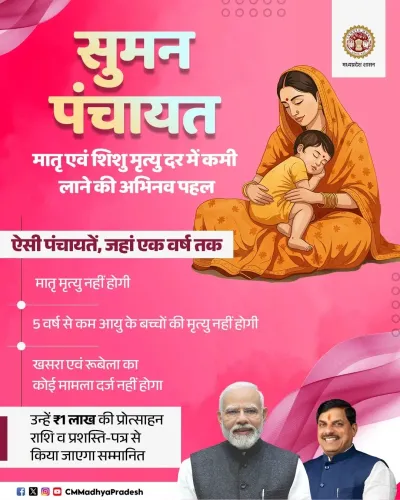
The Chief Minister's Office of Madhya Pradesh announced on 2 July 2026 a renewed push to promote institutional deliveries, timely immunisation, improved nutrition, and adequate antenatal care for pregnant women — reaffirming the state's commitment to reducing maternal and infant mortality.
Key Takeaways
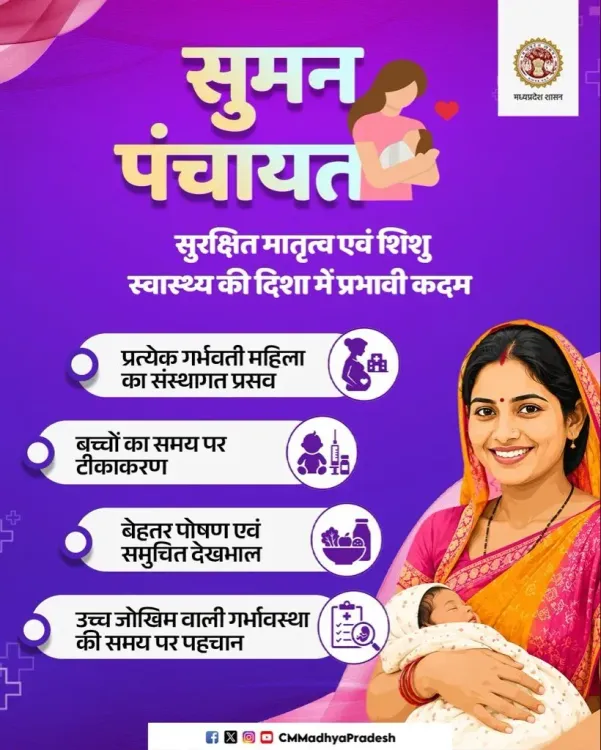
The Chief Minister's Office of Madhya Pradesh announced on 2 July 2026 a drive to promote institutional deliveries, timely immunisation, better nutrition, and adequate care for pregnant women.
Madhya Pradesh is classified as a high-focus state under the National Health Mission due to historically high maternal and infant mortality rates.
The announcement converges with central schemes including Janani Suraksha Yojana (2005) , Mission Indradhanush (2014) , PMMVY (2017) , and POSHAN Abhiyaan (2018) .
Nationally, institutional delivery rates crossed 80 per cent in NFHS-5 , with Madhya Pradesh among the key beneficiary states of targeted interventions.
ASHA workers are central to implementation, mobilising families for facility births and ensuring children complete immunisation schedules.
District-level HMIS data and future health surveys will be the primary measures of progress on these targets in the state.
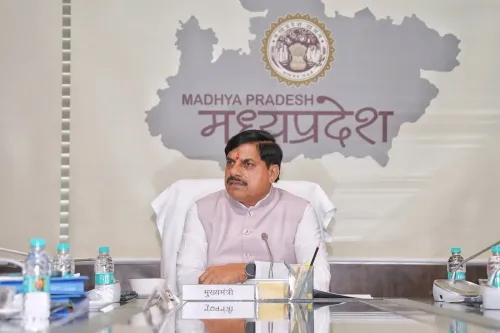
The Chief Minister's Office of Madhya Pradesh announced on Thursday, 2 July 2026 that the state government will intensify efforts to promote institutional deliveries, timely immunisation, better nutrition, and adequate care for pregnant women across the state.
The post stated — 'संस्थागत प्रसव, समय पर टीकाकरण, बेहतर पोषण और गर्भवती महिलाओं की समुचित देखभाल को मिलेगा बढ़ावा' — ('Institutional deliveries, timely immunisation, better nutrition and adequate care for pregnant women will be promoted.') — signalling a renewed state-level commitment to maternal and child health outcomes.
Context
Madhya Pradesh has long been classified as a high-focus state under the National Health Mission (NHM) owing to historically elevated maternal and infant mortality rates. The state's vast rural geography and large tribal population have made outreach for antenatal care and institutional births a persistent challenge for successive administrations.
Nationally, the National Family Health Survey-5 (NFHS-5) recorded institutional delivery rates crossing 80 per cent across India, a significant rise from earlier rounds — driven in large part by cash-incentive schemes and community health worker networks in states like Madhya Pradesh.
Policy Backdrop
The announcement aligns with a cluster of central schemes already operational in the state. The Janani Suraksha Yojana (JSY), launched in 2005, provides cash incentives to below-poverty-line pregnant women to deliver in government health facilities, directly targeting the institutional delivery gap that the CM Office's post addresses.
On the nutrition front, the POSHAN Abhiyaan — launched in 2018 as the National Nutrition Mission — set district-level targets for reducing anaemia among pregnant women and improving early childhood nutrition outcomes. The Pradhan Mantri Matru Vandana Yojana (PMMVY), launched in 2017, supplements this with conditional cash transfers for first live births to support antenatal care and dietary needs.
Immunisation coverage is anchored by Mission Indradhanush, originally launched in 2014 and subsequently intensified, which targets full vaccination for children and pregnant women in districts with historically low coverage — a category that includes several districts in Madhya Pradesh.
Stakeholders and Impact
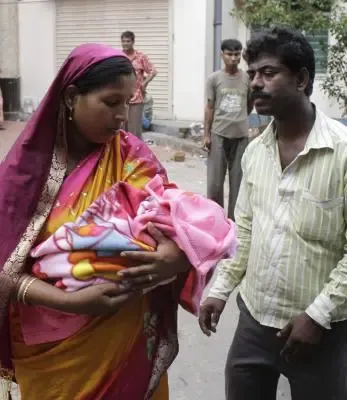
The primary beneficiaries of this stated push are pregnant women, newborns, and children under five across Madhya Pradesh — particularly those in rural and tribal belts where access to primary health centres remains uneven. ASHA (Accredited Social Health Activist) workers are the frontline link in this ecosystem, responsible for motivating families to opt for facility-based deliveries and ensuring children complete their immunisation schedules.
Improved institutional delivery rates directly reduce maternal mortality by ensuring skilled birth attendance, while timely immunisation prevents vaccine-preventable deaths among infants — two indicators on which Madhya Pradesh has historically lagged the national average.
What's Next
The concrete shape of this commitment — whether through fresh budgetary allocations, a new state scheme, or convergence with existing central programmes — is expected to become clearer through official government orders or legislative announcements in the coming weeks. District-level Health Management Information System (HMIS) data and the next round of state health surveys will serve as the primary yardstick for measuring progress on institutional delivery and full immunisation percentages across Madhya Pradesh's districts. Sustained follow-through on such commitments, backed by strengthened ASHA networks and functional primary health infrastructure, will determine whether this announcement translates into measurable gains in the state's maternal and child health indicators.
Point of View
A state that has historically anchored its development narrative around welfare delivery, such signals serve both a programmatic and an optics function ahead of data releases. The real test lies in district-level implementation: whether ASHA incentive structures are strengthened, health facility infrastructure is upgraded, and cold-chain logistics for immunisation are sustained in remote areas. Without granular operational follow-through, broad commitments on institutional delivery and nutrition risk remaining aspirational rather than transformative.
NationPress
2 Jul 2026
Frequently Asked Questions
What did the Madhya Pradesh CM Office announce on 2 July 2026?
The Chief Minister's Office of Madhya Pradesh announced a push to promote institutional deliveries, timely immunisation, better nutrition, and adequate care for pregnant women in the state.
What is Janani Suraksha Yojana and how does it relate to Madhya Pradesh?
Janani Suraksha Yojana is a central scheme launched in 2005 that provides cash incentives to below-poverty-line pregnant women to deliver in government health facilities. Madhya Pradesh, as a high-focus NHM state, is a key beneficiary of this scheme.
What is the current institutional delivery rate in India?
According to NFHS-5, institutional delivery rates in India have crossed 80 per cent nationally, a significant improvement driven by schemes like Janani Suraksha Yojana and community health worker outreach.
What is POSHAN Abhiyaan and what does it do for pregnant women?
POSHAN Abhiyaan, launched in 2018 as the National Nutrition Mission, sets district-level targets for reducing anaemia among pregnant women and improving nutrition for lactating mothers and children under five.
Who are ASHA workers and what role do they play in maternal health in Madhya Pradesh?
ASHA (Accredited Social Health Activist) workers are frontline community health volunteers who motivate families to opt for institutional deliveries and ensure children complete their immunisation schedules, forming the backbone of maternal and child health outreach in Madhya Pradesh.