MP CM Yadav Launches Modern Bus Services Including Electric Buses
Synopsis
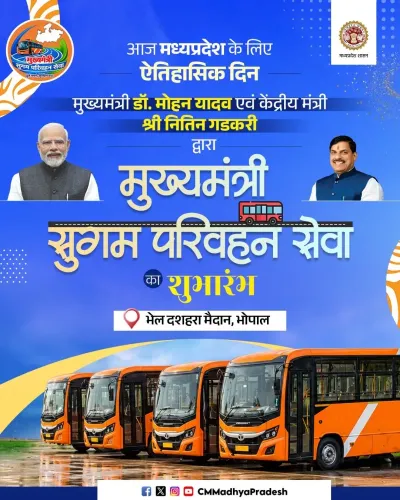
Madhya Pradesh launched its Mukhyamantri Sugam Parivahan Seva on September 25, 2026, introducing modern and electric bus services aimed at affordable commuting for low-income residents. Union Minister Nitin Gadkari hailed CM Dr. Mohan Yadav's initiative as a historic step for the state.
Key Takeaways
Mukhyamantri Sugam Parivahan Seva was launched on September 25, 2026 by the Madhya Pradesh government under Chief Minister Dr.
The fleet includes electric buses alongside modern conventional bus services.
Union Minister Nitin Gadkari publicly endorsed the scheme, calling it a 'historic step for Madhya Pradesh.' The scheme targets low-income commuters who cannot afford private taxis, offering safe, convenient, and affordable transport.
The launch aligns with India's national FAME India scheme (2015) encouraging states to electrify public transport fleets.
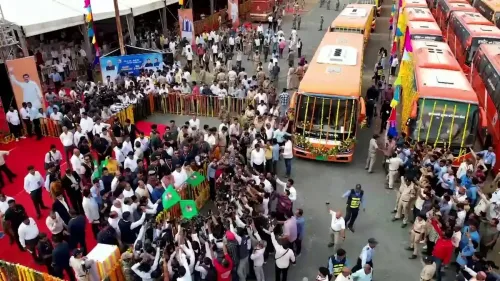
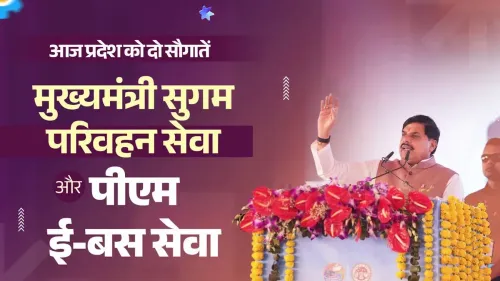
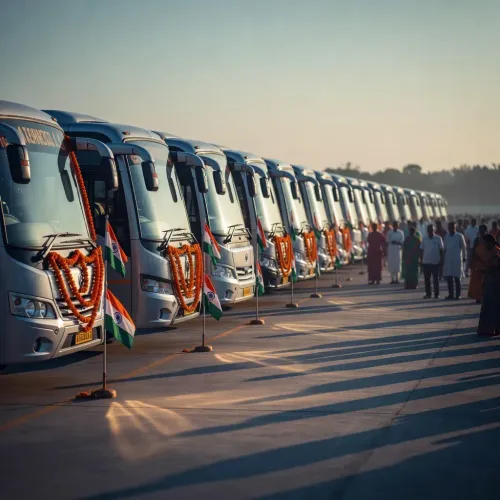
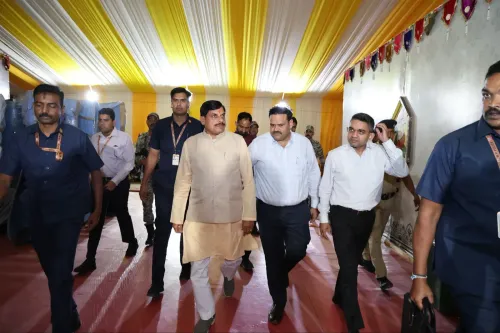
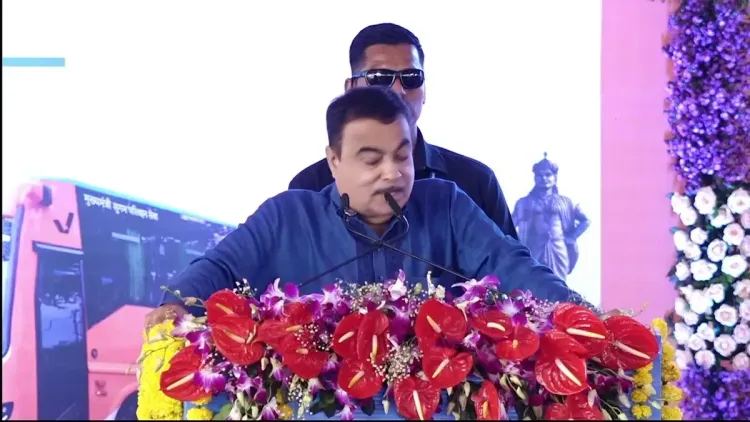
For the millions of daily commuters in Madhya Pradesh who cannot afford a private taxi, a concrete answer arrived on Friday, September 25, 2026 — a fleet of modern buses, including electric ones, rolled out under the state's Mukhyamantri Sugam Parivahan Seva scheme, backed by Chief Minister Dr. Mohan Yadav and welcomed by Union Minister Nitin Gadkari.
Gadkari's endorsement — and what it signals
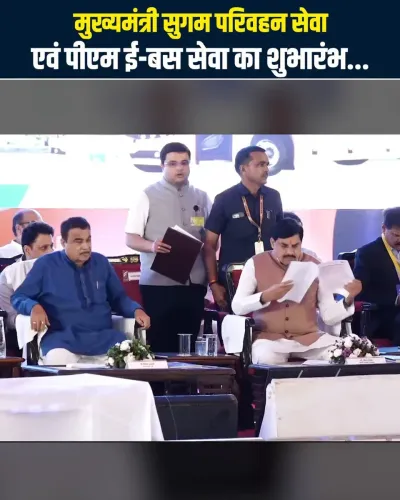
In a statement quoted by the Chief Minister's Office of Madhya Pradesh, Union Minister for Road Transport and Highways Nitin Gadkari offered a heartfelt note of appreciation: 'हृदय से धन्यवाद' ('heartfelt gratitude') to Chief Minister Dr. Mohan Yadav and the state government for the launch. His words were pointed — these buses, he said, will make life simpler for the 'common poor public' and resolve their daily commuting struggles. When the central minister in charge of the country's road transport portfolio personally endorses a state scheme, it carries weight well beyond a courtesy message.
Who the Sugam Parivahan Seva is actually for
The scheme's intent is sharply targeted. Gadkari named the beneficiary plainly: those who simply cannot bear the cost of private taxis. For them, he said, these buses will become a 'safe, convenient, and affordable' mode of travel. The inclusion of electric buses is not incidental — it lowers per-kilometre operating costs over time, which can translate into sustainably cheaper fares for riders. Low-income urban and semi-urban commuters stand to gain most directly.
Electric buses and India's broader push to clean up public fleets
The launch fits a clear national pattern. Indian states have progressively electrified public bus fleets over the past decade, accelerated in part by the central government's FAME India scheme, launched in 2015 to promote electric vehicle adoption including buses. Madhya Pradesh joining that wave with a state-branded scheme — Mukhyamantri Sugam Parivahan Seva — anchors the initiative in local political accountability while drawing on the architecture of central support. Gadkari called the launch 'a historic step for Madhya Pradesh,' framing it as more than an operational upgrade: a statement about where the state is headed.
The next test is execution — how many routes, how many districts, and how quickly the full fleet reaches the communities that need it most.
Point of View
The real measure will be whether the electric buses reach smaller towns and rural feeders, or remain concentrated in urban corridors where they are easier to operate but less transformative.
NationPress
25 Sept 2026
Frequently Asked Questions
What is Mukhyamantri Sugam Parivahan Seva in Madhya Pradesh?
Mukhyamantri Sugam Parivahan Seva is a Madhya Pradesh state scheme launched on September 25, 2026 to provide smooth, affordable, and modern public bus transport — including electric buses — primarily for low-income commuters who cannot afford private taxis.
Who launched the new bus service in Madhya Pradesh?
The bus service was launched by the Madhya Pradesh government under Chief Minister Dr. Mohan Yadav, and was publicly praised by Union Minister of Road Transport Nitin Gadkari.
Why is Nitin Gadkari praising Madhya Pradesh's bus launch?
Nitin Gadkari, as Union Minister for Road Transport and Highways, endorsed the scheme because it advances affordable and modern public mobility, aligns with the national push to electrify state transport fleets, and benefits poor commuters who cannot afford private transport.
Does the new MP bus service include electric buses?
Yes, the Mukhyamantri Sugam Parivahan Seva fleet explicitly includes electric buses, making it part of India's broader drive to add low-emission vehicles to state public transport networks.
How does the MP bus scheme connect to the FAME India scheme?
India's FAME scheme, launched in 2015, provides central support for electric vehicle adoption including buses. Madhya Pradesh's inclusion of electric buses in its Sugam Parivahan Seva fits within the policy architecture FAME created to encourage state-level fleet electrification.