MP CMO eyes telecom manufacturing self-reliance
Synopsis
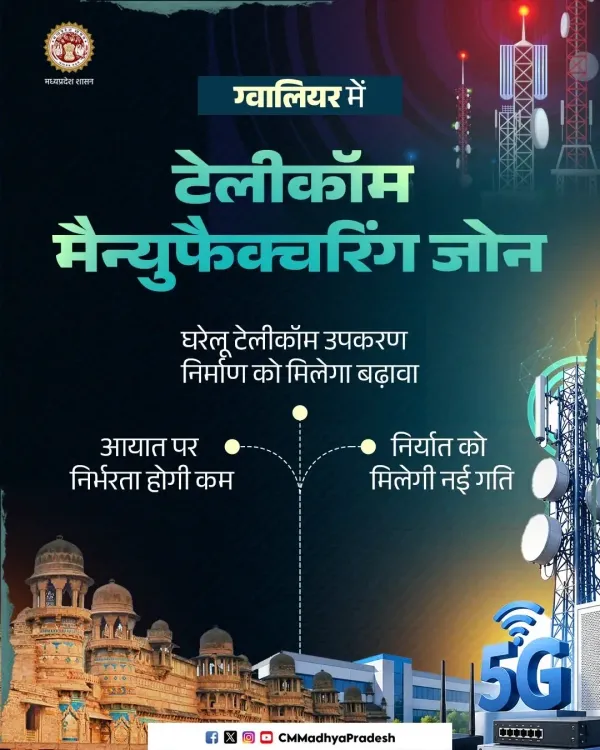
The Chief Minister's Office of Madhya Pradesh announced on 31 July 2026 that the state will become self-reliant in telecom manufacturing, signalling alignment with India's PLI scheme and the broader Atmanirbhar Bharat push to build domestic supply chains.
Key Takeaways
The Chief Minister's Office of Madhya Pradesh declared on 31 July 2026 that the state will become self-reliant in telecom manufacturing.
The announcement invokes the Atmanirbhar Bharat framework, the Government of India's national self-reliance initiative launched in 2020 .
India's Production Linked Incentive (PLI) Scheme for Telecom , introduced in 2021 , provides financial incentives for domestic production of telecom and networking equipment.
Indian states are increasingly competing to attract electronics and telecom investment by combining state-level incentives with central PLI benefits.
Concrete follow-through — MoUs, budget allocations, and electronics manufacturing clusters — will determine whether the declaration translates into investment on the ground.
Madhya Pradesh has set its sights on becoming a self-reliant hub for telecom manufacturing — a declaration that places the state squarely at the centre of India's most ambitious industrial pivot in decades. The Chief Minister's Office of Madhya Pradesh signalled this ambition on Friday, 31 July 2026, with a post that carries both economic weight and political intent.
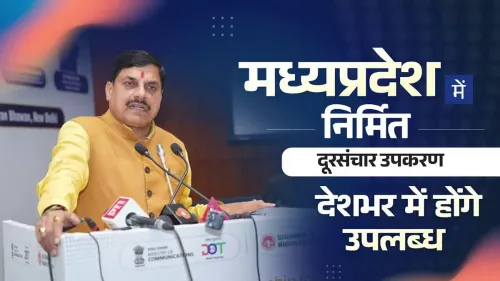
The post — 'टेलीकॉम मैन्युफैक्चरिंग के क्षेत्र में आत्मनिर्भर बनेगा मध्यप्रदेश' ('Madhya Pradesh will become self-reliant in the field of telecom manufacturing') — is a short sentence with long implications.
What 'Atmanirbhar' means for telecom in MP
The phrase 'Atmanirbhar' — self-reliant — is not casual political vocabulary. It is the load-bearing word of a national programme launched by the Government of India in 2020, designed to reduce the country's dependence on imported components across strategic sectors. Telecom was identified early as a priority, and in 2021, the Centre rolled out the Production Linked Incentive (PLI) Scheme for Telecom and Networking Products, offering direct financial incentives to manufacturers who build and sell domestically.
Madhya Pradesh's alignment with this framework is deliberate. Indian states have increasingly competed to attract electronics and telecom investment by packaging state-level industrial incentives on top of central PLI benefits — making the combined offer difficult for manufacturers to ignore.
MP's play in a crowded manufacturing race
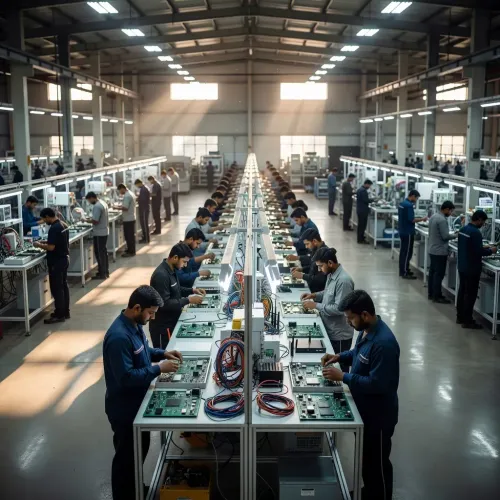
The telecom manufacturing race in India is real and intensifying. From networking equipment to base-station components, the domestic supply chain remains heavily import-dependent — a vulnerability that became impossible to ignore through global supply-chain disruptions in recent years. States that move fast on land, power, and skilled-labour policy stand to capture a disproportionate share of the units that manufacturers plan to set up under PLI incentives.
For Madhya Pradesh, a landlocked state that has historically lagged coastal peers in electronics investment, a credible telecom manufacturing push would mark a structural shift. The sectors that follow — component suppliers, logistics, technical education — tend to cluster around anchor investments.
Watch for concrete follow-through: state budget allocations, MoUs with telecom equipment makers, and the development of dedicated electronics manufacturing clusters will be the real test of whether this declaration translates into factory floors.
Point of View
The stakes are high — early movers in PLI-linked sectors tend to lock in supply-chain advantages that compound over years. The real signal to watch is not the announcement but the budget line that follows it.
NationPress
31 Jul 2026
Frequently Asked Questions
What did the Madhya Pradesh CMO announce about telecom manufacturing?
The Chief Minister's Office of Madhya Pradesh announced on 31 July 2026 that the state aims to become self-reliant in telecom manufacturing, aligning with the national Atmanirbhar Bharat initiative.
What is the PLI scheme for telecom in India?
The Production Linked Incentive (PLI) Scheme for Telecom and Networking Products, launched by the Government of India in 2021, offers financial incentives to manufacturers who produce telecom equipment domestically, reducing import dependence.
What is Atmanirbhar Bharat?
Atmanirbhar Bharat is a national self-reliance initiative launched by the Government of India in 2020 to reduce dependence on imported goods and build resilient domestic supply chains across strategic sectors including electronics and telecom.
Why is Madhya Pradesh focusing on telecom manufacturing?
Indian states are competing to attract high-value electronics and telecom investments by combining state-level industrial incentives with central PLI benefits. For Madhya Pradesh, a credible telecom push would mark a structural shift in its industrial base.
What should we watch for after this Madhya Pradesh telecom announcement?
Key indicators of follow-through include state budget allocations for electronics infrastructure, MoUs with telecom equipment manufacturers, and the development of dedicated electronics manufacturing clusters in Madhya Pradesh.