CM Mohan Yadav: MP Cottage Industries Drive Self-Reliance

Synopsis
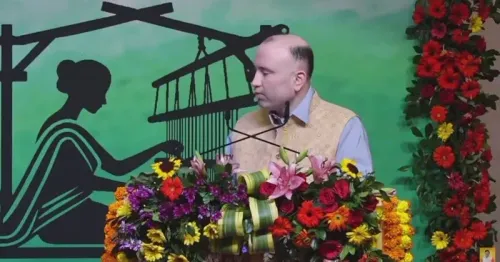
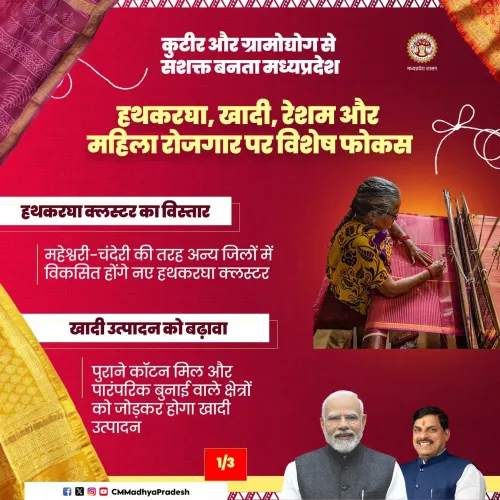
The Chief Minister's Office of Madhya Pradesh on 31 May 2026 declared cottage and village industries the foundation of self-reliance in the state, with CM Dr. Mohan Yadav emphasising that rural arts are gaining fresh recognition — aligning state policy with the national Atmanirbhar Bharat vision.
Key Takeaways
The Chief Minister's Office of Madhya Pradesh on 31 May 2026 announced that cottage and village industries are becoming the foundation of self-reliance in the state.
Mohan Yadav highlighted that village arts are receiving a 'new identity' under the state's current policy direction.
The initiative aligns with the national Atmanirbhar Bharat Abhiyan launched in May 2020 to strengthen local and rural economies.
The Khadi and Village Industries Commission (KVIC) and the Prime Minister's Employment Generation Programme (PMEGP) provide the institutional and financial framework supporting such rural industry drives.
Key beneficiaries include rural artisans, village entrepreneurs, and MSME units across Madhya Pradesh's districts.
Next fiscal allocations and new skill or marketing programmes from the state's Rural Development and MSME departments will be closely watched.
The Chief Minister's Office of Madhya Pradesh, on behalf of Chief Minister Dr. Mohan Yadav, on 31 May 2026 highlighted the state government's push to make cottage and village industries the foundation of self-reliance in Madhya Pradesh, while underscoring that rural arts are gaining fresh recognition under the initiative.
Context
The post, shared from the official Chief Minister's Office handle, states in Hindi: 'Madhya Pradesh mein kutir evam gram udyog ban rahe atmanirbharta ka aadhar' — meaning 'Cottage and village industries are becoming the foundation of self-reliance in Madhya Pradesh.' It further notes that 'gaon ki kala ko mil rahi nayi pehchaan' — 'village arts are receiving a new identity.' The messaging directly links traditional rural craftsmanship with the broader economic goal of reducing dependence on urban centres.Policy Backdrop
Madhya Pradesh has a deep-rooted tradition of handloom, handicraft, and cottage production spread across its large rural hinterland. These industries sit at the intersection of cultural heritage and livelihood generation for millions of artisans. At the national level, the Atmanirbhar Bharat Abhiyan, announced in May 2020, set the policy direction for strengthening local economies through micro, small, and medium enterprises and village-level production units. The Khadi and Village Industries Commission (KVIC), a statutory body under the Union Ministry of MSME, has long supported such industries across states, including Madhya Pradesh. The Prime Minister's Employment Generation Programme (PMEGP), operational since 2008, continues to fund micro-enterprise creation in rural belts, providing a financial scaffolding for the kind of grassroots industrialisation the state government is now amplifying.Stakeholders and Impact
The primary beneficiaries of this push are rural artisans, village entrepreneurs, and MSME units operating in Madhya Pradesh's districts. By positioning cottage industries as an 'aadhar' — a foundation — of self-reliance, the state signals an intent to move beyond symbolic recognition toward structural economic integration of village-level production. Reduced rural-to-urban migration is a key downstream benefit that policymakers associate with a thriving rural industry ecosystem. When local crafts gain market access and institutional support, artisan households are better positioned to sustain livelihoods without relocating to larger cities. The framing of 'nayi pehchaan' — new identity — for village arts also suggests an effort to link cultural products with contemporary branding and market channels.What's Next
Attention will now turn to whether the state government follows this messaging with concrete budgetary allocations for rural industries in upcoming fiscal planning, and whether new skill-development or marketing programmes are announced through the Department of Rural Development or the state's MSME machinery. The alignment of state-level communication with national self-reliance themes also points to potential convergence with centrally sponsored schemes that could channel additional resources to Madhya Pradesh's cottage sector. Observers will watch for specific scheme launches, production targets, or export-linkage announcements that give operational shape to the vision articulated in this post.Point of View
Reinforcing ideological continuity between Bhopal and New Delhi. For CM Dr. Mohan Yadav, championing rural artisans serves a dual purpose: it addresses genuine livelihood concerns in a predominantly agrarian state while building a distinct governance identity less than three years into his tenure. The emphasis on 'new identity' for village arts hints at an ambition to integrate traditional crafts into modern market and branding ecosystems — a transition that will require sustained institutional follow-through beyond social-media communication.
NationPress
14 Oct 2026
Frequently Asked Questions
What is Madhya Pradesh's cottage industry self-reliance initiative?
The Madhya Pradesh government, under CM Dr. Mohan Yadav, is promoting cottage and village industries as the foundation of economic self-reliance in the state, aiming to provide rural artisans and entrepreneurs with better recognition, market access, and institutional support.
How does this relate to Atmanirbhar Bharat?
The state's push for cottage and village industries directly aligns with the national Atmanirbhar Bharat Abhiyan launched in May 2020, which seeks to strengthen local manufacturing and village-level enterprises as engines of employment and economic decentralisation.
What is the role of KVIC in Madhya Pradesh's rural industries?
The Khadi and Village Industries Commission (KVIC), a statutory body under the Union Ministry of MSME, supports cottage and rural industries across India including Madhya Pradesh by providing financial assistance, training, and market linkages to village-level producers.
Who are the main beneficiaries of MP's village industry drive?
The primary beneficiaries are rural artisans, village entrepreneurs, and MSME units operating in Madhya Pradesh's districts, with the initiative aimed at sustaining local livelihoods and reducing rural-to-urban migration.
What should we watch for next on Madhya Pradesh rural industry policy?
Key developments to watch include the state's next budget allocations for rural industries and any new skill-development or marketing programmes announced by the Madhya Pradesh Department of Rural Development or the state's MSME machinery.