Has Rs 3,000 crores been spent on compensating for damaged crops in the last two years?
Synopsis
In a significant move for agricultural welfare, CM Mohan Yadav announced a staggering Rs 3,000 crore spent on crop damage compensation in Madhya Pradesh. This initiative aims to support farmers and enhance irrigation facilities in the Malwa region, showcasing the government’s commitment to agricultural development.
Key Takeaways
Rs 3,000 crore allocated for crop damage compensation.
6.5 lakh farmers benefited under the 'Bhavantar' scheme.
Focus on agricultural growth and farmer welfare.
Parvati–Kalisindh–Chambal project to enhance irrigation capacity.
39 development projects inaugurated, including a food processing park.
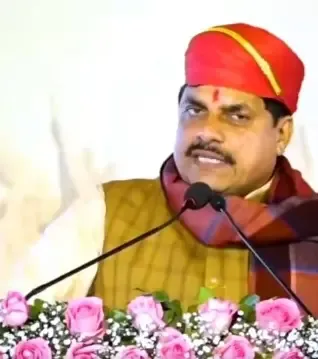
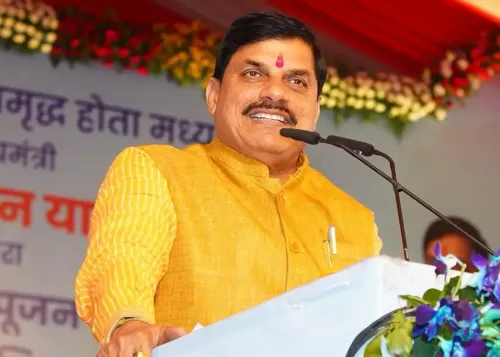
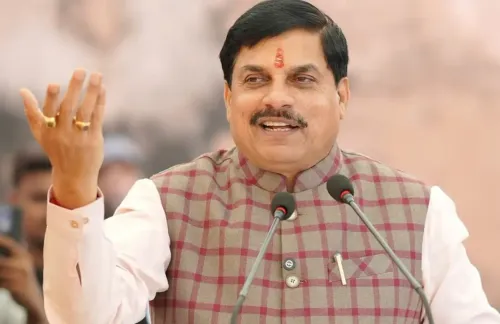
Ujjain, Jan 2 (NationPress) Referring to Malwa as the state’s granary, Chief Minister Mohan Yadav revealed on Friday that the Madhya Pradesh government has allocated Rs 3,000 crore as compensation for crops affected by rainfall over the past two years.
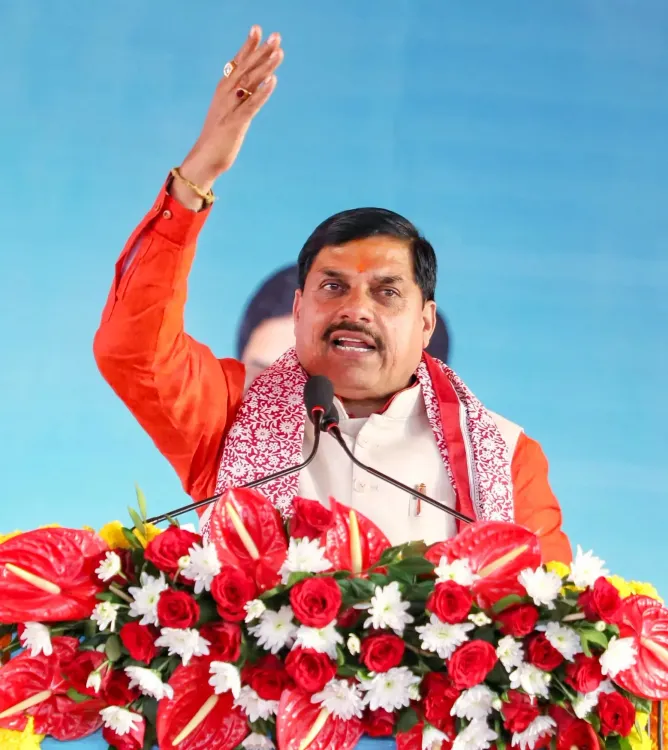
While speaking at a ceremonial gathering in Khachrod, located in Ujjain district, CM Yadav also disclosed that the government has provided Rs 1,300 crore to 6.5 lakh farmers as part of the compensation under the 'Bhavantar' initiative.
CM Yadav emphasized that the government’s vision for 2026 includes enhancing agricultural growth and the welfare of farmers through various innovative schemes that are set to be launched shortly.
He asserted, "The government’s primary focus this year will revolve around farmers, particularly in agro-based industries, to offer new directions and opportunities to both farmers and agri-entrepreneurs."
He reiterated that the 'Parvati–Kalisindh–Chambal' national river-linking project is designed to provide permanent irrigation to the entire Malwa–Nimar and Chambal regions, with an aim to elevate the state's irrigation capacity to 10 million hectares within the next five years.
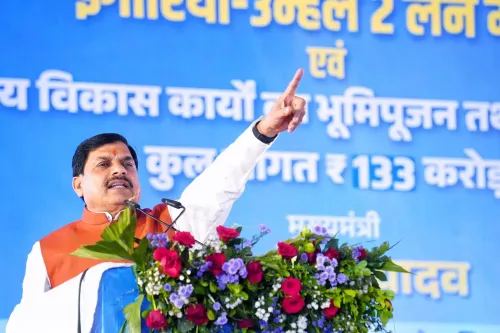
During this event, CM Yadav laid the groundwork and inaugurated 39 development projects worth Rs 78.61 crore, announcing plans to establish a food processing park in Khachrod, which will aid farmers in processing the region’s abundant green peas.
Additionally, he inaugurated the newly constructed Sandipani School building, completed at a cost of Rs 35.40 crore, and a new agricultural produce market yard complex valued at Rs 11.30 crore, along with several other development initiatives.
"The Sandipani school in Khachrod is set to become a beacon of modern educational infrastructure, offering world-class education. It is being developed as a sacred temple of learning, which will contribute to shaping a bright future for children," Yadav stated.
He emphasized ongoing efforts to ensure that the benefits of development reach the most marginalized individuals in society, ensuring no one is left behind.
Point of View
The announcement by CM Mohan Yadav on the substantial compensation for farmers in Madhya Pradesh reflects a focused approach towards agricultural resilience. It highlights the government's dedication to ensuring that farmers receive the necessary support, particularly in times of adversity. This initiative not only aids in immediate recovery but also sets a precedent for future agricultural policies.
NationPress
7 Oct 2026
Frequently Asked Questions
What is the total compensation amount spent by the MP government on damaged crops?
The Madhya Pradesh government has spent a total of Rs 3,000 crore in compensation for crops that were damaged due to rain.
How many farmers have benefited from the Bhavantar scheme?
Approximately 6.5 lakh farmers have received Rs 1,300 crore as compensation under the Bhavantar scheme.
What is the goal of the Parvati–Kalisindh–Chambal project?
The Parvati–Kalisindh–Chambal project aims to provide permanent irrigation facilities in the Malwa–Nimar and Chambal regions.
What new projects were inaugurated by CM Yadav?
CM Yadav inaugurated 39 development projects valued at Rs 78.61 crore, including a food processing park in Khachrod.
What is the significance of the Sandipani School?
The Sandipani School is positioned to become a modern educational institution, offering world-class education and contributing to the future of children in Khachrod.