CM Mohan Yadav Launches 'Mukhyamantri Sugam Parivahan Sewa' in MP
Synopsis
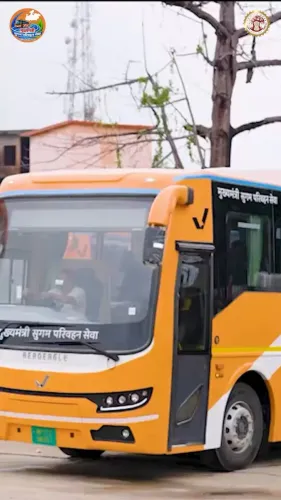
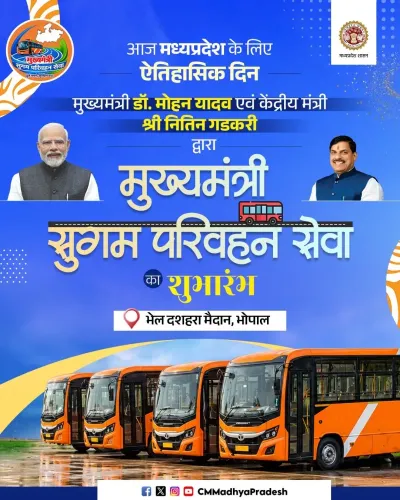
Madhya Pradesh CM Dr. Mohan Yadav launched the 'Mukhyamantri Sugam Parivahan Sewa' on September 25, 2026, a technology-driven public transport initiative targeting rural commuters, daily wage workers, and farmers — drawing an endorsement from Union Minister Nitin Gadkari.
Key Takeaways
Madhya Pradesh CM Dr.
Mohan Yadav launched the 'Mukhyamantri Sugam Parivahan Sewa' on September 25, 2026 .
Union Minister Nitin Gadkari publicly thanked the MP government, calling it an 'innovative model' for safe, affordable, and accountable public transport.
The scheme is explicitly targeted at villages, the poor, daily wage workers, and farmers across Madhya Pradesh.
Technology integration is central to the service's promise of safety and accountability — a step beyond traditional subsidy-only transport welfare models.
The launch fits a broader pattern of BJP-led central-state transport partnerships aimed at rural connectivity and last-mile mobility.
Gadkari's endorsement raises the possibility of the model being replicated in other states .
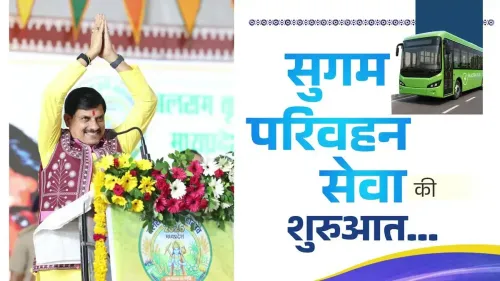
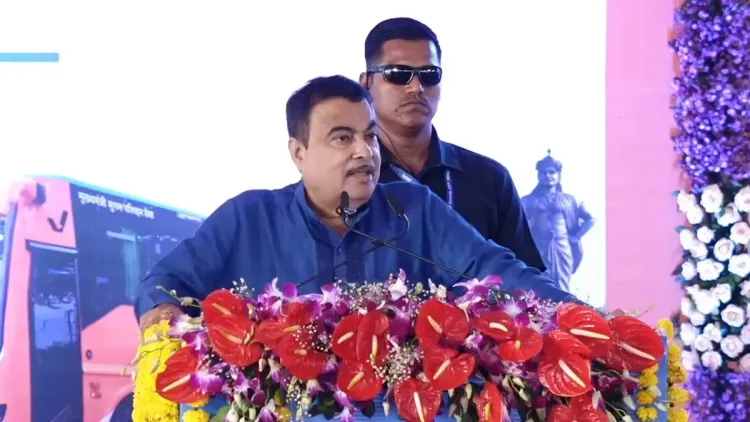
A new public transport scheme promising safer, cheaper, and more accountable mobility for rural Madhya Pradesh went live on Friday, September 25, 2026 — and it earned an immediate endorsement from the top of India's transport ministry. Madhya Pradesh Chief Minister Dr. Mohan Yadav announced the launch of the 'Mukhyamantri Sugam Parivahan Sewa', sharing praise from Union Minister for Road Transport and Highways Nitin Gadkari who called the initiative a model worth celebrating.
What Gadkari Said — and Why It Matters
The post carries a direct quote from Union Minister Nitin Gadkari: 'मध्यप्रदेश सरकार को इस इनोवेटिव मॉडल में मुख्यमंत्री सुगम परिवहन सेवा के शुभारंभ के लिए धन्यवाद देता हूं' — 'I thank the Madhya Pradesh government for launching the Mukhyamantri Sugam Parivahan Sewa under this innovative model.' Gadkari, whose ministry anchors national infrastructure and transport modernisation, described the scheme as using technology to build a public transport system that is safe, affordable, and accountable. An endorsement from the Union minister who controls highway and transport policy is not routine — it signals that Madhya Pradesh's rollout aligns with the Centre's broader push to digitise and formalise state-level mobility networks.
Villages, Workers, Farmers: Who the Scheme Targets
The stated beneficiary list in Gadkari's message is deliberately wide: villages, the poor, daily wage workers, and farmers. That framing matters. Rural commuters in Madhya Pradesh — one of India's larger states by area — have historically relied on informal, often unsafe transport options to reach markets, health centres, and workplaces. A tech-enabled, accountable network directly addresses the last-mile connectivity gap that limits economic participation for lower-income households. The emphasis on 'accountability' — tracking, grievance redress, or route reliability, depending on the model's specifics — marks a step beyond older subsidy-only approaches to public transport welfare.
Central-State Transport Partnerships: A Growing Pattern
The Mukhyamantri Sugam Parivahan Sewa fits a visible pattern across BJP-governed states: deploying central-state co-operation frameworks to upgrade mobility infrastructure with a welfare framing. The Ministry of Road Transport and Highways has progressively supported state transport corporations and urban mobility projects through technology mandates and financing windows. Madhya Pradesh, which has consistently positioned itself as a testing ground for welfare-oriented schemes, now adds a named transport service to that portfolio. Whether the model gets replicated in other states will be a key signal of how seriously the Centre treats it as a template — and Gadkari's public gratitude suggests the appetite is there.
For millions of rural commuters who have long navigated unreliable, expensive, or dangerous informal transport, a government-backed, technology-monitored service is not just a policy announcement. It is, if implemented well, a daily life upgrade. The road ahead starts here.
Point of View
Securing public praise from a senior Union minister reinforces his administration's positioning as a delivery-focused governance model ahead of any electoral cycle. The rural-welfare framing — explicitly naming villages, labourers, and farmers — also mirrors the BJP's broader outreach vocabulary, making this simultaneously a governance and political communication move. How quickly the scheme reaches operational scale across MP's districts will determine whether it becomes a genuine flagship or remains a well-branded announcement.
NationPress
25 Sept 2026
Frequently Asked Questions
What is Mukhyamantri Sugam Parivahan Sewa in Madhya Pradesh?
Mukhyamantri Sugam Parivahan Sewa is a technology-enabled public transport scheme launched by the Madhya Pradesh government on September 25, 2026, aimed at providing safe, affordable, and accountable mobility to rural commuters, daily wage workers, and farmers.
Who launched Mukhyamantri Sugam Parivahan Sewa?
The scheme was launched by the Madhya Pradesh government under Chief Minister Dr. Mohan Yadav. Union Minister Nitin Gadkari publicly endorsed the initiative, calling it an innovative model.
What did Nitin Gadkari say about MP's new transport scheme?
Nitin Gadkari, Union Minister for Road Transport and Highways, thanked the Madhya Pradesh government for the launch, stating that the technology-driven initiative would make transport safe, affordable, and accountable for all sections of society including the rural poor and farmers.
Who will benefit from Mukhyamantri Sugam Parivahan Sewa?
The scheme is designed to benefit a wide range of people including village residents, the economically weaker sections, daily wage workers, and farmers across Madhya Pradesh.
Will Mukhyamantri Sugam Parivahan Sewa be replicated in other states?
No official announcement has been made about replication, but Union Minister Nitin Gadkari's public endorsement of the 'innovative model' suggests federal interest in the approach, and rollout across Madhya Pradesh districts will be watched closely.