MP relaunches public bus service after 21 years on Deendayal Upadhyaya's birth anniversary
Synopsis
After 21 years without a state-run bus network, Madhya Pradesh is back in the public transport business. The Mukhyamantri Sugam Parivahan Seva launches Friday with 351 GPS-equipped, CCTV-fitted buses across seven cities — and an ambition to scale to 15,000 buses by 2031 on a PPP model that could redefine last-mile connectivity for millions.
Key Takeaways
Madhya Pradesh relaunches its state public bus service on 26 September 2025 after a 21-year gap.
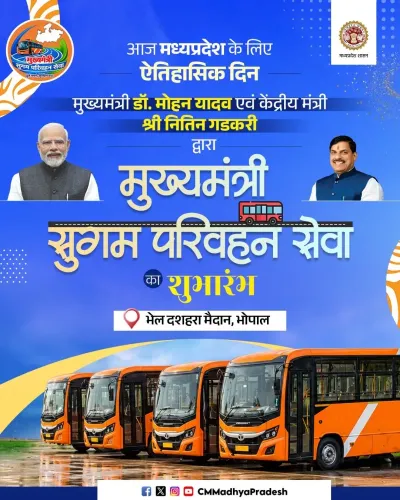
Chief Minister Mohan Yadav and Union Minister Nitin Gadkari will flag off the service at 12:30 pm from Dussehra Maidan, Bhopal .
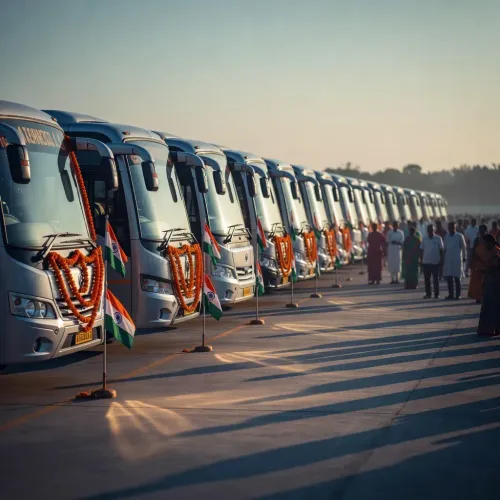
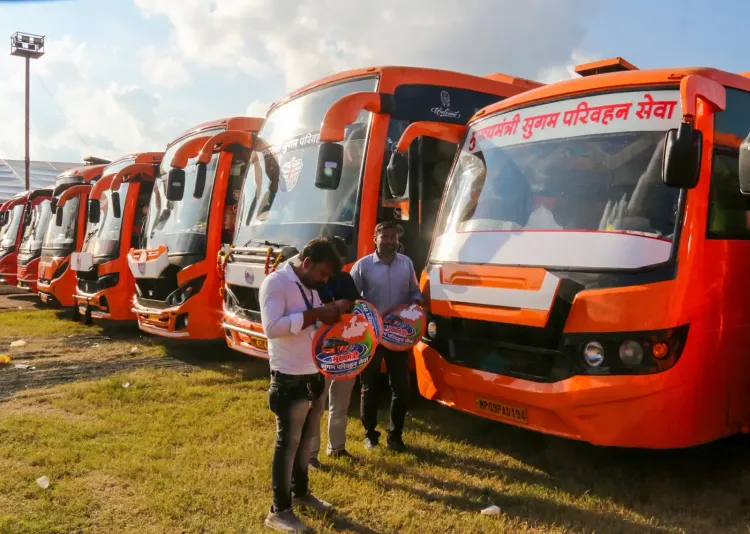
351 buses — intercity and intracity — will be launched simultaneously across seven cities , with Indore receiving the largest share of 145 buses .
Buses will feature GPS , CCTV , panic buttons , and digital ticketing ; service will run on a PPP model .
The government targets 15,000 buses by 2031 , starting with 1,500 in the first year .
The relaunch is framed around Pandit Deendayal Upadhyaya's Antyodaya philosophy, targeting last-mile connectivity for rural and urban populations.
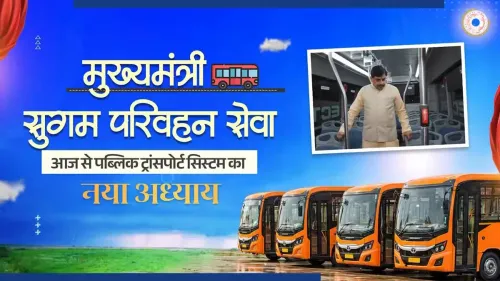
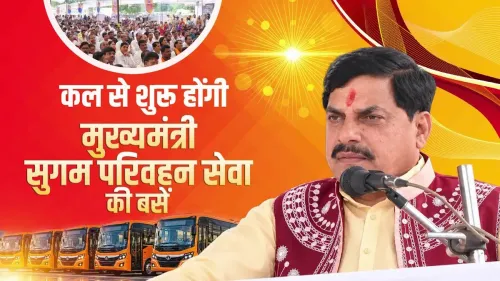
Madhya Pradesh is set to relaunch its state-run public transport bus service on Friday, 26 September 2025, after a gap of 21 years, with Chief Minister Mohan Yadav and Union Minister for Road Transport and Highways Nitin Gadkari scheduled to flag off the 'Mukhyamantri Sugam Parivahan Seva' at 12:30 pm from Dussehra Maidan in the Govindpura (BHEL) area of Bhopal. The relaunch coincides with the birth anniversary of Pandit Deendayal Upadhyaya and marks the resumption of direct bus connectivity between cities and villages across the state.
Background: Two Decades Without a State Bus Service
The Madhya Pradesh State Road Transport Corporation was shuttered in the early 2000s, leaving millions of residents — particularly in rural areas — reliant on unregulated private operators. The absence of a structured public transport network has long been cited by urban planners as a barrier to equitable mobility and last-mile connectivity in one of India's largest states by area.
The new initiative is framed by the state government as rooted in Upadhyaya's philosophy of Antyodaya — the upliftment of the last person in the queue — with an explicit focus on affordable, safe, and accessible transport for both rural and urban populations.
Scale of the Launch: 351 Buses Across Seven Cities
At Friday's launch, 351 intercity and intracity buses will be flagged off simultaneously from seven cities. The breakdown is as follows:
Indore will receive the largest fleet with 145 buses (50 intercity and 95 intracity), followed by Bhopal with 106 buses (23 intercity and 83 intracity), and Jabalpur with 67 buses (14 intercity and 53 intracity). Additionally, Rewa will get 18 intercity buses, Dewas will receive 10, Katni will get three, and Bhind will receive two intercity buses.
Technology, Safety, and the PPP Model
The service will operate on a public private partnership (PPP) model, with transparent contracting systems and incentive schemes designed to attract and retain private operators. Each bus will be equipped with GPS tracking, a panic button, CCTV cameras, and digital ticketing — a significant upgrade from the pre-2000s fleet.
Private operators will be permitted to supplement revenue through non-fare sources such as advertising and cargo services, and will have access to modern depot and terminal facilities along with full administrative support. This dual revenue model is intended to make the service financially viable over the long term.
Target: 15,000 Buses by 2031
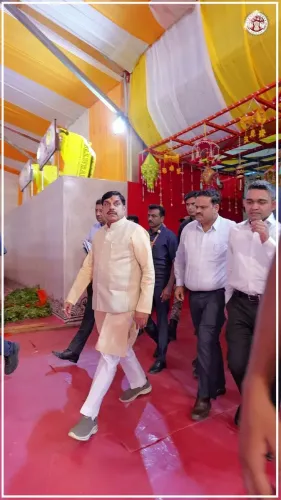
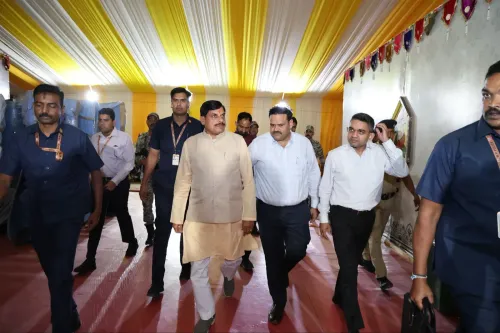
The state government has set an ambitious target of operating 15,000 buses by 2031. The rollout is structured in phases: 1,500 buses in the first year, followed by an addition of 2,500 to 3,000 buses annually thereafter. Chief Minister Yadav visited the launch venue on Thursday evening to review preparations, inspecting the stage, new buses, and passenger amenities, and was briefed by Transport Secretary Manish Singh. Bhopal Municipal Commissioner Sanskriti Jain and officials from relevant departments were also present.
If sustained, the expansion would place Madhya Pradesh among the larger state-run bus networks in India, potentially transforming mobility patterns for tens of millions of residents across a state where public transport has been largely absent for over two decades.
Point of View
But 15,000 buses by 2031 is a large number for a network starting at 351. The execution architecture — how contracts are enforced, how losses are shared, how rural routes that private operators have no incentive to serve get covered — will determine whether this is a genuine transport transformation or a well-photographed flag-off.
NationPress
25 Sept 2026
Frequently Asked Questions
What is the Mukhyamantri Sugam Parivahan Seva?
The Mukhyamantri Sugam Parivahan Seva is Madhya Pradesh's relaunched state public bus service, flagged off on 26 September 2025 after the closure of the MP State Road Transport Corporation in the early 2000s. It operates on a public private partnership model, initially deploying 351 buses across seven cities.
Why was the Madhya Pradesh public bus service shut down for 21 years?
The Madhya Pradesh State Road Transport Corporation was closed in the early 2000s, with financial unviability the primary reason. For over two decades, public transport in the state was largely left to unregulated private operators, particularly affecting rural and semi-urban residents.
Which cities will receive buses at the launch, and how many?
Seven cities will receive buses at the 26 September launch: Indore (145 buses), Bhopal (106), Jabalpur (67), Rewa (18), Dewas (10), Katni (3), and Bhind (2), totalling 351 intercity and intracity buses flagged off simultaneously.
What safety and technology features will the new buses have?
Each bus under the Mukhyamantri Sugam Parivahan Seva will be equipped with GPS tracking, CCTV cameras, a panic button, and digital ticketing. Private operators will also have access to modern depot and terminal facilities as part of the PPP arrangement.
What is the government's long-term target for the bus service?
The Madhya Pradesh government has set a target of operating 15,000 buses by 2031. The rollout plan envisages 1,500 buses in the first year, with 2,500 to 3,000 buses added annually thereafter.