MP tables Uniform Civil Code Bill, opposition erupts in Assembly
Synopsis
Madhya Pradesh has become one of the first states to formally table a Uniform Civil Code Bill, banning polygamy and Triple Talaq, mandating registration of live-in relationships, and equalising inheritance rights — while carving out a full exemption for tribal communities. Drafted after consultations with over 10 lakh people, the bill now heads into what promises to be a fiercely contested legislative debate.
Key Takeaways
The Madhya Pradesh UCC Bill was tabled by Higher Education Minister Gautam Tetwal on 20 July 2026 , the opening day of the Monsoon Session.
The bill bans polygamy and Triple Talaq and mandates registration of marriages and live-in relationships.
Equal inheritance rights are proposed for sons, daughters, widows, widowers, and parents ; children from live-in relationships will be considered legitimate.
The tribal community has been fully exempted from the UCC's provisions.
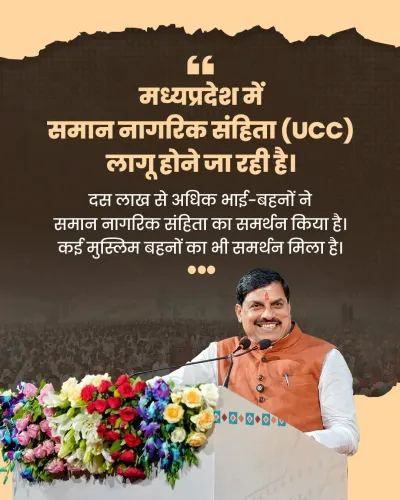
The draft was prepared by a committee headed by former Supreme Court Justice Ranjana Prakash Desai , drawing inputs from over 10 lakh people .
A total of 14 bills were introduced in the session; all are scheduled for detailed discussion as per Assembly Speaker Narendra Singh Tomar .
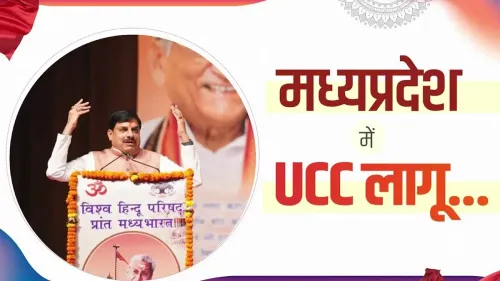
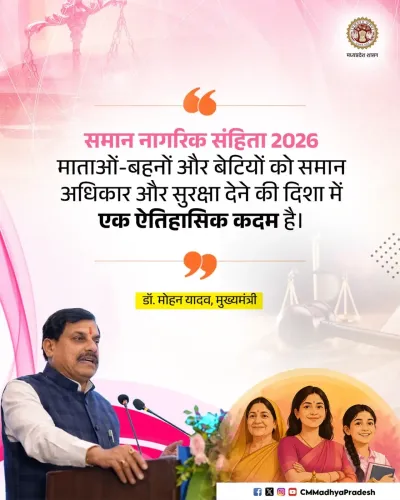
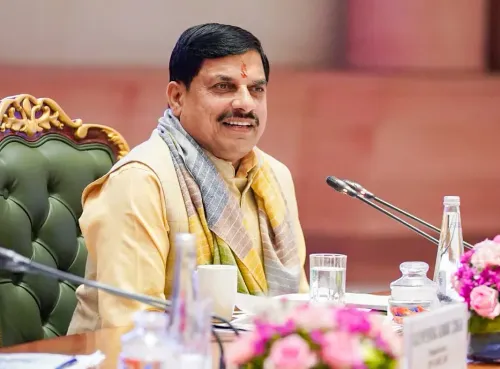
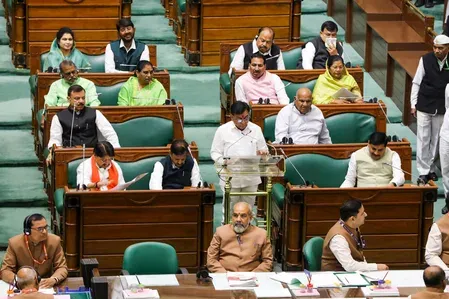
The Madhya Pradesh government on Monday, 20 July 2026 introduced the Madhya Pradesh Uniform Civil Code (UCC) Bill on the opening day of the Monsoon Session of the state Legislative Assembly in Bhopal, triggering an immediate and sharp uproar from opposition benches. Higher Education Minister Gautam Tetwal tabled the bill in the House after the Chief Minister Mohan Yadav-led cabinet had cleared it, describing the move as 'historic' for ensuring equality in personal laws across communities.
Key Provisions of the UCC Bill
The bill proposes a uniform legal framework governing marriage, divorce, adoption, and inheritance, replacing religion-specific personal laws. Among its most significant provisions are a ban on polygamy and Triple Talaq, mandatory registration of marriages and live-in relationships, and equal inheritance rights for sons, daughters, widows, widowers, and parents.
Children born out of live-in relationships will be recognised as legitimate and will carry inheritance rights. Women in live-in relationships who are abandoned will be entitled to maintenance. The bill also proposes action against individuals who desert their parents.
Marriages solemnised through traditional rites — including Saptapadi, Nikah, Anand Karaj, and Arya Samaj ceremonies — will remain legally valid. However, the bill proposes to criminalise Nikah Halala. Marriages entered into through force, fraud, or concealment of material facts may be declared voidable.
Divorce, Adoption, and Inheritance Rules
Divorce may be sought on grounds of cruelty, adultery, desertion, and mental disorder, with mutual consent divorce available after reconciliation efforts are exhausted. The bill mandates transparent adoption processes and specifies that a person convicted of murdering a property owner cannot inherit that property.
A dedicated system of Registrars and a Registrar General will oversee registration of marriages, divorces, and related proceedings, with penalties prescribed for false declarations or tampering with records.
Tribal Exemption and Scope Clarification
Notably, the tribal community has been explicitly exempted from the UCC's purview. The bill also clarifies that it does not seek to abolish religious marriage practices but establishes a uniform legal consequence for those practices across all communities.
The draft was prepared by a seven-member committee headed by former Supreme Court Justice (Retired) Ranjana Prakash Desai. The committee, constituted on 27 April 2026, gathered inputs from over 10 lakh people through public consultations and a dedicated web portal before finalising its recommendations.
Other Bills Introduced and What Comes Next
Alongside the UCC Bill, a total of 14 bills were introduced in the session, including the Dhanvantari University Bill, Fire Services Bill, Ease of Doing Business Bill, and Cess Amendment Bill. Assembly Speaker Narendra Singh Tomar informed the House that all bills, including the UCC, would be taken up for detailed discussion during the session as per the supplementary list of business.
The opposition's strong floor protest signals that the UCC Bill is set for intense legislative debate in the days ahead, making this Monsoon Session one of the most consequential for the state in recent years.
Point of View
BJP-governed states are increasingly using the UCC as a legislative vanguard — testing both legal boundaries and electoral arithmetic. The tribal exemption is a pragmatic carve-out, but it also exposes the bill's core tension: a 'uniform' code that is not truly universal. The opposition's uproar is predictable, but the sharper scrutiny will come from constitutional lawyers and civil society groups questioning whether state-level UCCs can coexist with personal law frameworks that are, in several respects, a concurrent and central subject.
NationPress
20 Oct 2026
Frequently Asked Questions
What is the Madhya Pradesh Uniform Civil Code Bill 2026?
The Madhya Pradesh UCC Bill is a proposed law that seeks to replace religion-specific personal laws with a single legal framework governing marriage, divorce, adoption, and inheritance for all communities in the state, except tribal communities who are exempted. It was tabled in the MP Legislative Assembly on 20 July 2026.
What are the key provisions of the MP UCC Bill?
The bill bans polygamy and Triple Talaq, mandates registration of marriages and live-in relationships, and grants equal inheritance rights to sons, daughters, widows, widowers, and parents. It also criminalises Nikah Halala and provides maintenance rights to women abandoned in live-in relationships.
Are tribal communities covered under the MP UCC Bill?
No. The tribal community has been explicitly exempted from the provisions of the Madhya Pradesh UCC Bill, a carve-out that the government included in the draft from the outset.
Who drafted the MP UCC Bill?
The bill was drafted by a seven-member committee headed by former Supreme Court Justice (Retired) Ranjana Prakash Desai. The committee was constituted on 27 April 2026 and gathered suggestions from over 10 lakh people through public consultations and a web portal.
What happens next after the UCC Bill was tabled in the MP Assembly?
Assembly Speaker Narendra Singh Tomar has confirmed that the UCC Bill, along with 13 other bills introduced in the Monsoon Session, will be taken up for detailed discussion during the session. Given the strong opposition protest on the day of introduction, a contentious floor debate is expected.