MP UCC Bill in Monsoon Session: Only monogamous marriages valid, says CM Yadav
Synopsis
Madhya Pradesh is set to become only the second Indian state to enact a Uniform Civil Code, with CM Mohan Yadav confirming the Bill will be tabled in the Assembly from 20 July. The most striking provision: only those in a single marriage will have the right to reside in the state — a direct legislative strike at polygamy that applies across all religions.
Key Takeaways
Madhya Pradesh CM Mohan Yadav confirmed the Uniform Civil Code (UCC) Bill will be introduced in the Monsoon Session beginning 20 July .
Under the proposed law, only those with a single marriage will have the right to reside in Madhya Pradesh .
The UCC will apply to citizens of all religions , according to the Chief Minister.
A government-constituted drafting committee has already submitted its report.
If passed, Madhya Pradesh will become the second state after Uttarakhand to implement a UCC.
The Monsoon Session runs from 20 July to 25 July .
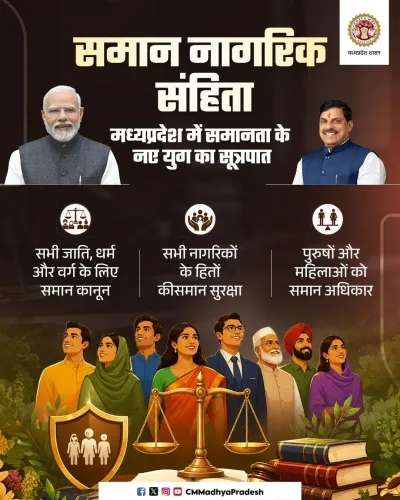
Madhya Pradesh Chief Minister Mohan Yadav on Friday, 17 July declared that only monogamous marriages will be legally recognised under the state's proposed Uniform Civil Code (UCC), which the Bharatiya Janata Party (BJP) government plans to table during the Monsoon Session of the state Assembly beginning 20 July. The law, if passed, would apply to citizens of all religions and make Madhya Pradesh only the second Indian state — after Uttarakhand — to enact a Uniform Civil Code.
What the CM Said
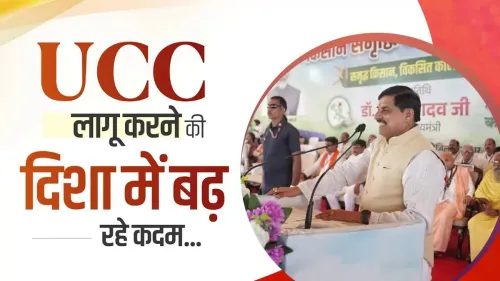
Addressing a public gathering in Katni district after inaugurating newly constructed Sandipani Schools at Jhinjhri and Bahoriband, Chief Minister Yadav made the government's position unambiguous. 'Under the new UCC law, only those having one marriage will have the right to reside in Madhya Pradesh,' he said.
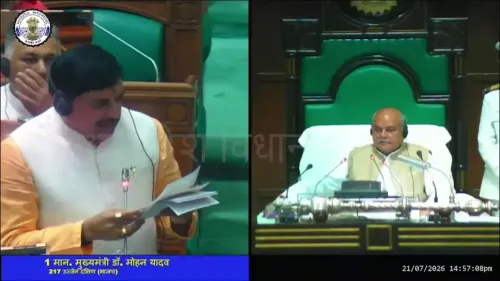
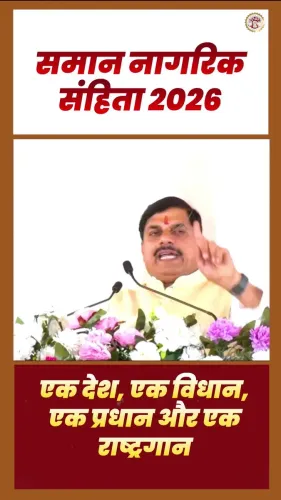
Yadav also invoked a broader ideological framing: 'With the blessings of Lord Ram, Madhya Pradesh is moving towards one nation, one Constitution, one flag and one law. During the Monsoon Session of the Assembly, we will bring the Uniform Civil Code for people of all religions,' he stated.
Key Provisions and Legislative Timeline
The Monsoon Session of the Madhya Pradesh Legislative Assembly is scheduled from 20 July to 25 July, and the BJP government is expected to introduce the UCC Bill within that window. A government-constituted drafting committee has already submitted its report, clearing the path for the Bill's tabling.
The proposed legislation, as outlined by the Chief Minister, would recognise only a single marriage per individual — a provision that directly targets the practice of polygamy. Yadav had previously signalled this stance, and Friday's remarks confirm the government's intent to codify it into law.
Political Significance
The UCC has been a cornerstone of the BJP's electoral agenda at both the state and national level, featuring prominently in successive party manifestos. Madhya Pradesh's move follows Uttarakhand, which became the first state to enact a UCC in 2024. The timing — ahead of a short, focused Assembly session — suggests the BJP leadership in Bhopal is confident of the numbers needed to pass the Bill.
Critics and opposition parties have historically argued that a state-level UCC raises constitutional questions about legislative competence, given that personal laws are a concurrent subject. Those objections are likely to resurface during the Assembly debate.
What Happens Next
With the drafting committee's report already in hand, the government is expected to circulate the Bill text before the session opens on 20 July. If passed, the law will require implementation rules to be notified separately, and legal challenges before the Madhya Pradesh High Court or the Supreme Court are widely anticipated. The outcome in Madhya Pradesh could also accelerate similar moves in other BJP-governed states.
Point of View
And a state-level UCC has never been tested in court at this scale. Uttarakhand's version remains under judicial scrutiny. Madhya Pradesh is charging ahead anyway, betting that the political dividend arrives before the legal reckoning does. The real question is whether the drafting committee's report has produced a text robust enough to survive that challenge — or whether this is another headline law that stalls in implementation.
NationPress
16 Oct 2026
Frequently Asked Questions
What is the Madhya Pradesh UCC Bill?
The Madhya Pradesh Uniform Civil Code (UCC) Bill is a proposed legislation that would establish a common legal framework for personal matters — including marriage — applicable to citizens of all religions in the state. Its most prominent provision, as stated by CM Mohan Yadav, is that only monogamous marriages will be legally recognised, and only those in a single marriage will have the right to reside in Madhya Pradesh.
When will the MP UCC Bill be tabled in the Assembly?
The Bill is expected to be introduced during the Madhya Pradesh Assembly's Monsoon Session, which runs from 20 July to 25 July 2025. The government has indicated it intends to bring the Bill within this window.
Which state was the first to implement a Uniform Civil Code?
Uttarakhand became the first Indian state to enact a Uniform Civil Code in 2024. If the Madhya Pradesh Bill is passed, the state will become the second in the country to implement a UCC.
Will the MP UCC apply to people of all religions?
Yes. Chief Minister Mohan Yadav explicitly stated that the proposed UCC will be applicable to people of all religions in Madhya Pradesh, not limited to any single community.
What is the political significance of the MP UCC Bill?
The Uniform Civil Code has been a key promise in the BJP's election manifesto at both state and national levels. Madhya Pradesh's move to legislate it reinforces the party's broader national agenda and follows Uttarakhand's lead, potentially encouraging other BJP-governed states to pursue similar legislation.