MP UCC panel submits final report; Bill likely in Monsoon Session
Synopsis
Madhya Pradesh's UCC push just cleared a major milestone — a 3-volume report with a 404-section draft Bill is now with the Law Department, and the Monsoon Session is the target for tabling. With Scheduled Tribes proposed for exemption and gender equality cited as the core principle, the Bill's Assembly debut will test how far a state can go where the Centre has yet to tread.
Key Takeaways
The Madhya Pradesh UCC high-level committee submitted its final report to Chief Minister Mohan Yadav on 13 July in Bhopal .
The report spans three volumes ; the draft Bill has 4 parts , 404 sections , and 7 schedules .
More than 9.58 lakh public responses were received and analysed during the consultation process.
Scheduled Tribes are recommended to remain outside the UCC's purview.
The draft Bill will undergo legal review and Cabinet clearance before being introduced in the Monsoon Session of the MP Assembly.
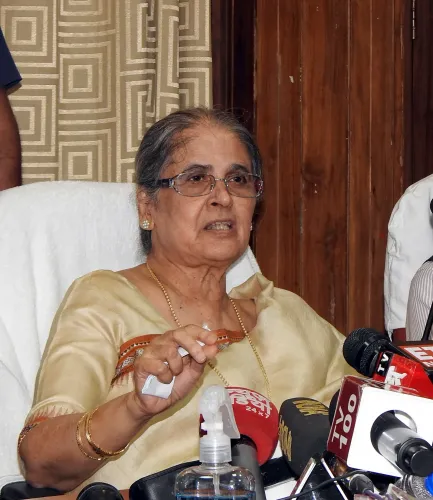
The committee was chaired by retired Supreme Court judge Justice Ranjana Prakash Desai .
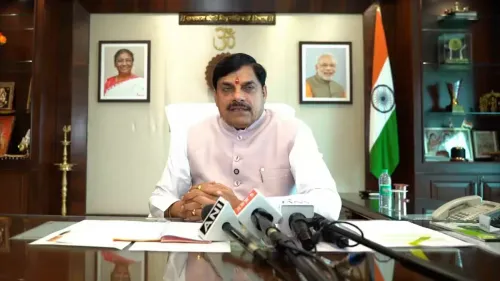
The Madhya Pradesh government moved closer to enacting a Uniform Civil Code (UCC) on Monday, 13 July, after a high-level committee chaired by retired Supreme Court judge Justice Ranjana Prakash Desai submitted its final report to Chief Minister Mohan Yadav in Bhopal. The three-volume report now heads to the state Law Department for legal vetting, with the draft Bill expected to be tabled during the upcoming Monsoon Session of the Madhya Pradesh Legislative Assembly.
What the Report Contains
The committee's submission runs across three volumes. The first sets out recommendations drawn from international practices and a review of existing Central and state laws. The second contains the draft Bill itself — structured in four parts, comprising 404 sections and seven schedules. The third documents the public consultation process, through which the panel received more than 9.58 lakh responses via district-level meetings, state-level consultations, and an online platform.
Responses were analysed across questions, gender, and community lines before recommendations were finalised, according to the state government. The committee was mandated to examine laws covering marriage, divorce, maintenance, inheritance, adoption, and live-in relationships, and to prepare a draft suited to the social, cultural, and economic conditions of Madhya Pradesh.
Key Recommendations
One of the panel's most significant recommendations is that Scheduled Tribes should remain outside the purview of the proposed UCC — a carve-out that mirrors debates seen in Uttarakhand's implementation. The state government said the draft was prepared with gender equality as its core principle, while respecting prevailing customs and traditions and ensuring consistency with constitutional provisions and public policy.
What the Chief Minister Said
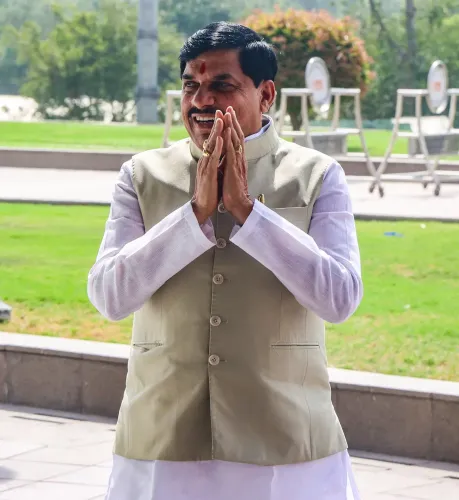
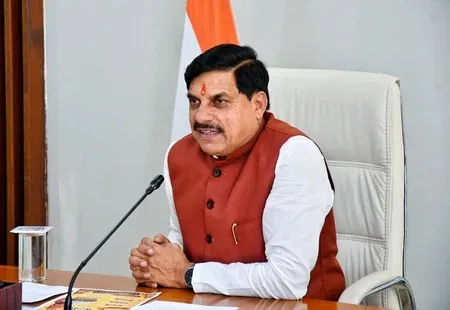
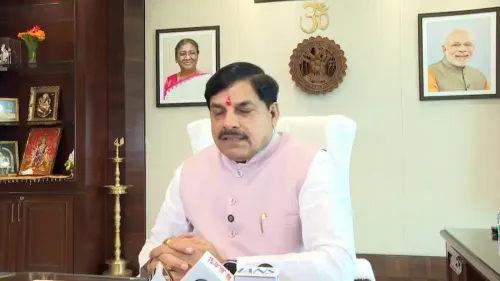
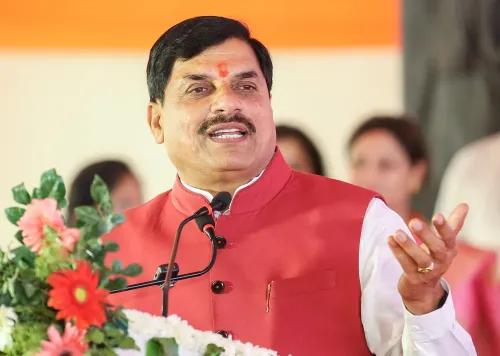
'I thank the chairperson and all members of the committee for submitting the report within the prescribed timeline,' Chief Minister Mohan Yadav said in a statement on Monday. Yadav received the report and publicly acknowledged the committee for completing the exercise on schedule.
What Happens Next
The report has been forwarded to the state Law Department. Following legal examination, it will undergo scrutiny by a committee of senior secretaries before the draft Bill is placed before the state Cabinet. The government is expected to introduce the legislation during the Monsoon Session of the Madhya Pradesh Assembly. This comes amid growing momentum for UCC adoption at the state level — Uttarakhand became the first state in independent India to enact and implement a UCC, prompting several BJP-governed states to initiate similar exercises.
The development is constitutionally significant: Article 44 of the Constitution, a Directive Principle of State Policy, directs the State to endeavour to secure a Uniform Civil Code for all citizens. While not judicially enforceable, Directive Principles serve as guiding frameworks for legislation and governance.
Point of View
But the real test will be whether the Bill's 404 sections survive judicial scrutiny on minority rights and federal competence. Uttarakhand's UCC has been law for over a year yet faces multiple High Court challenges; MP enters that same contested terrain. The Centre's own UCC ambitions remain stalled, making state-level enactments both a pressure tactic and a constitutional experiment whose outcomes are far from settled.
NationPress
14 Jul 2026
Frequently Asked Questions
What is the Madhya Pradesh UCC report submitted on 13 July?
It is the final report of a high-level committee tasked with drafting a Uniform Civil Code for Madhya Pradesh, submitted to Chief Minister Mohan Yadav on 13 July. The report spans three volumes and includes a draft Bill with 404 sections and seven schedules covering marriage, divorce, maintenance, inheritance, adoption, and live-in relationships.
When will the MP UCC Bill be introduced in the Assembly?
The state government expects to introduce the Bill during the upcoming Monsoon Session of the Madhya Pradesh Legislative Assembly. Before that, the report must clear legal examination by the Law Department and scrutiny by a committee of senior secretaries, followed by Cabinet approval.
Who chaired the Madhya Pradesh UCC committee?
The committee was chaired by retired Supreme Court judge Justice Ranjana Prakash Desai. Other members included Prof. Gopal Sharma, Budhpal Singh, Shobha Paithankar, and Member Secretary Ajay Katesaria.
Are Scheduled Tribes included under the proposed MP UCC?
No. One of the committee's key recommendations is that Scheduled Tribes should remain outside the purview of the proposed Uniform Civil Code — a significant carve-out that reflects both constitutional sensitivities and the precedent set by Uttarakhand's UCC.
What is the constitutional basis for a state-level UCC?
Article 44 of the Constitution, a Directive Principle of State Policy, directs the State to endeavour to secure a Uniform Civil Code for all citizens. While Directive Principles are not enforceable by courts, they serve as guiding frameworks for legislation, giving states a constitutional basis to pursue UCC independently.