MP to set up fast-track courts in 4 cities for exam irregularity cases
Synopsis
Madhya Pradesh CM Mohan Yadav announced fast-track courts in four major cities to tackle exam irregularity cases — a direct policy response to a politically sensitive issue — while CJI Surya Kant used the same platform to push legal institutions to reach out to the marginalised rather than wait for them to knock on the door.
Key Takeaways
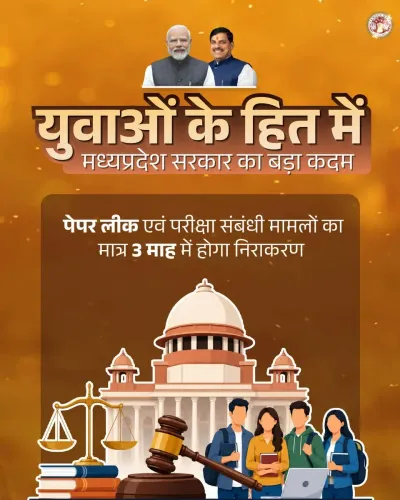
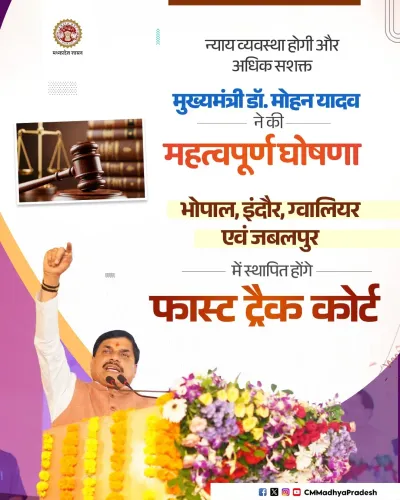
CM Mohan Yadav announced fast-track courts in Indore , Bhopal , Gwalior , and Jabalpur for exam irregularity cases on 8 August .
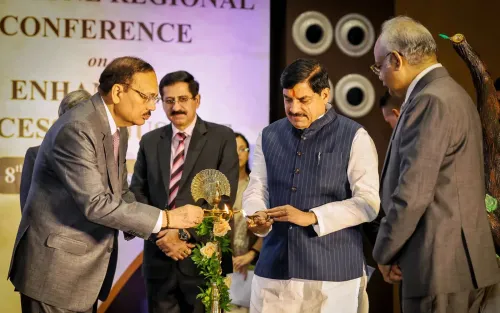
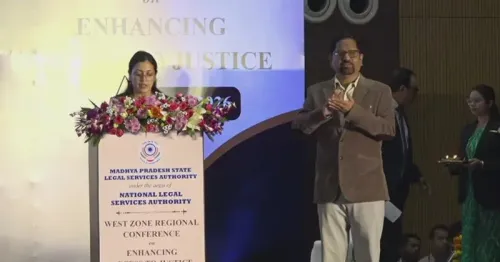
The announcement was made at the West Zone Regional Conference on 'Enhancing Access to Justice' at the Brilliant Convention Centre, Indore.
Chief Justice of India Surya Kant was the chief guest; he called for proactive legal outreach to marginalised communities.
Madhya Pradesh has already implemented e-case filing, virtual hearings , and repealed several British-era laws, according to CM Yadav.
The Jan Vishwas Act and the passage of the Uniform Civil Code Bill in the state assembly were cited as recent legal reforms.
The conference is organised under the National Legal Services Authority (NALSA) with the MP High Court and MP State Legal Services Authority co-organising.
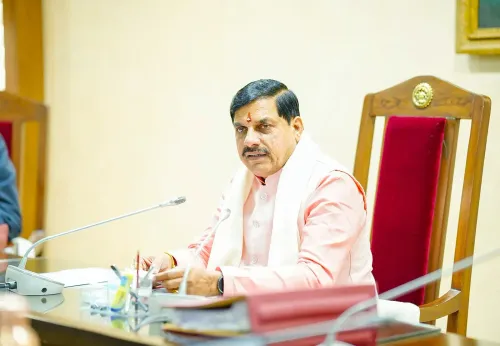
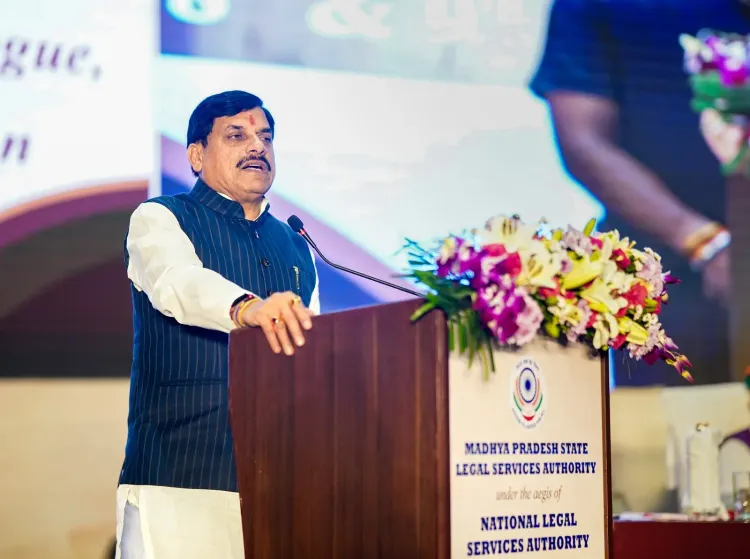
Madhya Pradesh Chief Minister Mohan Yadav on Saturday, 8 August announced that the state will establish fast-track courts in Indore, Bhopal, Gwalior, and Jabalpur to ensure speedy disposal of cases related to examination irregularities. The announcement came at the inaugural session of the two-day West Zone Regional Conference on 'Enhancing Access to Justice' held at the Brilliant Convention Centre in Indore, where Chief Justice of India (CJI) Surya Kant was the chief guest.
Key Announcement on Fast-Track Courts
Chief Minister Yadav made the fast-track court declaration while addressing delegates at the conference, which is being held under the aegis of the National Legal Services Authority (NALSA), with the Madhya Pradesh State Legal Services Authority and the Madhya Pradesh High Court co-organising the event. The proposed courts will focus specifically on cases stemming from examination irregularities — an issue that has drawn significant public attention across the state in recent years.
Yadav also highlighted a range of technology-driven reforms the state government has undertaken to modernise its justice delivery framework. 'Madhya Pradesh government has implemented e-case filing, virtual hearings, digital data management and modern judicial administration. Many obsolete British-era laws have been repealed,' he said.
Legal Reforms Cited by the Chief Minister
The Chief Minister pointed to the Jan Vishwas Act as a reform that has decriminalised minor violations, making the legal system simpler and more citizen-friendly. He also noted that the Uniform Civil Code Bill has been passed in the Madhya Pradesh Legislative Assembly, describing it as a significant step toward equal justice and equal rights.
What the Chief Justice of India Said
CJI Surya Kant used his address to broaden the conversation beyond courtroom outcomes, arguing that access to justice must be understood as an experience that begins at a citizen's very first interaction with the legal system. 'For the common citizen, the experience of justice is not limited merely to obtaining relief, compensation, acquittal, or a verdict; the experience of justice begins much earlier,' he said.
The CJI stressed that anyone approaching a legal aid centre, court complex, or Taluka-level Legal Services Authority must feel heard, respected, and treated fairly. He called on legal services institutions to move beyond a 'one-size-fits-all' approach and urged greater responsiveness to the specific needs of different communities and regions, including outreach in local languages and dialects.
Role of Para-Legal Volunteers and Inclusion
Justice Surya Kant underlined the critical role of para-legal volunteers in carrying information about legal rights and government schemes to villages and marginalised communities. He emphasised that legal institutions must proactively reach out to the people rather than waiting for the needy to come to them.
He identified dialogue, dignity, and inclusion as the three key pillars of an effective legal services system, and stressed that the constitutional promise of equal justice and free legal aid under Article 39A would be meaningful only when its benefits genuinely reached those for whom the system was designed.
About the Conference
The two-day West Zone Regional Conference is organised under NALSA, with the Madhya Pradesh State Legal Services Authority and the Madhya Pradesh High Court playing central roles. The event brings together judicial officers, legal services authorities, and policymakers from across the western zone to deliberate on expanding access to justice. The fast-track court announcement is expected to be among the most consequential policy commitments to emerge from the conference.
Point of View
And Madhya Pradesh is no exception. Creating dedicated courts signals urgency, but the real measure will be staffing, timelines, and whether convictions follow. Meanwhile, CJI Surya Kant's remarks — that legal institutions must go to the people rather than the reverse — cut against the grain of how most legal aid bodies actually operate. The gap between that vision and ground reality is wide, and a regional conference, however well-attended, rarely closes it.
NationPress
8 Aug 2026
Frequently Asked Questions
Why is Madhya Pradesh setting up fast-track courts for exam irregularity cases?
Chief Minister Mohan Yadav announced the fast-track courts to ensure speedy disposal of cases related to examination irregularities in the state. The courts will be set up in Indore, Bhopal, Gwalior, and Jabalpur to address a backlog of such cases more efficiently.
Where was the fast-track court announcement made?
The announcement was made on 8 August at the West Zone Regional Conference on 'Enhancing Access to Justice' held at the Brilliant Convention Centre in Indore. Chief Justice of India Surya Kant was present as the chief guest.
What did CJI Surya Kant say at the Indore conference?
CJI Surya Kant said that access to justice must be seen as an experience starting from a citizen's first interaction with the legal system, not just the final verdict. He called for legal institutions to proactively reach marginalised communities and for outreach in local languages and dialects.
What other legal reforms did CM Mohan Yadav highlight?
CM Yadav cited the implementation of e-case filing, virtual hearings, digital data management, and the repeal of several British-era laws. He also referenced the Jan Vishwas Act, which decriminalised minor violations, and the passage of the Uniform Civil Code Bill in the Madhya Pradesh Legislative Assembly.
Who organised the West Zone Regional Conference on Access to Justice?
The conference is being held under the aegis of the National Legal Services Authority (NALSA), with the Madhya Pradesh State Legal Services Authority and the Madhya Pradesh High Court involved in its organisation.