MP CM Yadav deploys African Boma method to end crop raids
Synopsis
Madhya Pradesh is deploying the African Boma method to safely relocate nilgai and blackbuck from farmland to reserved forests, CM Dr. Mohan Yadav announced on 28 October 2026, framing the move as part of the state's broader farmer welfare and conservation agenda.
Key Takeaways
The Madhya Pradesh government is using the African Boma method to relocate nilgai and blackbuck away from agricultural land.
Animals are being transported safely to reserved forest areas , reducing crop damage without harming protected species.
Both nilgai and blackbuck are protected under India's Wildlife (Protection) Act, 1972 , limiting farmers' legal options for deterrence.
Madhya Pradesh holds the largest forest cover of any Indian state, creating a persistent overlap between wildlife corridors and farming districts.
Mohan Yadav linked the initiative to the government's wider goals of farmer welfare, youth employment, and nature conservation.
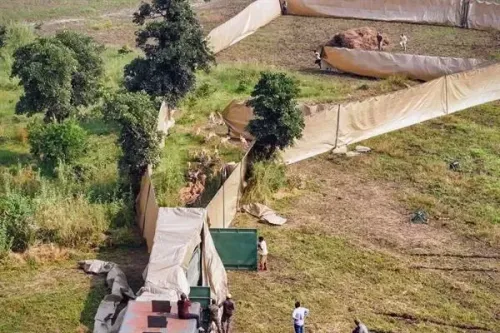
The Boma technique originated in sub-Saharan Africa, where temporary funnel enclosures are used to herd and capture wild animals without harm.
Crops saved, wildlife protected — and a technique born on the African savanna now quietly at work in the fields of Madhya Pradesh. The Chief Minister's Office of Madhya Pradesh announced on Wednesday, 28 October 2026 that the state government is using the African Boma method to safely relocate nilgai (blue bull) and blackbuck away from farmland and into designated forest reserves, easing one of rural India's most persistent tensions: the standoff between farmer and animal.
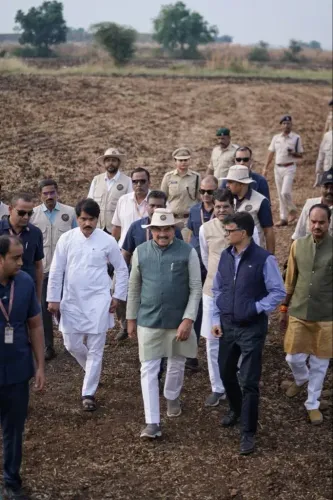
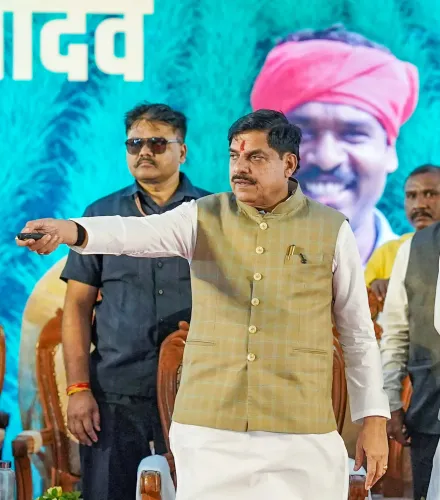
Chief Minister Dr. Mohan Yadav stated that the state government is continuously advancing public welfare work — from farmer welfare and youth employment to the protection of nature and wildlife. 'To protect farmers' crops from damage caused by wildlife,' CM Yadav said, 'nilgai and blackbuck are being safely relocated to reserved forest areas through the African Boma method.'What the African Boma method actually does
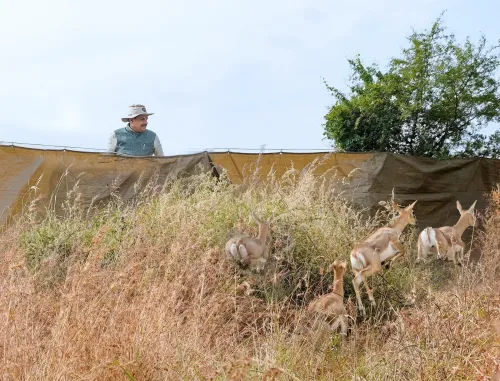
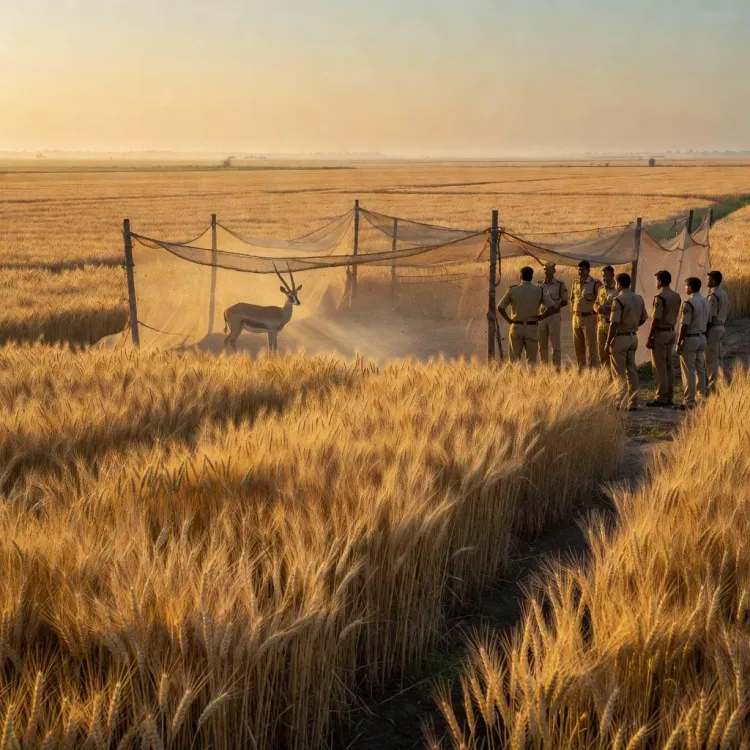
The Boma technique originates from sub-Saharan Africa, where conservationists long used temporary funnel-shaped enclosures — bomas — to herd and capture wild animals without harm. Adapted here, it allows field teams from the Madhya Pradesh Forest Department to guide free-roaming nilgai and blackbuck into a controlled holding structure, then transport them to reserved forest zones where they pose no threat to standing crops. The process prioritises the animal's survival over culling or chemical immobilisation alone — a significant departure from older conflict-resolution methods.
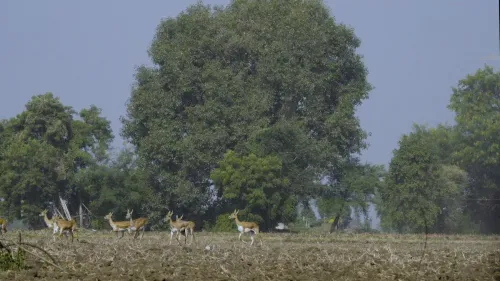
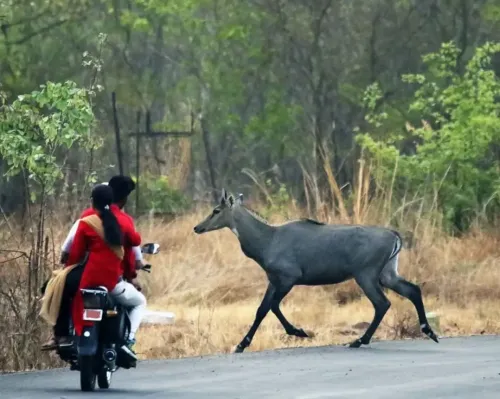
Nilgai, India's largest antelope, and the blackbuck, a protected species under the Wildlife (Protection) Act, 1972, are both prolific crop raiders across central and northern India. Because both species enjoy legal protection, farmers have historically had limited recourse — leading to illegal poisonings, wire snares, and smouldering resentment in agricultural belts. A humane, government-backed relocation mechanism changes that calculus for farming communities.
Madhya Pradesh: where farm belt meets forest corridor
Madhya Pradesh holds roughly 30% of its geographical area under forest cover — the largest in any Indian state — and supports major tiger reserves, biosphere zones, and extensive agricultural districts simultaneously. That overlap is not incidental; it is structural. Farmers in districts bordering wildlife corridors have long reported seasonal crop losses to herds of nilgai moving out of forest edges at night. The scale of losses, while unquantified in the current announcement, has driven demand for durable state intervention for decades.
The deployment of the Boma method signals that the government is treating this as an ongoing programme rather than a one-off drive. CM Yadav's statement frames wildlife relocation alongside farmer welfare and youth employment — placing conservation explicitly within the state's broader social-development vocabulary, not in a separate silo.
The human-wildlife balance Madhya Pradesh is betting on
States across India have experimented with various responses to crop-raiding wildlife — compensation schemes, solar fencing, community patrols — with mixed results. The Boma model is notable because it resolves the conflict at source: the animals are moved, not merely deterred. Whether Madhya Pradesh expands the method to additional districts or conflict hotspots will be the real test of its ambition. Successful relocation outcomes — survival rates of transported animals, reduction in crop-damage complaints in treated zones — will determine whether this becomes a replicable model for other wildlife-dense states.
For now, the image is striking: a cattle-herding method from the African plains, repurposed to protect a blackbuck in a Madhya Pradesh wheat field. Conservation, when it works, tends to travel far.
Point of View
The Madhya Pradesh government is threading a politically delicate needle — protecting legally shielded wildlife while visibly siding with farmers hit by crop losses. Framing conservation as a component of farmer welfare is a deliberate narrative choice by CM Dr. Mohan Yadav, one that pre-empts the usual rural backlash against conservation restrictions. The move also signals state-level willingness to import global wildlife-management tools rather than defaulting to compensation schemes that address symptoms without solving the underlying spatial conflict. Whether the programme scales, and whether relocation outcomes are made public, will determine if this is durable policy or a well-timed announcement.
NationPress
28 Oct 2026
Frequently Asked Questions
What is the African Boma method used in Madhya Pradesh?
The African Boma method uses temporary funnel-shaped enclosures to herd wild animals — in this case nilgai and blackbuck — into a holding structure, from where they are safely transported to reserved forest areas, avoiding harm to the animals or farmers.
Why are nilgai and blackbuck a problem for farmers in Madhya Pradesh?
Nilgai and blackbuck frequently raid standing crops in districts bordering wildlife corridors. Because both species are protected under the Wildlife (Protection) Act, 1972, farmers cannot legally cull them, making humane relocation a preferred solution.
Who announced the African Boma method programme in Madhya Pradesh?
Chief Minister Dr. Mohan Yadav announced the initiative, with the official communication posted by the Chief Minister's Office of Madhya Pradesh on 28 October 2026.
Is blackbuck a protected species in India?
Yes. The blackbuck is listed as a protected species under the Wildlife (Protection) Act, 1972, and cannot be hunted or harmed without facing criminal penalties under Indian law.
Which Indian state has the most forest cover?
Madhya Pradesh has the largest forest cover of any Indian state, with roughly 30% of its geographical area classified as forest, making human-wildlife conflict a persistent issue in agricultural districts near these zones.