MP CM Mohan Yadav reviews blackbuck rescue in Shajapur, calls it South Asia first
Synopsis
Madhya Pradesh has launched what Chief Minister Mohan Yadav calls South Asia's first large-scale antelope translocation — using South African Boma technique and helicopter support to move 2,000 blackbucks away from farmland. With 1,236 animals already relocated and a 31 October deadline, the operation is as much a farmers' welfare measure as a conservation milestone.
Key Takeaways
MP Chief Minister Mohan Yadav reviewed Project Antelope Translocation at Ranthbhanwar village, Shajapur on 28 October 2026 .
The operation uses the Boma technique with helicopter support — described as a first-of-its-kind effort in South Asia .
The second phase targets relocation of 2,000 blackbucks between 9–31 October ; more than 1,236 animals have been rescued so far.
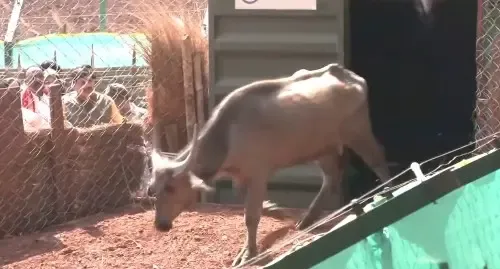
Animals are being transported via 11 trucks to forest zones in Sheopur , Gandhi Sagar , and Rani Durgavati Reserve Forest .
Technical support was initially provided by a team from South Africa ; veterinarians are deployed for safe transit.
The project is framed under the state's 'Year of Farmers' Welfare' and aims to reduce crop damage from wildlife incursions.
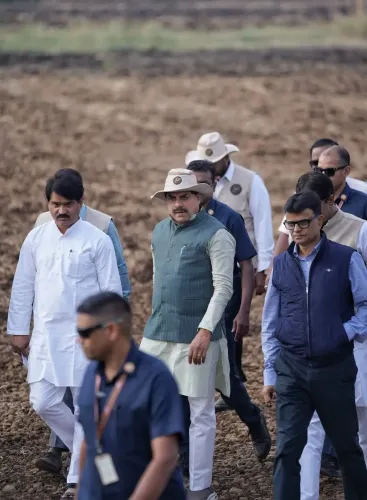
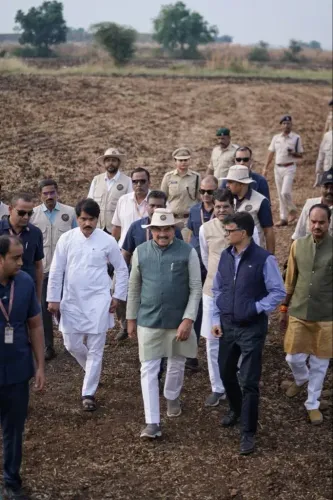
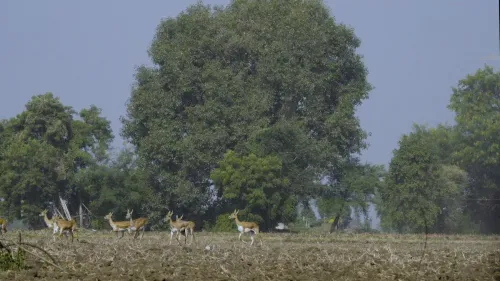
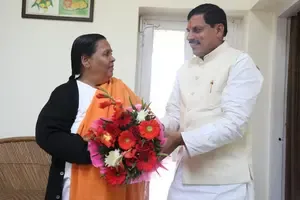
Madhya Pradesh Chief Minister Mohan Yadav on Wednesday, 28 October 2026, visited Ranthbhanwar village in Shajapur district to personally review the ongoing wildlife relocation drive under 'Project Antelope Translocation' — an initiative he described as the first of its kind in South Asia. The operation aims to safeguard farmers' crops from damage caused by blackbucks and nilgai (blue bull) while ensuring the humane relocation of the animals to designated forest zones.
What Project Antelope Translocation Involves
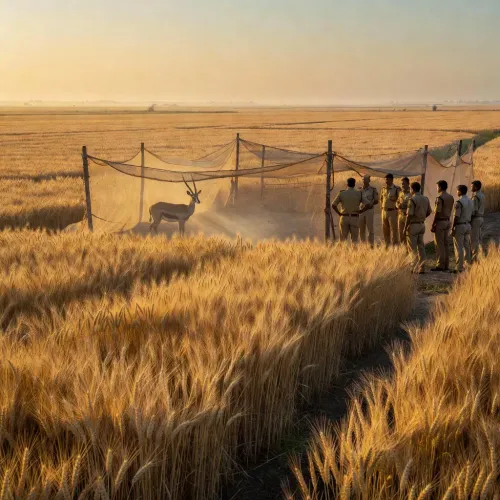
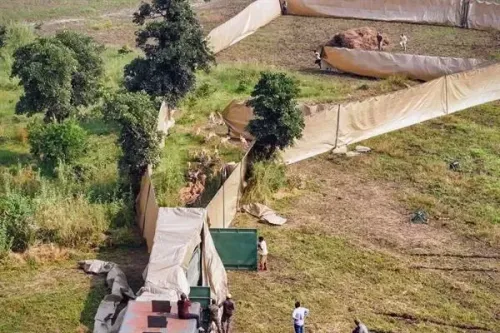
The project deploys the Boma technique — a method that uses temporary enclosures and directed animal movement to safely capture wildlife without injury — backed by helicopter support. Technical assistance for the operation was initially provided by a team from South Africa, making it a rare instance of cross-continental wildlife management collaboration in the region.
The animals are transported in a fleet of 11 trucks to forest areas in Sheopur, Gandhi Sagar, and the Rani Durgavati Reserve Forest. Veterinarians and specialised equipment have been deployed at every stage to ensure safe transit.
Progress and Scale of the Operation
The second phase of the campaign is underway across Shajapur district from 9 October to 31 October, targeting the relocation of 2,000 blackbucks. As of the Chief Minister's visit, more than 1,236 blackbucks and nilgai had been safely rescued. The first phase was launched last year under the state government's 'Year of Farmers' Welfare' programme.
What the Chief Minister Said
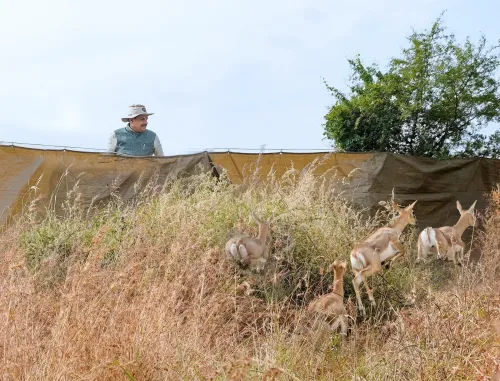
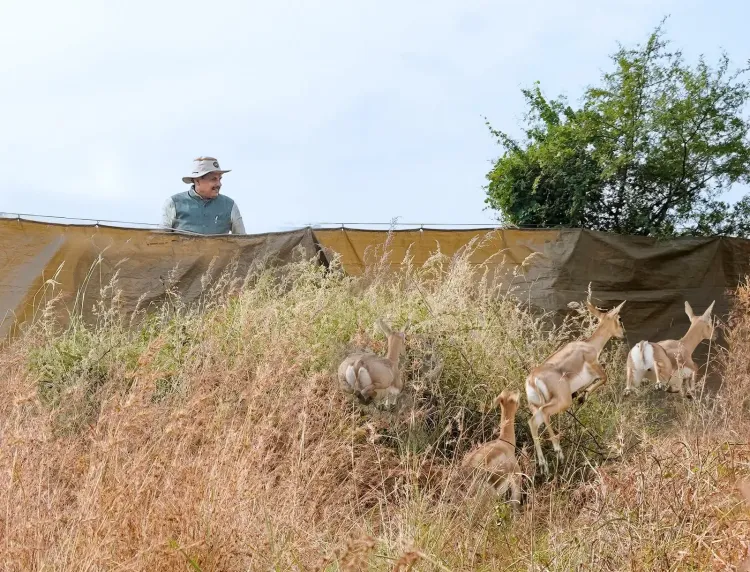
Chief Minister Yadav, who observed the rescue process from a camouflaged platform, said the project represents one of the state government's foremost efforts at combining farmers' welfare with wildlife conservation. He expressed confidence that the initiative's success would prompt other Indian states to adopt similar translocation models.
Yadav noted that blackbuck and nilgai incursions into agricultural land have long been a source of significant crop loss for farmers in the region. The translocation programme, he said, addresses both the human cost and the conservation imperative simultaneously.
Officials Present and Administrative Backing
Senior state officials accompanied the Chief Minister, including Principal Chief Conservator of Forests Shubhranjan Sen, Chief Wildlife Warden Samita Rajora, and District Collector Parikshit Sanjayrao Jhade. Local Members of the Legislative Assembly were also present during the review.
The Forest Department and district administration received appreciation from Yadav for the coordination required to execute an operation of this scale. With the second phase scheduled to conclude on 31 October, the state government is expected to publish a full progress report outlining relocation outcomes and the long-term management plan for the displaced animals.
Point of View
Borrowed from African game management, is a credible method, but the real test is post-relocation: whether the destination forests in Sheopur and Gandhi Sagar can sustain a sudden influx of 2,000 additional animals without triggering a new ecological imbalance. A target of 2,000 relocations in roughly three weeks is ambitious; the 1,236 figure mid-operation suggests the pace is workable but the final stretch will be demanding. If it succeeds, this becomes a replicable model for states like Rajasthan and Haryana where human-wildlife conflict over nilgai is equally acute.
NationPress
28 Oct 2026
Frequently Asked Questions
What is Project Antelope Translocation in Madhya Pradesh?
Project Antelope Translocation is a state government initiative in Madhya Pradesh that safely captures and relocates blackbucks and nilgai from farmland to designated forest areas using the Boma technique. It aims to reduce crop damage to farmers while protecting the animals, and was launched under the 'Year of Farmers' Welfare' programme with technical support from South Africa.
What is the Boma technique used in the blackbuck rescue?
The Boma technique involves guiding animals into a temporary enclosure using directed movement — often aided by helicopter support — so they can be captured safely without injury. It is a wildlife management method widely used in Africa and has now been applied in this South Asian operation for the first time at this scale.
How many blackbucks have been rescued so far in Shajapur?
More than 1,236 blackbucks and nilgai have been safely rescued as part of the second phase, which runs from 9 to 31 October 2026 in Shajapur district. The overall target for this phase is the relocation of 2,000 animals.
Where are the rescued blackbucks being relocated?
The animals are being transported in a fleet of 11 trucks to forest areas in Sheopur, Gandhi Sagar, and the Rani Durgavati Reserve Forest in Madhya Pradesh. Veterinarians and necessary equipment are deployed throughout the transit process.
Why does Madhya Pradesh consider this operation significant for farmers?
Blackbuck and nilgai incursions into agricultural land have long caused substantial crop losses for farmers in Shajapur and surrounding districts. By relocating the animals to forest zones, the project directly reduces that damage while avoiding harm to the wildlife, making it a dual-purpose conservation and agrarian welfare measure.