Mumbai Airport T1 redevelopment: Winter slots protected, joint panel to plan overhaul
Synopsis
Mumbai's T1 — one of India's busiest and most stretched airport terminals — is finally headed for a structured overhaul. Airlines get their key demand met: winter slots stay untouched. But the real test begins with the summer schedule, when traffic-balancing toward the new Navi Mumbai airport kicks in.
Key Takeaways
CSMIA operator and airlines agreed on 13 October 2026 to pursue a phased redevelopment of Terminal 1 (T1) in Mumbai.
A joint working group will prepare an implementation strategy within the next two weeks .
Winter schedule slots will remain fully undisturbed, addressing a core concern of airlines.
Traffic-balancing measures — including shifts to Navi Mumbai International Airport (NMIA) — are expected to begin from the summer schedule .
A follow-up review meeting is scheduled for 28 October 2026 .
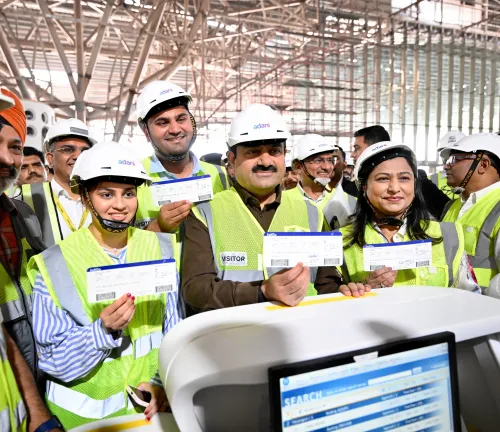
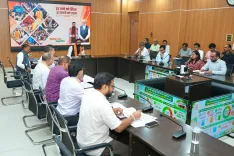
The meeting was attended by Jeet Adani , Arun Bansal , AOC representatives, and airline stakeholders.
Mumbai's Chhatrapati Shivaji Maharaj International Airport (CSMIA) operator and airlines reached an agreement on Tuesday, 13 October 2026, to pursue a phased redevelopment of Terminal 1 (T1), with a joint working group tasked with preparing a detailed implementation strategy within the next two weeks. Critically, existing winter schedule slots will remain undisturbed, addressing a central concern raised by carriers ahead of the meeting.
How the Decision Was Reached
The agreement emerged from a high-level meeting on 13 October attended by Jeet Adani, Arun Bansal, representatives of the Airports of Mumbai (AOC), airline officials, and other airport stakeholders. The discussions centred on two interconnected priorities: the redevelopment of the ageing T1 infrastructure and the planned migration of some flight operations to the upcoming Navi Mumbai International Airport (NMIA).
A spokesperson for Mumbai International Airport Ltd (MIAL) confirmed that the airport management has pledged to minimise operational disruptions and fully honour historical slot allocations throughout the process. 'Joint working group to work over next 2 weeks to come up with a plan for implementation of redevelopment of ageing T1 infrastructure,' read the official statement released after the meeting.
Winter Schedule Slots: Airlines Get Key Assurance
One of the most consequential outcomes of Tuesday's meeting was the management's commitment to keep all existing slots undisturbed during the winter schedule. Slot protection is a commercially sensitive issue for airlines, as any reallocation can disrupt network planning, passenger bookings, and revenue streams. The assurance effectively removes a significant near-term uncertainty for carriers operating out of T1.
Airlines, in turn, have committed to supporting the redevelopment process and traffic-balancing measures. These measures are expected to be phased in from the summer schedule onwards, giving operators adequate time to plan transitions.
Role of Navi Mumbai Airport in Easing Capacity
The NMIA figures prominently in the longer-term strategy. Airport management has assured full support to airlines that choose to shift a portion of their operations to the new facility, which is positioned as a key pressure valve for capacity constraints across the Mumbai Metropolitan Region. With CSMIA operating near its limits, NMIA's operationalisation is expected to be a structural relief for both airlines and passengers.
Notably, the Mumbai airport ecosystem has been under sustained capacity stress for several years, with T1 — originally built to handle domestic traffic — increasingly seen as a bottleneck requiring urgent modernisation.
Next Steps and Timeline
Both sides agreed to reconvene on 28 October to review the working group's progress. In the interim, airport management and airline representatives will engage directly with individual carriers' network planning and slot allocation teams to align on operational requirements and work toward a coordinated rollout.
The MIAL spokesperson described the tenor of the meeting positively: 'The meeting ended with a thankful note across both sides and a renewed positive commitment towards development of Mumbai Airport to the standard as is deserved by Mumbaikars.'
The outcome sets the stage for what could become one of the more complex airport redevelopment exercises in India, balancing live operations against the long-overdue upgrade of ageing infrastructure.
Point of View
But the harder work starts with the summer schedule. Protecting winter slots buys goodwill; the real stress-test is whether NMIA can absorb meaningful traffic shifts without creating a new set of operational headaches. Mumbai's air capacity crunch has been building for years, and a phased T1 redevelopment — however well-coordinated — will still mean disruption in a live, high-utilisation environment. The involvement of Jeet Adani signals Adani Airports' direct stake in making CSMIA's modernisation a flagship project, but execution track records on Indian airport redevelopments have been mixed. The 28 October review meeting will be the first real signal of whether this consensus holds under operational pressure.
NationPress
14 Oct 2026
Frequently Asked Questions
What was decided at the Mumbai Airport T1 redevelopment meeting on 13 October?
Airport operator MIAL and airline representatives agreed to pursue a phased redevelopment of Terminal 1 at Mumbai's CSMIA, with a joint working group tasked with preparing an implementation plan within two weeks. Winter schedule slots will remain fully protected throughout the process.
Will airline slots at Mumbai Airport be affected by the T1 redevelopment?
No, not during the winter schedule. Airport management has given airlines a firm assurance that existing slot allocations will be honoured and left undisturbed for the current winter period. Changes tied to traffic balancing are expected only from the summer schedule onwards.
What is the role of Navi Mumbai International Airport in this plan?
NMIA is central to the longer-term capacity strategy. MIAL has committed full support to airlines wishing to shift some operations there, positioning NMIA as a relief valve for the capacity constraints that have long pressured CSMIA.
When is the next review meeting on the Mumbai Airport T1 plan?
Both sides agreed to hold a follow-up meeting on 28 October 2026 to assess the working group's progress. In the interim, individual airline network planning and slot allocation teams will be consulted.
Who attended the 13 October Mumbai Airport meeting?
The meeting was attended by Jeet Adani, Arun Bansal, representatives of the Airports of Mumbai (AOC), airline officials, and other airport stakeholders, according to MIAL's spokesperson.