MIAL, airlines finalise phased shift of 5 mppa to Navi Mumbai for T1 redevelopment
Synopsis
A 60-year-old terminal that two independent audits flagged as structurally unsafe is finally getting demolished — but only after airlines agree to temporarily reroute 5 million passengers a year to Navi Mumbai. With IndiGo, Air India, and Akasa Air already signed on for 3 mppa, the clock is ticking: MIAL needs all transition plans by 3 November 2026 to hit the Northern Summer 2027 launch.
Key Takeaways
MIAL and the AOC aligned on 28 October 2026 on shifting 5 mppa of international traffic to Navi Mumbai International Airport (NMIA) to enable T1 demolition .
IndiGo , Air India , and Akasa Air have finalised plans for approximately 3 mppa of the transition; the balance will come from T2 slot reallocation for the NS27 season .
Airlines must submit transition plans by 3 November 2026 .
91% of CSMIA 's current traffic remains unaffected; total airport capacity will rise from 55 mppa to 65 mppa after redevelopment.
The new T1 will handle 20 mppa — up 33% — with 25 contact stands , 12 e-gates , and 11 reclaim belts ; completion targeted for December 2030 .
Structural audits by Structwel (2017) and IIT Bombay (2024) had flagged the 60-year-old terminal as unsafe, with redevelopment already delayed over nine years .
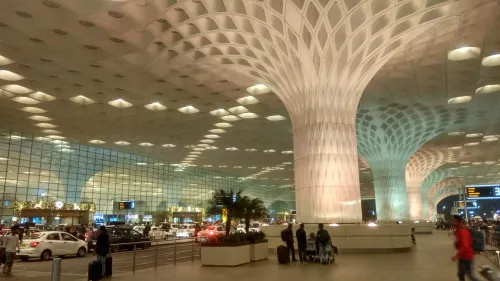
Mumbai International Airport Ltd (MIAL) and the Airline Operators Committee (AOC) on Wednesday, 28 October 2026, reached a broad alignment on a phased dual-airport transition strategy for the Mumbai Metropolitan Region, clearing a key coordination hurdle for the long-delayed redevelopment of Terminal 1 (T1) at Chhatrapati Shivaji Maharaj International Airport (CSMIA). The plan involves temporarily shifting 5 million passengers per annum (mppa) of international traffic to Navi Mumbai International Airport (NMIA) to allow demolition and reconstruction of the ageing terminal.
Why T1 Demolition Can No Longer Wait
Structural audit reports by Structwel (2017) and IIT Bombay (2024) have independently flagged severe safety and structural vulnerabilities in T1, which was first commissioned in 1964 and is now over 60 years old. According to a CSMIA spokesperson, the redevelopment has already been delayed by more than nine years, making the demolition a matter of public safety rather than a discretionary upgrade. The T1 demolition and the temporary capacity reduction are already incorporated into the approved tariff order following prior stakeholder consultations, MIAL clarified.
Transition Plan: Who Moves and When
Leading carriers IndiGo, Air India, and Akasa Air have already finalised transition plans to shift their international operations to NMIA, accounting for approximately 3 mppa. To bridge the remaining gap and reach the full 5 mppa target, MIAL has proposed a temporary reallocation of the balance slots from CSMIA T2 starting with the Northern Summer 2027 (NS27) season. Airline operators have been asked to submit their individual transition plans no later than 3 November 2026. MIAL has assured all carriers that the 5 mppa of transitioned international traffic will be fully restored to CSMIA once the T2 expansion is completed.
The Scale of Disruption — and What Remains Unaffected
CSMIA currently handles a total capacity of around 55 mppa. The temporary transition of 5 mppa means that 91% of existing traffic at the airport will remain unaffected throughout the redevelopment period. This framing is significant: critics of large airport transitions often highlight passenger inconvenience, but the 9% diversion is comparatively modest against the airport's overall throughput. Demolition is scheduled to begin in April 2027, with a G+3 T2 North-West Pier expansion set to become operational by March 2029 to handle interim domestic traffic during the construction phase.
The New T1: Capacity, Design and Timeline
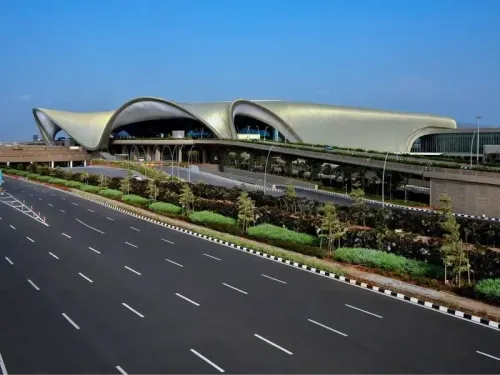
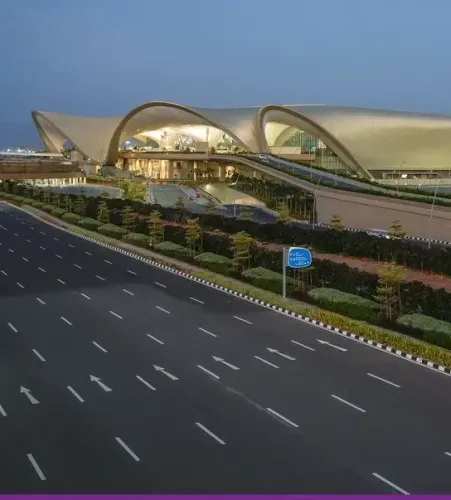
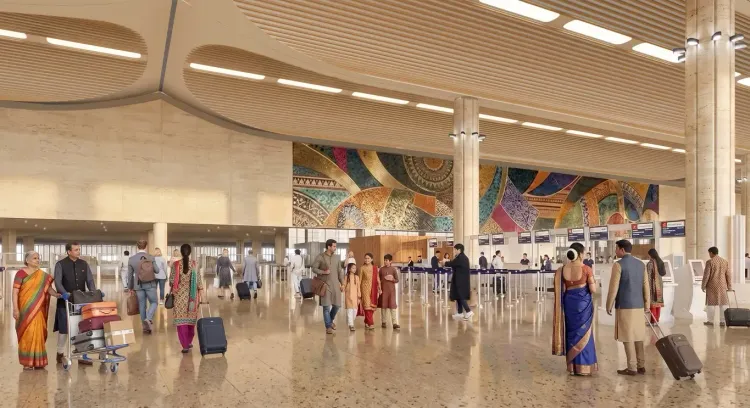
At Wednesday's meeting, CSMIA shared architectural impressions of the reimagined T1. The vision centres on a passenger-first design — a sweeping departure kerbside, a vast column-free check-in hall featuring local art murals, a lush departure lounge with indoor greenery and runway views, and an arrival kerbside marked by a signature giant flamingo sculpture celebrating Mumbai's biodiversity. The numbers behind the vision are equally ambitious: annual passenger handling capacity at T1 alone rises 33% from 15 mppa to 20 mppa; check-in counters increase 47% from 74 to 109; security lanes expand 2.5 times with 15 passenger lanes and 5 transfer lanes; contact stands grow 3.5 times from 7 to 25; and baggage reclaim belts more than double from 5 to 11. Conventional boarding gates will be replaced by 12 state-of-the-art e-gates. Completion of the new T1 is targeted for December 2030, at which point CSMIA's total capacity will rise to 65 mppa, a meaningful step in positioning Mumbai as a world-class aviation hub.
What Happens Next
The immediate milestone is the 3 November 2026 deadline for airlines to submit transition plans. With IndiGo, Air India, and Akasa Air already on board for 3 mppa, the remaining 2 mppa will require either additional carrier commitments or slot reallocation from T2. The coming weeks will test whether the broader airline community shares MIAL's confidence in a smooth NS27 transition — or whether slot negotiations prove contentious. The long-term payoff, a modern 65-mppa dual-airport metro system, hinges on those decisions being made swiftly.
Point of View
Yet the old building still stands. The transition of just 9% of CSMIA's traffic is a manageable ask, but the hard part is coordinating dozens of airline schedules under a tight November deadline, with NMIA itself still ramping up. If slot negotiations stall or NMIA readiness lags, the NS27 timeline risks slipping further, compounding the safety liability. The real test of MIAL's 'world-class aviation hub' ambition is not the architectural renderings — it is whether execution matches the decade-in-the-making urgency.
NationPress
29 Oct 2026
Frequently Asked Questions
Why is CSMIA Terminal 1 being demolished?
T1 at Chhatrapati Shivaji Maharaj International Airport is being demolished due to severe structural and safety vulnerabilities identified in independent audits by Structwel in 2017 and IIT Bombay in 2024. The terminal, originally commissioned in 1964, is over 60 years old and its redevelopment has already been delayed by more than nine years.
Which airlines are moving international flights to Navi Mumbai airport?
IndiGo, Air India, and Akasa Air have already finalised plans to transition their international operations to Navi Mumbai International Airport (NMIA), accounting for approximately 3 million passengers per annum. MIAL expects additional carriers or slot reallocations to cover the remaining 2 mppa needed to meet the 5 mppa target.
When will the T1 demolition begin and when will the new terminal open?
Demolition of the existing T1 is scheduled to begin in April 2027. The new Terminal 1 is targeted for completion in December 2030, at which point CSMIA's total capacity will rise to 65 mppa.
How much of Mumbai airport's traffic will be disrupted during the transition?
Only 5 mppa — roughly 9% of CSMIA's current total capacity of 55 mppa — will be temporarily redirected to Navi Mumbai International Airport. The remaining 91% of traffic at CSMIA will be unaffected during the redevelopment.
What improvements will the new Terminal 1 offer over the current structure?
The new T1 will increase annual passenger handling capacity by 33% from 15 mppa to 20 mppa. Check-in counters will grow 47% to 109, security lanes will expand 2.5 times, contact stands will increase from 7 to 25, and baggage reclaim belts will more than double from 5 to 11, along with 12 state-of-the-art e-gates replacing conventional boarding gates.