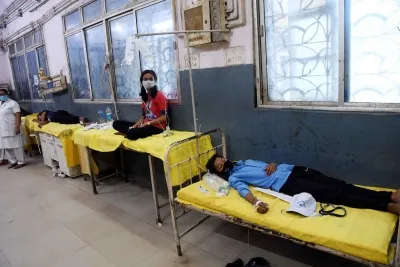
Mumbai Pydhonie family deaths: No food adulteration found, bodies showed abnormal green discolouration

Synopsis
Four members of a Mumbai family died after eating watermelon and biryani — but the food was clean. With morphine detected in post-mortem reports, abnormal green tissue discolouration flagged, and unidentified foreign particles found in viscera, investigators are now racing to determine whether this was accidental poisoning, contamination, or something more sinister.
Key Takeaways
Abdullah Dokadia , 40, wife Nasreen , 35, and daughters Ayesha , 16, and Zainab , 13, died in Pydhonie, Mumbai on 26 April after consuming watermelon and biryani.
The Maharashtra FDA found no adulteration in 11 food samples collected from the family's residence.
Post-mortem report indicated presence of morphine and an abnormal green discolouration in body tissues, potentially caused by a toxic substance.
The Kalina Forensic Laboratory detected unidentified foreign particles in viscera samples; their nature — toxic, medicinal, or otherwise — remains undetermined.
Police have found no suspicious financial transactions , no family disputes, and no concrete digital leads as of yet; the toxicology report is awaited.
Four members of a Mumbai family died under mysterious circumstances in the Pydhonie area after consuming watermelon and biryani, with preliminary investigations by the Maharashtra Food and Drug Administration (FDA) finding no adulteration in 11 food samples collected from the family's residence, officials confirmed on Saturday, 2 May. Authorities are now awaiting a detailed toxicology report to determine the actual cause of death.
Who the Victims Were
Abdullah Dokadia, 40, his wife Nasreen, 35, and their two daughters Ayesha, 16, and Zainab, 13, all passed away after falling ill on 26 April. Abdullah had been the first to be hospitalised, informing doctors that the family experienced a sudden deterioration in health after eating watermelon. All four individuals subsequently died.
What the Food and Forensic Tests Revealed
The FDA examined 11 food samples from the family's home in Pydhonie, including biryani, watermelon, water stored in earthen pots and from the refrigerator, raw and cooked rice, raw and cooked chicken, dates, and spices. No harmful substances or evidence of adulteration were detected in any of the samples.
However, the post-mortem report, according to police, indicated the presence of morphine — a painkiller — in the bodies. Notably, the report also revealed an abnormal green discolouration in certain body tissues, a phenomenon that officials say could potentially be caused by a toxic substance. An official from the Kalina Forensic Laboratory confirmed that preliminary examination of viscera samples revealed the presence of unidentified foreign particles, though it remains unclear at this stage whether these substances are toxic, medicinal, or of some other nature.
Status of the Police Investigation
The Mumbai Police have registered an Accidental Death Report (ADR) and initiated a multi-angle investigation. An officer associated with the probe stated,
Point of View
Calling this a food poisoning case remains premature.
NationPress
26 Sept 2026
Frequently Asked Questions
What caused the deaths of the Pydhonie family in Mumbai?
The exact cause of death has not yet been confirmed. Four members of the Dokadia family died on 26 April after consuming watermelon and biryani, but the Maharashtra FDA found no adulteration in 11 food samples. Post-mortem reports revealed the presence of morphine and abnormal green discolouration in body tissues; a detailed toxicology report is awaited.
Was adulteration found in the food consumed by the Mumbai family?
No. The Maharashtra Food and Drug Administration examined 11 food samples — including biryani, watermelon, water, rice, chicken, dates, and spices — and found no harmful substances or evidence of adulteration in any of them.
What did the post-mortem report reveal about the Pydhonie family deaths?
The post-mortem report indicated the presence of morphine, a painkiller, in the bodies. It also flagged an abnormal green discolouration in certain body tissues, which officials say could potentially be caused by a toxic substance. The Kalina Forensic Laboratory additionally found unidentified foreign particles in viscera samples.
What is the current status of the Mumbai Police investigation into the Pydhonie deaths?
Mumbai Police have registered an Accidental Death Report and are investigating from all angles. No suspicious financial transactions, family disputes, or concrete digital leads have surfaced so far. Police are awaiting detailed reports from the Kalina Forensic Laboratory, the FDA, and JJ Hospital before drawing any conclusions.
When will the toxicology report in the Mumbai Pydhonie deaths case be available?
A specific timeline has not been announced by authorities. The toxicology report, expected from the Kalina Forensic Laboratory, will clarify whether any poison was consumed, and if so, determine the timeline of its ingestion.