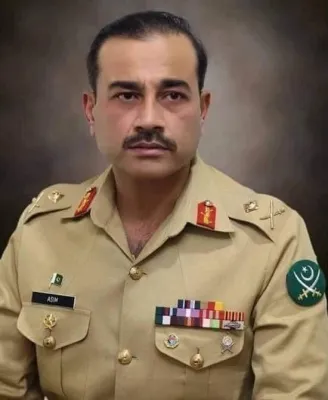
Asim Munir's Struggle for Narrative Control Amid Global Setbacks
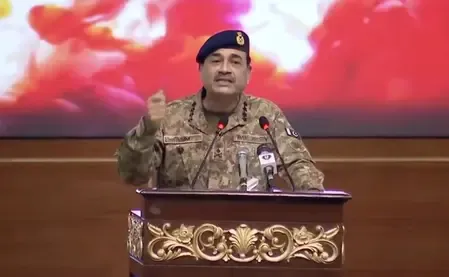
Synopsis
Asim Munir's attempts to reshape Pakistan's narrative following Operation Sindoor face fierce challenges. With escalating doubts about military capabilities and a series of diplomatic failures, his efforts are met with skepticism both domestically and internationally.
Key Takeaways
Pakistan's Misinformation Campaign: Aimed at countering criticism of military failures.
Asim Munir's Challenges: Struggling to maintain narrative control after Operation Sindoor.
Global Media Skepticism: Increasing doubts about Pakistan's claims on the international stage.
Strategic Media Initiatives: Establishing new media outlets to promote favorable narratives.
Diplomatic Setbacks: Failure to effectively manage relations with key regional players.
New Delhi, April 7 (NationPress) Pakistan has embarked on an elaborate campaign of misinformation against India. Known for its support of terrorist organizations targeting India, Pakistan is now waging a different type of warfare: the dissemination of fabricated narratives about its neighboring country.
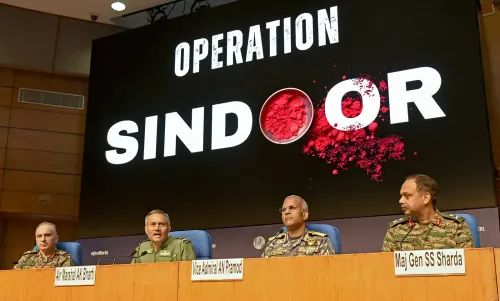
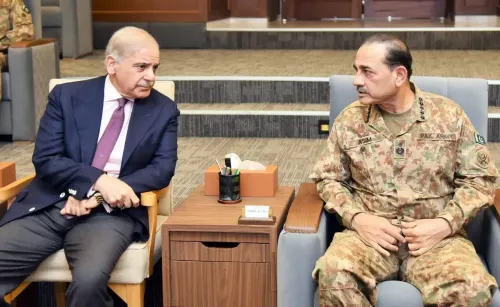
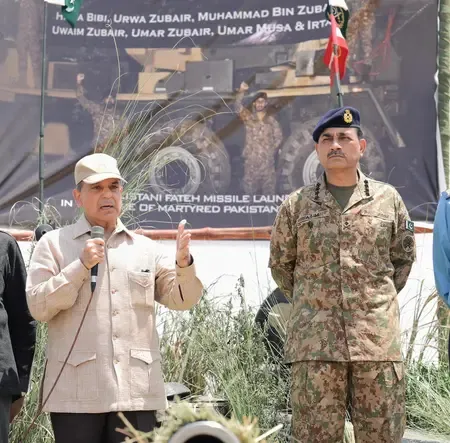
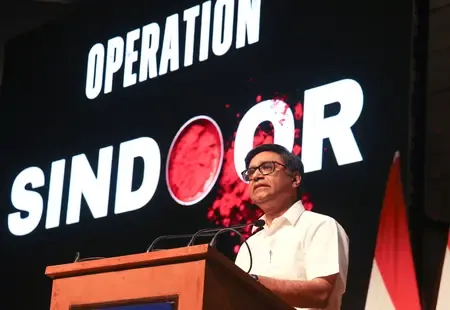
The surge in these misleading stories can be attributed to Field Marshal Asim Munir’s shortcomings and his urgent need to craft his own legacy. A significant setback for Munir came with Operation Sindoor, during which the Indian Armed Forces dismantled terror infrastructure.
An official from the Intelligence Bureau remarked that the largest challenge Munir encountered stemmed from Pakistan's own proxies. Particularly, the Jaish-e-Mohammad (JeM) openly questioned the Pakistan Army's and ISI’s ability to safeguard their operations after the Indian forces dismantled their headquarters in Bahawalpur.
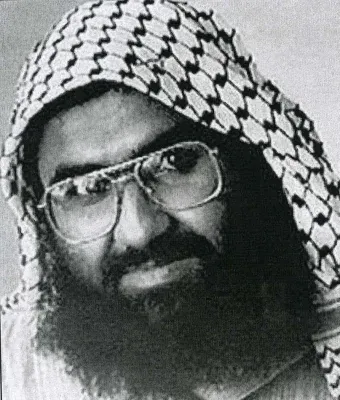
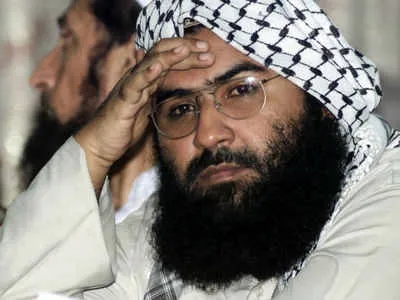
JeM leader, Masood Azhar, is reportedly disillusioned with the establishment and has been largely absent since Operation Sindoor. Another official noted that the raising of doubts about the Pakistan Army's capabilities made it essential for Munir to engage in a campaign of false narratives against India.
While this strategy had some initial success, it unraveled as Pakistan faced a series of diplomatic setbacks in its dealings with foreign nations. Observers of Pakistan's foreign policy note that its reputation has been rapidly deteriorating.
The situation in Afghanistan proved to be another significant blow to Asim Munir. He had hoped to easily maneuver the Afghan Taliban, but that strategy faltered. Following the Taliban's return to power, Pakistan aspired to exert control over Afghanistan, which has since expressed a desire for independence in its foreign policy.
A major setback occurred when the Afghan Taliban restored relations with India, leading the Pakistan Army to falsely claim that the Taliban had provided a safe haven for the Tehreek-e-Taliban Pakistan (TTP) to conduct attacks.
The Afghan Taliban has firmly rejected these assertions, yet Pakistan initiated a conflict against Afghanistan. Disnfo Lab, a research group focused on Info-Warfare and Psy-war, reported that since Operation Sindoor, Munir has been attempting to establish his legacy as a prominent leader.
Pakistan has been experiencing a frosty reception from the UAE, Saudi Arabia, Iran, and Afghanistan. Munir is frantically trying to create a narrative as his survival depends on it. However, the global media is not accepting his narrative, prompting Pakistan to build its own press network to propagate its preferred narratives.
Disnfo Lab highlighted the establishment of the Himalayan Institute of Research and Policy Studies (HIRPS) at the Minhaj Institute in Lahore. This institute claims to study geopolitics, security, and climate across the Himalayan region, extending from Pakistan to China, India, and Central Asia. Founded in November 2025, it is headed by Prof. Dr. Hussain Mohi-ud-Din Qadri, a known critic of India, and includes a mix of academics, retired military personnel, and others engaged in an anti-India agenda.
An official stated that HIRPS aims to facilitate discussions and conduct studies. While it publicly claims to focus on geopolitics, its true intention appears to be hosting global conferences and promoting a false narrative against India.
The institute seeks to depict India as the aggressor in the region to attract media attention, the official added.
Additionally, Pakistan has drafted the Strategic Communication Master Plan 2025 (STRATCOM 2025), aimed at developing English-language media platforms to broadcast its misleading narratives globally. In line with Munir’s ambition for international recognition, several media outlets have been established, including AsiaOne News (Karachi, July 2025), Pakistan TV Digital (August 2025), DM News English (Manchester, UK, August 2025), FP92TV (Paris, operational from 2024), and Afrik1 TV.
AsiaOne, headquartered in Karachi, launched just two months post-Operation Sindoor. It recruited presenters from Turkey, Nigeria, the UK, and Australia to create an international appeal. The channel is owned by 365 Digital Media Company, founded by former TRT World journalist Naveed Qamar Baloch, who has close connections with the ISI.
TRT, a Turkish state-funded media organization, has been instrumental in helping Pakistan propagate its misleading narratives against India, often amplifying false claims made by the DG ISPR. For instance, during Operation Sindoor, TRT circulated fabricated reports that Indian jets were intercepted by Pakistani forces.
Another media outlet initiated by the Pakistani establishment is DM News English, founded by Dr. Liaqat Malik, a British Pakistani based in Manchester. This outlet presents itself as British, operating studios in Manchester, Birmingham, London, and Lahore. The founder is notorious for spreading misinformation and has frequently promoted illicit activities on air.
To ensure that Pakistan’s false narratives reach audiences beyond English speakers, FP92TV, a French-Urdu digital channel, was also launched.
These developments indicate that Pakistan is struggling to maintain its global narrative, with the international media increasingly skeptical of its claims.
Pakistan had touted its role in brokering a ceasefire between Iran and the United States, yet Iran has cited a significant trust deficit. This was Munir's prime opportunity to mold his legacy as a global leader, but it did not materialize. Although Pakistan has a military alliance with Saudi Arabia, it failed to uphold it amidst tensions with Iran.
Even the UAE, which has faced challenges during the ongoing conflict, harbors considerable trust issues with Pakistan, perceiving it as opportunistic. An official explained that questions regarding Asim Munir’s leadership are being raised both domestically and internationally. This explains his establishment of numerous media outlets, as he seeks global attention and hopes these platforms will help him gain recognition in the international media.
Munir has also managed to suppress local media while promoting these new outlets that present themselves as global brands.
Another official noted that Pakistan’s miscalculations in Pahalgam have severely damaged its narrative and reputation. The Indian government’s decisive response through Operation Sindoor has left Asim Munir struggling to cope with the aftermath.
Point of View
The ongoing narrative battle reflects deep-seated issues within Pakistan's military and diplomatic strategies. The situation is dire, with a need for accountability and a reevaluation of their approach towards regional relations.
NationPress
20 Oct 2026
Frequently Asked Questions
What is Operation Sindoor?
Operation Sindoor refers to a military operation carried out by the Indian Armed Forces to dismantle terror infrastructure in Pakistan.
What role does the Jaish-e-Mohammad play in this context?
The Jaish-e-Mohammad (JeM) has questioned the capabilities of the Pakistan Army, particularly following the Indian Armed Forces' actions during Operation Sindoor.
What is the Strategic Communication Master Plan 2025?
The STRATCOM 2025 is Pakistan's initiative aimed at developing media platforms to project its narratives globally, particularly in English.
How is Pakistan's relationship with Afghanistan currently?
Pakistan's relationship with Afghanistan is strained, especially after the Afghan Taliban rejected claims of aiding the Tehreek-e-Taliban Pakistan.