President Murmu visits Atal Tunnel, hails BRO's engineering marvel
Synopsis
President Droupadi Murmu's visit to the Atal Tunnel wasn't ceremonial — it was a reminder that the world's longest highway tunnel, bored through the Himalayas at 10,000 feet, continues to reshape life in one of India's most isolated valleys. Six years after inauguration, the BRO-built passage remains a defining symbol of India's strategic infrastructure push in its border regions.
Key Takeaways
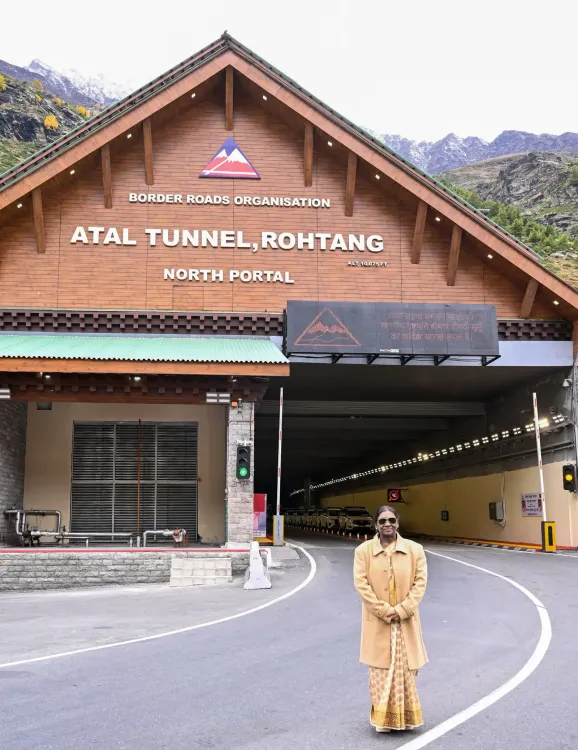
President Droupadi Murmu travelled through the Atal Tunnel in Himachal Pradesh on 7 October 2026 , calling it an engineering marvel of global standards.
The 9.02-km tunnel, built by the Border Roads Organisation (BRO) , is the world's longest highway tunnel.
Inaugurated by Prime Minister Narendra Modi in 2020 , it connects Manali to Lahaul-Spiti Valley year-round, ending a seasonal six-month isolation.
The tunnel reduces the Manali–Leh road distance by 46 km and travel time by four to five hours .
Located at 3,000 metres in the Pir Panjal range, it is designed for 3,000 cars and 1,500 trucks per day at a maximum speed of 80 km/h .
President Murmu is scheduled to return to New Delhi on 8 October after concluding her Himachal Pradesh visit.
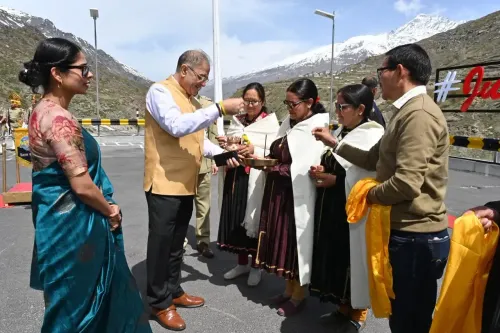
President Droupadi Murmu on Wednesday, 7 October 2026, travelled through the Atal Tunnel in the Rohtang region of Himachal Pradesh, describing the structure as an engineering marvel that reflects India's technological prowess and its commitment to connectivity in some of the country's most demanding terrains. The visit came during the President's ongoing stay in Manali, ahead of her scheduled return to New Delhi on 8 October.
President's Remarks on the Tunnel
In a post on X, President Murmu wrote that the Atal Tunnel is 'an engineering marvel of global standards, constructed with exemplary dedication by the Border Roads Organisation (BRO).' She added: 'This iconic infrastructure stands as a testament to India's technological prowess, determination and commitment to ensuring seamless connectivity in the most challenging terrains.'
Himachal Pradesh Governor Shiv Pratap Shukla, who accompanied President Murmu, described the day as 'an inspiring moment,' noting that the tunnel has brought Lahaul-Spiti closer to the rest of the nation. He called it 'a world-class feat of engineering' and a showcase of India's strength in modern infrastructure and strategic development.
What Makes the Atal Tunnel Significant
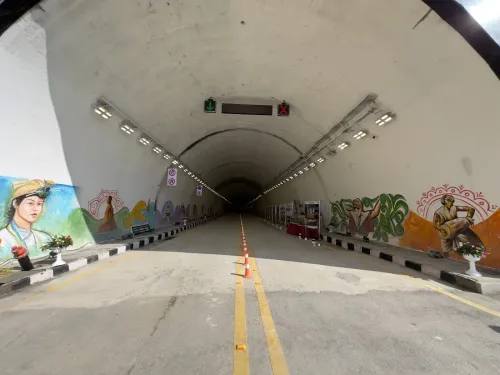
Inaugurated in 2020 by Prime Minister Narendra Modi, the 9.02-km-long Atal Tunnel is the longest highway tunnel in the world. Built in the Pir Panjal range of the Himalayas at an altitude of 3,000 metres (10,000 feet) above mean sea level, it provides year-round road connectivity between Manali and the Lahaul-Spiti Valley — a corridor that was previously cut off for roughly six months every year due to heavy snowfall.
The tunnel reduces the road distance between Manali and Leh by 46 km and cuts travel time by approximately four to five hours, making it a critical artery for both civilian movement and strategic logistics.
Engineering Specifications
The Atal Tunnel is horseshoe-shaped, single-tube, and double-lane, with an eight-metre-wide roadway and an overhead clearance of 5.525 metres. It has been designed to handle a traffic density of up to 3,000 cars and 1,500 trucks per day, with a maximum speed limit of 80 km per hour.
The South Portal is located 25 km from Manali at an altitude of 3,060 metres, while the North Portal sits near Teling village in Sissu, Lahaul Valley, at 3,071 metres.
Strategic and Humanitarian Impact
Beyond its engineering credentials, the tunnel carries substantial strategic value. The Lahaul-Spiti Valley borders sensitive regions, and year-round access is considered vital for defence logistics and troop movement. Notably, the BRO — the organisation credited with building the tunnel — has accelerated infrastructure delivery in border areas significantly over the past decade.
For local communities in Lahaul-Spiti, the tunnel has transformed everyday life: medical emergencies, supply chains, and educational access that were seasonally disrupted for half the year are now uninterrupted. President Murmu's visit underscores the tunnel's continuing national significance, six years after its inauguration.
President Murmu is scheduled to conclude her Himachal Pradesh visit on 8 October and return to New Delhi, with the Atal Tunnel stop marking a highlight of her itinerary.
Point of View
But it signals something more deliberate: the Centre's consistent effort to frame border infrastructure as a national-pride narrative rather than a defence necessity alone. The Atal Tunnel is genuinely transformative for Lahaul-Spiti — but the BRO's pipeline of projects in Arunachal Pradesh, Ladakh, and Uttarakhand, many still delayed, deserves the same spotlight. Celebrating one landmark while the broader border-connectivity programme remains uneven is a pattern worth tracking.
NationPress
8 Oct 2026
Frequently Asked Questions
What is the Atal Tunnel and where is it located?
The Atal Tunnel is the world's longest highway tunnel at 9.02 km, located in the Pir Panjal range of the Himalayas in Himachal Pradesh at an altitude of 3,000 metres. It connects Manali to the Lahaul-Spiti Valley and was inaugurated by Prime Minister Narendra Modi in 2020.
Why did President Murmu visit the Atal Tunnel?
President Droupadi Murmu was on an official visit to Himachal Pradesh and travelled through the Atal Tunnel on 7 October 2026, praising it as an engineering marvel of global standards built by the Border Roads Organisation. She is scheduled to return to New Delhi on 8 October.
How has the Atal Tunnel changed life in Lahaul-Spiti?
Before the tunnel opened, Lahaul-Spiti Valley was cut off from the rest of Himachal Pradesh for roughly six months every year due to heavy snowfall blocking mountain passes. The tunnel now provides year-round road access, improving supply chains, medical services, and daily connectivity for local communities.
What are the key specifications of the Atal Tunnel?
The Atal Tunnel is 9.02 km long, horseshoe-shaped, single-tube, and double-lane, with an eight-metre-wide roadway and an overhead clearance of 5.525 metres. It is designed for up to 3,000 cars and 1,500 trucks per day at a maximum speed of 80 km/h, situated at 3,000 metres above sea level.
Who built the Atal Tunnel and when was it inaugurated?
The Atal Tunnel was built by the Border Roads Organisation (BRO) and inaugurated by Prime Minister Narendra Modi in 2020. It reduces the road distance between Manali and Leh by 46 km and cuts travel time by approximately four to five hours.