Wayanad Muslim brothers perform last rites for 85-year-old Hindu woman, Kerala CM hails act

Synopsis
In Wayanad's Chithragiri village, two Muslim brothers cared for an 85-year-old Hindu woman with no family and performed her last rites — a gesture Kerala CM Satheesan personally called to acknowledge. The story has gone viral as a rare, unscripted moment of inter-faith humanity from a district more often in the news for other reasons.
Key Takeaways
Kalyani Amma , aged 85 , of Chithragiri, Moopainad Panchayat, Wayanad , died with no children or relatives.
Muslim brothers Razak and Sulaiman and their family cared for her in her final years and performed her last rites .
Kerala Chief Minister V.D.
Satheesan publicly hailed the act in a social media post and personally called Razak on Wednesday morning .
Satheesan quoted the headline: 'Kalyani Amma departed this world wrapped in the silk cloth of humanity.' The CM has promised to meet the brothers and their family during an upcoming visit to Wayanad .
In a rare and moving act of communal harmony, two Muslim brothers from Wayanad district in Kerala cared for an 85-year-old Hindu woman through her final years and performed her last rites after she passed away, having no children or relatives of her own. The story, originating from Chithragiri in Moopainad Panchayat, has drawn widespread attention and the personal acknowledgement of Kerala Chief Minister V.D. Satheesan.
A Family Found in Neighbours
Kalyani Amma, aged 85, lived alone in Chithragiri with no immediate family to care for her. As advancing age and illness left her increasingly frail, her neighbours — brothers Razak and Sulaiman along with their family — stepped in, tending to her needs as they would for their own mother. The two brothers ensured she was never left alone through her difficult final days.
When Kalyani Amma passed away, Razak and Sulaiman took full responsibility for her last rites, conducting them with the devotion and care befitting a family member. The gesture has since resonated far beyond the quiet panchayat where it occurred.
Chief Minister Satheesan Reaches Out
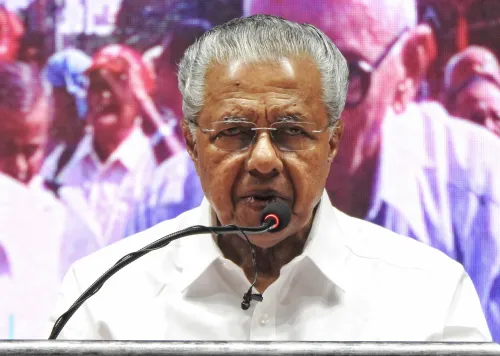
Chief Minister V.D. Satheesan hailed the brothers publicly, describing the incident as a true Kerala story embodying the spirit of human love and compassion. In a social media post, the Chief Minister recalled the headline of the news report he had read: 'Kalyani Amma departed this world wrapped in the silk cloth of humanity.'
'There are no words to say beyond that,' Satheesan wrote in his post.
Satheesan said he called Razak on Wednesday morning to personally convey the support and gratitude of Kerala for the family's gesture. He also promised to meet the brothers and their family during an upcoming visit to Wayanad.
Why This Story Matters
The incident has once again brought into focus how bonds of neighbourly compassion can transcend religious differences. Kalyani Amma's story is not simply one of kindness — it is a reminder of the social fabric that sustains elderly individuals who fall outside formal care networks. With India's elderly population growing and institutional elder care still underdeveloped in rural areas, informal community support systems like the one Razak and Sulaiman provided carry an outsized social weight.
Notably, Wayanad — a district that has grappled with communal tensions in the past — emerges here as the setting for a story of quiet, unremarked solidarity. This is the kind of human interest that travels: in the days since the story broke, it has circulated widely on social media, drawing responses from across Kerala and beyond.
The Broader Context
Stories of inter-faith solidarity have periodically emerged from Kerala, often cited as evidence of the state's historically syncretic social culture. However, advocates for the elderly point out that such acts of individual compassion should not substitute for structured community and state support for isolated senior citizens. The story of Kalyani Amma underscores a gap that welfare systems — both state and local — are yet to fully address.
Chief Minister Satheesan's public acknowledgement is likely to give the story wider national reach, lending institutional weight to what began as a quietly human act in a small village in Wayanad.
Point of View
But the act gains its moral authority from its anonymity and ordinariness. What mainstream coverage tends to miss is the structural undercurrent: Kalyani Amma's isolation reflects a wider failure of elder-care systems in rural Kerala and India at large. Individual compassion should not be the last line of defence for the elderly without family. The question policymakers should be asking is not just 'why are some neighbours so good?' but 'why are so many elderly people left so alone?'
NationPress
11 Nov 2026
Frequently Asked Questions
Who are Razak and Sulaiman, and what did they do?
Razak and Sulaiman are Muslim brothers from Chithragiri in Moopainad Panchayat, Wayanad, Kerala. They cared for their elderly Hindu neighbour Kalyani Amma, aged 85, through her final years and performed her last rites after she passed away, as she had no children or relatives of her own.
Why did Kerala CM Satheesan react to this story?
Chief Minister V.D. Satheesan hailed the brothers' act as a true example of Kerala's spirit of human compassion. He posted about it on social media, personally called Razak on Wednesday morning to convey Kerala's gratitude, and promised to visit the family during his next trip to Wayanad.
Where did this incident take place?
The incident took place in Chithragiri, a locality in Moopainad Panchayat in Wayanad district, Kerala.
What did CM Satheesan say in his post?
Satheesan quoted the headline 'Kalyani Amma departed this world wrapped in the silk cloth of humanity' and wrote, 'There are no words to say beyond that.' He described the incident as a true Kerala story embodying the spirit of human love and compassion.
Why does this story resonate beyond Kerala?
The story highlights both the power of inter-faith community bonds and the vulnerability of elderly individuals without family support in rural India. It has drawn wide attention on social media as a symbol of quiet, unannounced human solidarity.