Muthanga verdict: 21 guilty, 35 acquitted after 23-year Kerala trial

Synopsis
After 23 years, the Wayanad court has closed the criminal chapter on the Muthanga police firing — but not cleanly. The CBI's murder conspiracy charges collapsed entirely, 35 accused walk free, and the one man found responsible for killing Constable Vinod is already dead. Meanwhile, tribal groups are still waiting for justice over protester Jogi's killing in the same confrontation.
Key Takeaways
The Wayanad District Principal Sessions Court delivered its verdict on 31 July , ending a 23-year criminal trial.
35 accused were acquitted ; 21 were convicted of rioting, unlawful assembly, and forest encroachment.
The court found constable K.V.
Vinod was killed by Ashokan (the second accused), who died during the trial — making a murder sentence impossible.
The CBI failed to prove charges of murder conspiracy and attempted murder against the remaining accused.
The case stemmed from the 19 February 2003 eviction of Adivasi families from the Muthanga Wildlife Sanctuary during the A.K.
Tribal organisations continue to demand accountability for the death of protester Jogi , allegedly killed in police firing, which they say was never properly investigated.
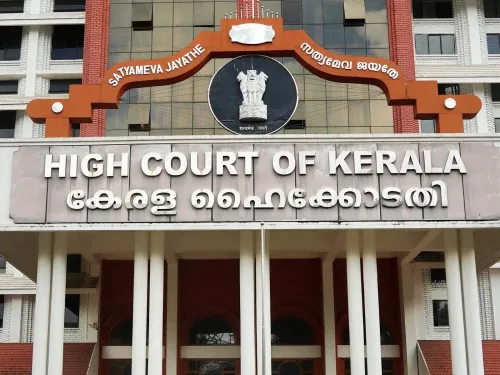
The Wayanad District Principal Sessions Court on Friday, 31 July delivered its verdict in the long-pending murder case of Kerala Armed Police constable K.V. Vinod, closing a criminal trial that had stretched over 23 years since the violent Muthanga Wildlife Sanctuary eviction of 2003. Principal Sessions Judge A. Ayyub Khan acquitted 35 of the accused while convicting 21 others on charges including rioting, unlawful assembly, and encroachment into forest land.
Key Findings of the Court
The court established that Constable Vinod, attached to the Kerala Armed Police Fourth Battalion, was killed by the second accused, Ashokan — who died during the course of the trial. With the sole individual held responsible for the murder no longer alive, no sentence can be imposed for the homicide.
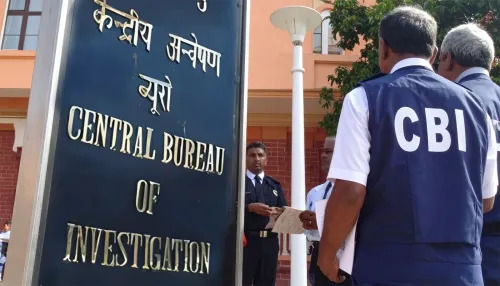
Critically, the court ruled that the Central Bureau of Investigation (CBI) failed to prove charges of murder conspiracy and attempted murder. The remaining 21 convictions pertain exclusively to offences connected with the broader violence during the confrontation.
Background: The 2003 Muthanga Occupation
The case traces its origins to 19 February 2003, when security forces launched an operation to evict hundreds of Adivasi families who had occupied land inside the Muthanga Wildlife Sanctuary under the banner of the Adivasi Gothra Maha Sabha (AGMS). The 47-day occupation, led by tribal leaders C.K. Janu and M. Geethanandan, had drawn national attention to the land rights demands of Kerala's indigenous communities.
The eviction, carried out during the tenure of the A.K. Antony government, descended into violent clashes that claimed two lives — Constable Vinod and tribal protester Jogi. The CBI subsequently charged 57 persons, including Geethanandan, alleging that Vinod was taken hostage inside a makeshift shed and murdered during the confrontation.
Why the Conspiracy Charges Collapsed
The defence had consistently argued that no direct eyewitness to the alleged murder existed. According to the defence, journalists and other witnesses were stationed at a distance, and dense smoke from continuous police firing and grenade explosions made it impossible to determine what occurred inside the shed. The court ultimately found the evidence insufficient to sustain the conspiracy charges — a significant setback for the CBI's case after more than two decades of prosecution.
Unresolved Questions and What Comes Next
While the verdict formally concludes the criminal proceedings over Constable Vinod's death, tribal organisations have reiterated their demand for accountability over the killing of protester Jogi during the police firing — a death they allege was never subjected to a meaningful investigation. The emotional and political wounds of Muthanga, they argue, remain open.
The 21 convicted individuals are expected to face sentencing proceedings in the coming weeks. The verdict is likely to reignite debate in Kerala over the state's approach to Adivasi land rights and the use of force during the 2003 eviction.
Point of View
While Jogi's killing in the same police action remains, according to tribal groups, uninvestigated in any meaningful sense. That imbalance is not incidental; it reflects a persistent pattern in how the Indian state treats violence against its own personnel versus violence against marginalised communities. The sentencing of the 21 convicted will be watched closely, but the deeper accountability deficit — on both sides of the 2003 confrontation — is unlikely to be addressed by this verdict alone.
NationPress
14 Sept 2026
Frequently Asked Questions
What was the Muthanga case about?
The Muthanga case arose from a police operation on 19 February 2003 to evict Adivasi families who had occupied land inside the Muthanga Wildlife Sanctuary in Wayanad, Kerala, under the Adivasi Gothra Maha Sabha. The 47-day occupation ended in violent clashes that killed both a police constable, K.V. Vinod, and a tribal protester, Jogi. The CBI subsequently charged 57 persons with murder conspiracy and other offences.
What did the Wayanad court decide on 31 July?
The Wayanad District Principal Sessions Court acquitted 35 of the accused and convicted 21 others on charges of rioting, unlawful assembly, and forest encroachment. The court ruled that the CBI failed to prove murder conspiracy or attempted murder, and found that constable Vinod was killed by the second accused, Ashokan, who died during the trial.
Why can no one be sentenced for the murder of constable Vinod?
The court found that Vinod was killed by Ashokan, identified as the second accused in the case. However, Ashokan died during the course of the 23-year trial, making it legally impossible to impose a murder sentence. The remaining convictions cover only violence-related offences, not the homicide itself.
What happens to the 21 convicted individuals?
The 21 persons convicted of rioting, unlawful assembly, and encroachment into forest land are expected to face sentencing proceedings before the Wayanad District Principal Sessions Court in the coming weeks.
Why do tribal organisations say justice is still pending?
Tribal groups argue that the death of protester Jogi — killed during the police firing on 19 February 2003 — was never subjected to a credible investigation. While the criminal case focused on the killing of Constable Vinod, organisations representing Adivasi communities contend that accountability for Jogi's death remains unaddressed even after the verdict.