Kerala HC questions Muthanga verdict, flags trial court inconsistencies
Synopsis
Two decades after the bloodiest tribal confrontation in Kerala's recent history, the High Court has cast doubt on the very logic of the Muthanga conviction — questioning how a trial court can find only a prima facie conspiracy yet still sentence four people to five years. The legal inconsistency flagged could unravel a judgment delivered just days ago.
Key Takeaways
The Kerala High Court on Thursday raised doubts over the Wayanad Principal Sessions Court verdict convicting tribal leader M.
Geethanandan and three others in the 2003 Muthanga agitation case .
The court questioned how the trial court could find only a prima facie case of criminal conspiracy yet still convict and sentence the accused after a full trial.
The Sessions Court had sentenced the four to five years' rigorous imprisonment and ordered payment of ₹7 lakh compensation to the family of slain constable K.V.
The High Court issued notices to the CBI and the Kerala state government and posted the appeals for further hearing.
The Muthanga agitation of 19 February 2003 involved over 800 tribal families occupying the Muthanga Wildlife Sanctuary in Wayanad to demand land rights.
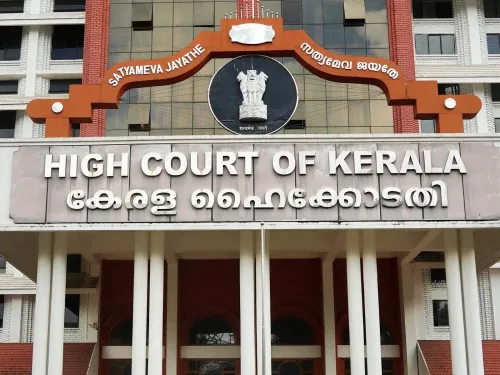
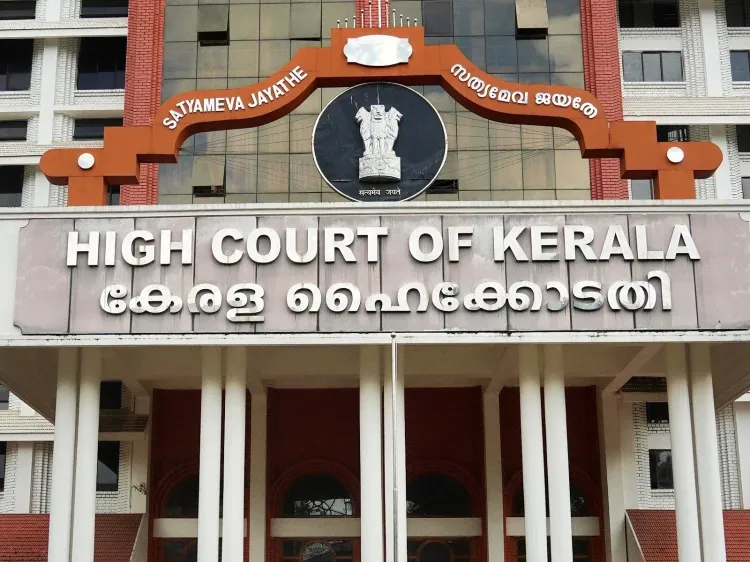
The Kerala High Court on Thursday raised serious doubts over the conviction of tribal leader M. Geethanandan and three others by the Wayanad Principal Sessions Court in the 2003 Muthanga agitation case, observing that the trial court's findings appeared to contain inconsistencies that warranted closer judicial scrutiny. The High Court was hearing appeals filed by Geethanandan and the three co-convicts seeking to set aside both their conviction and sentence.
The Core Legal Question
At the heart of the High Court's concern was a specific and contradictory finding in the Sessions Court judgment. The court questioned how a trial court delivering a final verdict — after a full-fledged trial — could simultaneously conclude that only a prima facie case of criminal conspiracy had been established against the accused.
Such a conclusion, the High Court indicated, appeared fundamentally inconsistent with the act of convicting and sentencing the accused. The court observed that the verdict required detailed examination and issued notices to the Central Bureau of Investigation (CBI) and the Kerala state government, posting the appeals for further hearing.
What the Sessions Court Had Decided
The Wayanad Principal Sessions Court had, only days before the High Court hearing, sentenced Geethanandan and three others to five years' rigorous imprisonment along with a fine, after finding them guilty of attempting to murder police officer Salam during the police operation at Muthanga.
The Sessions Court had additionally directed the convicts to pay ₹7 lakh as compensation to the family of police constable K.V. Vinod, who was killed during the violence that erupted at the site.
Background: The 2003 Muthanga Agitation
The case traces its origins to 19 February 2003, when tribal families led by C.K. Janu and Geethanandan occupied land inside the Muthanga Wildlife Sanctuary in Wayanad, demanding that the government honour its promise of distributing land to landless Adivasi communities.
The occupation followed the collapse of negotiations with the then A.K. Antony-led state government, which had allegedly failed to fulfil assurances made after a prolonged protest by the Adivasi Gothra Maha Sabha outside the state Secretariat. More than 800 tribal families had erected makeshift shelters inside the sanctuary before a police eviction drive culminated in one of Kerala's most violent tribal confrontations in recent memory.
Significance of the High Court's Observations
The High Court's intervention reopens what has long been one of Kerala's most politically and socially charged criminal cases. The Muthanga agitation remains a touchstone in debates over Adivasi land rights, state accountability, and the use of police force against marginalised communities.
Notably, the fact that the High Court flagged a logical inconsistency in the very structure of the trial court's reasoning — rather than merely a factual dispute — suggests the appellate scrutiny could be extensive. With notices now issued to both the CBI and the state government, the case is set for a renewed and potentially far-reaching judicial examination.
Point of View
Not a conviction standard. If the trial court itself used that language in a final judgment, it suggests the verdict may not have met the burden of proof it was required to discharge. More broadly, the Muthanga case has never been purely a criminal matter — it sits at the intersection of Adivasi land rights, state violence, and political accountability. A High Court reversal, even partial, would carry consequences well beyond the courtroom, reigniting questions about why the 2003 eviction was ordered and who bears responsibility for the death of constable Vinod and the injuries sustained by tribal protesters.
NationPress
21 Sept 2026
Frequently Asked Questions
What is the Muthanga agitation case?
The Muthanga agitation case arises from a police eviction on 19 February 2003 at the Muthanga Wildlife Sanctuary in Wayanad , where over 800 tribal families had occupied forest land demanding the state government honour its promise of land distribution to landless Adivasis. The eviction turned violent, leaving police constable K.V. Vinod dead and several others injured.
What did the Wayanad Sessions Court decide?
The Wayanad Principal Sessions Court convicted tribal leader M. Geethanandan and three others for attempting to murder police officer Salam , sentencing them to five years' rigorous imprisonment and a fine. The court also ordered them to pay ₹7 lakh in compensation to the family of constable K.V. Vinod .
Why has the Kerala High Court raised doubts over the verdict?
The Kerala High Court found a logical inconsistency in the Sessions Court judgment: the trial court concluded only a prima facie case of criminal conspiracy existed, yet proceeded to convict and sentence the accused after a full trial. The High Court indicated this contradiction warranted detailed examination.
Who has been issued notices by the High Court?
The Kerala High Court issued notices to the Central Bureau of Investigation (CBI) and the Kerala state government , posting the appeals filed by Geethanandan and the three co-convicts for further hearing.
What is the Adivasi Gothra Maha Sabha?
The Adivasi Gothra Maha Sabha is a tribal rights organisation that led a prolonged protest outside the Kerala Secretariat demanding land for landless Adivasi communities. The collapse of negotiations between the organisation and the then A.K. Antony -led state government directly preceded the Muthanga occupation in 2003 .