BJP chief Nitin Nabin: Modi's 25 years prove what 'pro-incumbency' looks like
Synopsis
BJP President Nitin Nabin has mounted a pointed defence of PM Modi's 25-year political record, reframing electoral durability as proof of genuine governance rather than political luck. With Rahul Gandhi publicly questioning the disappearance of anti-incumbency in BJP-ruled states, this exchange marks the opening salvo of a narrative battle that will shape how parties contest upcoming elections.
Key Takeaways
BJP President Nitin Nabin praised PM Modi's 25 years of governance on 7 November 2026 , calling it a model of 'pro-incumbency'.
Nabin claimed around 25 crore people have come out of poverty under 12 years of Modi's leadership at the Centre.
He cited India's rise from the 'Fragile Five' to the world's top five economies as a key achievement.
Leader of Opposition Rahul Gandhi had earlier questioned why anti-incumbency 'suddenly disappears' in Maharashtra, Haryana, and Uttar Pradesh .
Gandhi referenced Indira Gandhi's post-1971 anti-incumbency to argue that no government is immune.
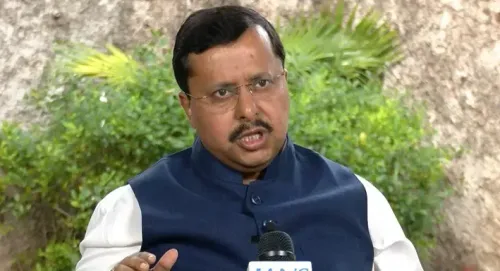
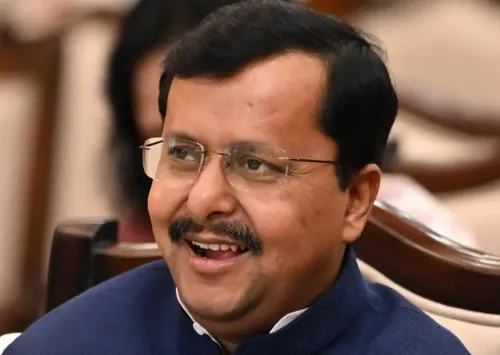
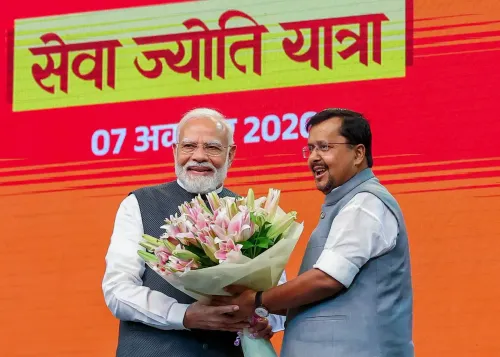
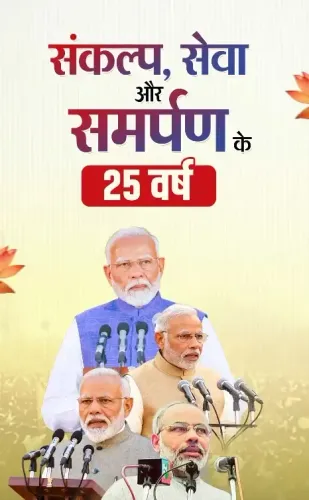
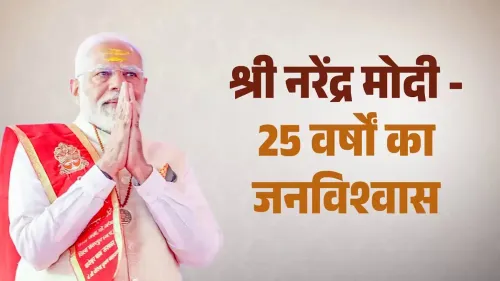
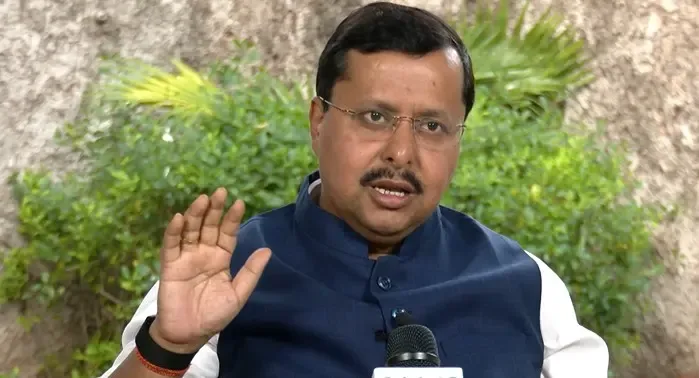
Bharatiya Janata Party (BJP) President Nitin Nabin on Saturday, 7 November hailed Prime Minister Narendra Modi's 25 years of governance, asserting that the Prime Minister has redefined what 'pro-incumbency' means in Indian politics. Speaking in an exclusive interaction, Nabin credited Modi's sustained electoral success to measurable welfare delivery rather than political management.
25 Years of Governance: Nabin's Assessment
'I consider these 25 years a period of service, dedication, and 'tapasya' (hard work). He has devoted 25 years of his life to serving the nation, society, and bringing change to the lives of the poor,' Nabin said. The BJP chief pointed to Modi's tenure as Chief Minister of Gujarat, arguing that the state emerged as a development model — branded as 'Vibrant Gujarat' — long before he assumed national office.
Nabin also cited Modi's handling of the 2002 Gujarat earthquake and its aftermath as a demonstration of administrative resilience. 'How the then-Gujarat Chief Minister steered the state out of the earthquake and its tragic aftermath stands as a testament of his governance,' he said.
Key Achievements Cited
The BJP president pointed to several milestones he attributed to 12 years of Modi's leadership at the Centre. Chief among them, he said, was poverty alleviation. 'Around 25 crore people have come out of poverty,' Nabin claimed, referencing government data on beneficiary outreach. He added that welfare transfers now reach intended recipients directly, reducing leakage — a claim the government has repeatedly made in support of the Direct Benefit Transfer architecture.
On national security, Nabin struck a sharper tone. 'Earlier our soldiers were beheaded but now under PM Modi's leadership no one can dare raise eyes towards India,' he said. He also invoked India's economic trajectory, noting that the country has moved from being counted among the so-called 'Fragile Five' economies to its current standing among the world's top five economies.
The 'Pro-Incumbency' Argument
The central thrust of Nabin's remarks was a direct rebuttal of the conventional anti-incumbency thesis in Indian electoral politics. 'Earlier, people used to talk about anti-incumbency but PM Modi proved what pro-incumbency looks like. If governments work for the welfare of the people, they do give (the party) chance again,' he said. This framing positions welfare delivery as an electoral shield — a narrative the BJP has increasingly leaned on ahead of state elections.
Rahul Gandhi's Counter-Argument
The remarks come in direct response to a line of questioning raised by Leader of Opposition in Lok Sabha Rahul Gandhi, who had addressed a press conference in Delhi in September, questioning the apparent 'absence of anti-incumbency' against the BJP in states like Maharashtra, Haryana, and Uttar Pradesh. Gandhi cited the example of former Prime Minister Indira Gandhi, noting that she faced anti-incumbency within one to two years of India's victory in the 1971 Bangladesh Liberation War. 'Despite prevailing anti-incumbency for years, it suddenly disappears from Maharashtra, Haryana, Uttar Pradesh,' Gandhi said, calling it a 'fundamental' question. Critics argue that electoral outcomes in these states warrant independent scrutiny of the pro-incumbency thesis.
With several state elections on the horizon, the pro-incumbency versus anti-incumbency debate is set to remain a defining frame for how both the ruling party and the opposition interpret voter mandates.
Point of View
But income inequality and unemployment data complicate the welfare narrative. Rahul Gandhi's question about anti-incumbency selectively vanishing in certain states is substantive, not merely rhetorical — and neither side has yet offered a falsifiable answer. The real test of 'pro-incumbency' as a political theory will come in the next round of state elections, where the welfare delivery record will be measured against voter sentiment on the ground.
NationPress
8 Nov 2026
Frequently Asked Questions
What did BJP President Nitin Nabin say about PM Modi's 25 years of governance?
Nabin described Modi's 25-year political career as a period of 'service, dedication, and tapasya', arguing that consistent welfare delivery has made the BJP immune to anti-incumbency. He credited Modi with lifting around 25 crore people out of poverty and moving India from the 'Fragile Five' to the top five global economies.
What does 'pro-incumbency' mean in this context?
'Pro-incumbency' refers to the idea that voters actively reward a government for performance rather than simply punishing it for being in power. Nabin used the term to argue that Modi's sustained electoral wins reflect genuine public satisfaction with governance, not political engineering.
What was Rahul Gandhi's argument about anti-incumbency?
Leader of Opposition Rahul Gandhi questioned why anti-incumbency appears to 'suddenly disappear' from BJP-ruled states like Maharashtra, Haryana, and Uttar Pradesh, calling it a 'fundamental' question. He cited Indira Gandhi's post-1971 electoral setback as evidence that no government escapes anti-incumbency indefinitely.
What was Nitin Nabin's claim about India's economic standing?
Nabin said India has moved from being counted among the 'Fragile Five' economies — a grouping of vulnerable emerging markets — to being among the world's top five economies, attributing this shift to PM Modi's governance model.
Why are these remarks politically significant right now?
With several state elections approaching, both the BJP and the opposition are shaping competing narratives on voter sentiment. The pro-incumbency versus anti-incumbency debate will directly influence how parties frame their campaigns and how analysts interpret election outcomes.