Nadda Addresses Samvidhan Hatya Diwas in Patna on Emergency Anniversary
Synopsis
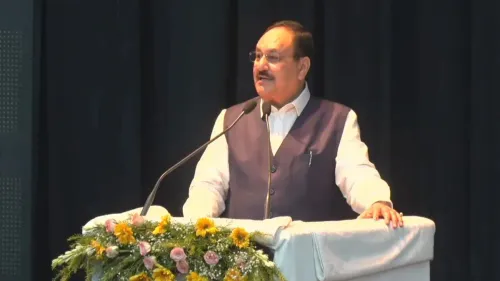
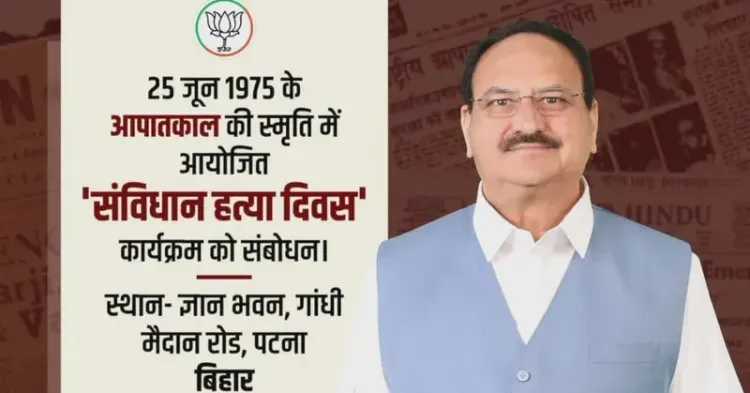
Union Health Minister and BJP president J. P. Nadda addressed the Samvidhan Hatya Diwas programme in Patna on 25 June 2026, marking 51 years since the imposition of the 1975 Emergency. The event, institutionalised as an official government observance since 2024, frames the Emergency as an assault on India's constitutional order.
Key Takeaways
Nadda addressed the Samvidhan Hatya Diwas programme in Patna, Bihar on 25 June 2026 .
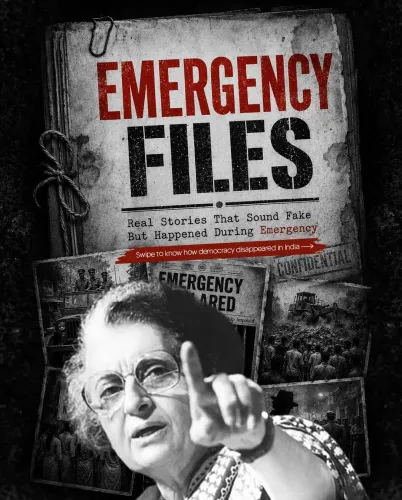
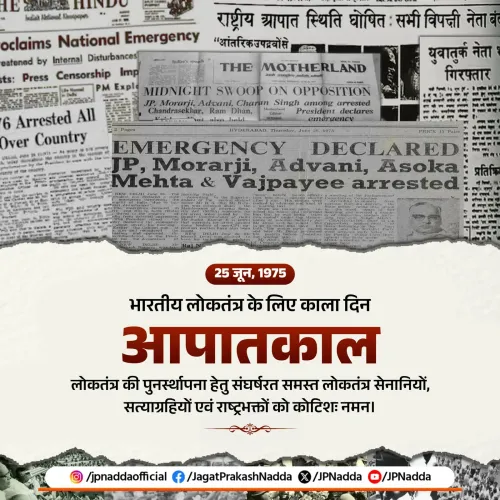
The event marks the 51st anniversary of the Emergency declared by then Prime Minister Indira Gandhi on 25 June 1975 .
The central government formally recognised Samvidhan Hatya Diwas as an official observance starting June 2024 , the 49th anniversary.
Bihar holds special symbolic weight for the commemoration due to its role as the epicentre of the Jayaprakash Narayan-led movement against the Emergency.
The BJP uses the annual event to frame its governance as a restoration of constitutional values against what it calls Congress-era authoritarianism.
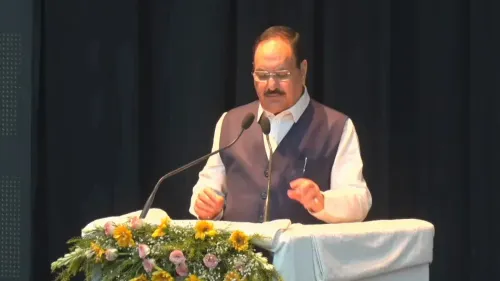
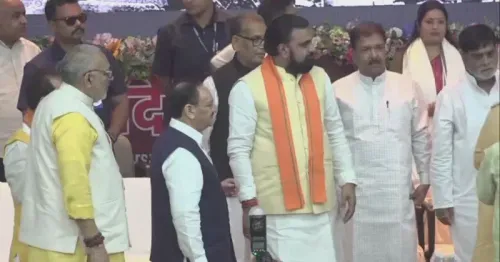
Union Health Minister and BJP national president J. P. Nadda addressed the Samvidhan Hatya Diwas programme in Patna, Bihar, on 25 June 2026, marking the 51st anniversary of the declaration of the Emergency imposed on 25 June 1975. The event, organised in memory of what the BJP frames as an assault on constitutional values, drew senior party leaders and supporters to the state capital.
Context
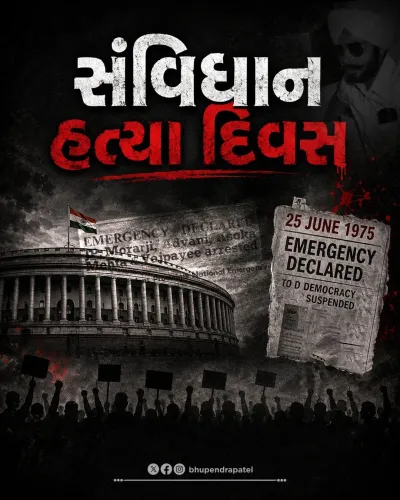
Nadda's post, shared on 25 June 2026, announced his address at the Patna event with the hashtag #SamvidhanHatyaDiwas — translating roughly as 'Constitution Murder Day' — a term the BJP uses to characterise the suspension of civil liberties ordered by then Prime Minister Indira Gandhi on 25 June 1975. The Emergency lasted from June 1975 to March 1977, a period during which fundamental rights were curtailed, the press was censored, and the Constitution of India was amended to concentrate power in the executive.
In his address, Nadda invoked the memory of the Emergency to underscore what he described as the importance of protecting constitutional norms. The event in Patna is one of several state-level observances held across India each year on this date.
Policy Backdrop
The central government formally observed the first official Samvidhan Hatya Diwas in June 2024, marking the 49th anniversary of the Emergency, institutionalising what had until then been a party-level commemoration. The move elevated the observance from a BJP political event to a government-recognised day of remembrance.
The BJP has, over successive years, used the Emergency anniversary to contrast the 1975–77 period with its own governance record, framing the occasion as a reminder of the cost of democratic backsliding. Bihar, as a state that witnessed significant political resistance to the Emergency — including the movement led by Jayaprakash Narayan — holds particular symbolic importance for these commemorations.
Stakeholders and Impact
The annual observance carries significance for multiple constituencies. For the BJP and its ideological ecosystem, it reinforces a historical narrative positioning the party as a defender of constitutional democracy against what it characterises as Congress-era authoritarianism. For the Congress party and opposition groups, the framing is contested — they argue the event is politically motivated rather than a genuine constitutional tribute.
Citizens, civil society groups, and constitutional scholars engage with the Emergency's legacy differently: some view it as an irreversible cautionary chapter in Indian democratic history, while others debate the contemporary relevance of invoking it in today's political climate. Bihar's electorate, which has historically been sensitive to questions of political liberty given the state's role in the 1974–75 JP Movement, remains an important audience for such messaging.
What's Next
With the 2026 observance now on record, attention will turn to whether the central government announces any new policy or legislative gesture tied to the day — such as educational initiatives or archival projects related to the Emergency period. State-level programmes are expected to continue expanding in scale each year. Mentions of Samvidhan Hatya Diwas during the forthcoming winter session of Parliament are also likely, as the BJP has previously used the anniversary to raise questions about the Congress party's democratic credentials on the floor of the House.
Point of View
Giving the BJP a structural advantage in framing the historical narrative. By deploying a figure of Nadda's seniority — Union Minister and party president — rather than a local leader, the party signals that the Emergency remains a first-order national issue, not merely a Bihar-specific memory. The broader arc points to a sustained effort to keep 1975 alive in public consciousness as a contrast frame for current governance.
NationPress
25 Jun 2026
Frequently Asked Questions
What is Samvidhan Hatya Diwas?
Samvidhan Hatya Diwas, meaning 'Constitution Murder Day', is a BJP-initiated and now officially recognised annual observance held on 25 June to mark the anniversary of the Emergency declared in 1975, which the BJP argues violated constitutional values.
Why is 25 June significant in Indian political history?
25 June 1975 is the date on which then Prime Minister Indira Gandhi declared a state of Emergency in India, suspending civil liberties and fundamental rights. The Emergency lasted until March 1977 and remains one of the most contested episodes in Indian democratic history.
When did the government officially recognise Samvidhan Hatya Diwas?
The central government formally observed the first official Samvidhan Hatya Diwas in June 2024, on the 49th anniversary of the Emergency, elevating it from a party-level event to an official government commemoration.
Why was the 2026 Samvidhan Hatya Diwas event held in Patna?
Patna, the capital of Bihar, holds particular symbolic importance for Emergency-related commemorations because Bihar was the epicentre of the Jayaprakash Narayan-led political movement that opposed Indira Gandhi's government in 1974-75, directly preceding the Emergency.
What did J. P. Nadda say at the Samvidhan Hatya Diwas event in Patna?
Nadda addressed the Patna programme on 25 June 2026 invoking the memory of the 1975 Emergency; the full text of his speech was shared via a live broadcast linked in his post, but specific remarks beyond the event context were not detailed in the post.