Nadda Addresses 2nd Convocation of AIIMS Bathinda
Synopsis
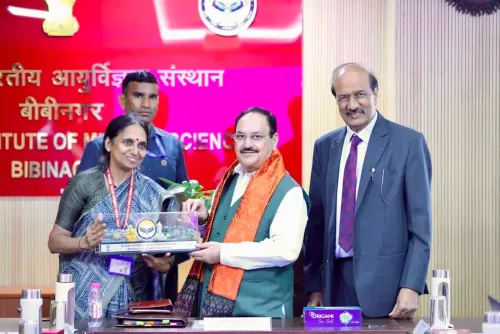
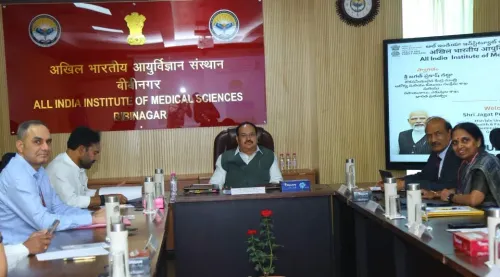
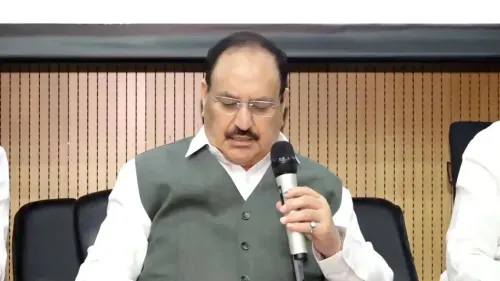
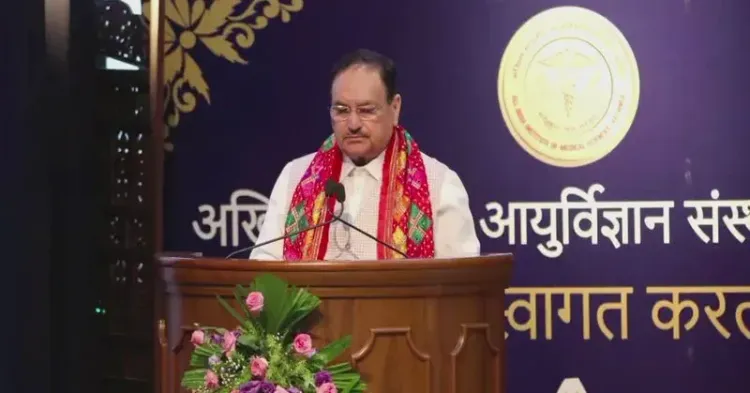
Union Health Minister J. P. Nadda addressed the 2nd Convocation Ceremony of AIIMS Bathinda on June 2, 2026, marking a key milestone for the Punjab campus established under the Pradhan Mantri Swasthya Suraksha Yojana. The event highlights India's expanding network of premier medical institutions beyond Delhi.
Key Takeaways
Union Health Minister J.
Nadda addressed the 2nd Convocation Ceremony of AIIMS Bathinda on June 2, 2026 .
AIIMS Bathinda was established under the Pradhan Mantri Swasthya Suraksha Yojana (PMSSY) , approved in the 2009-2010 Cabinet phase.
The institution began its MBBS programme in 2016 , making this convocation a milestone for its early graduating cohorts.
The AIIMS network expansion aims to address regional imbalances in specialist care, particularly benefiting Punjab and north-western India.
The event underscores the central government's continued investment in health infrastructure under the PMSSY framework alongside Ayushman Bharat initiatives.
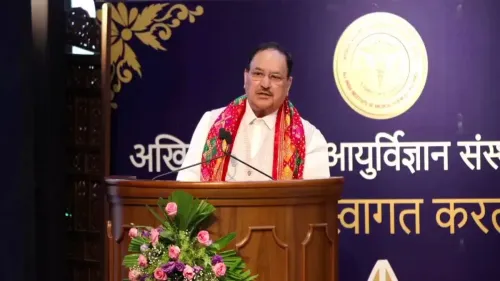
Union Health Minister J. P. Nadda addressed the 2nd Convocation Ceremony of the All India Institute of Medical Sciences (AIIMS) Bathinda in Punjab on Tuesday, June 2, 2026, marking a milestone for one of India's newer premier medical institutions.
Context
AIIMS Bathinda is among the batch of new AIIMS campuses established under the Pradhan Mantri Swasthya Suraksha Yojana (PMSSY) to bring tertiary medical education and specialist care closer to underserved regions. The institution commenced its MBBS programme in 2016, making this convocation a recognition of the early graduating cohorts who have passed through its academic pipeline. The ceremony reflects the campus's transition from a newly operational institute to a fully functioning medical school with its own convocation tradition.
Policy Backdrop
The PMSSY, first launched in 2003, was designed to correct regional disparities in specialist healthcare by establishing six new AIIMS-equivalent institutions and upgrading existing government medical colleges. A second phase approved by the Cabinet in 2009-2010 added further campuses, including Bathinda, extending the network into Punjab and other states that historically lacked top-tier public medical infrastructure. Successive Union Budgets have continued to fund new campuses and expand MBBS and postgraduate seat counts under this framework.
The broader policy arc connects AIIMS expansion to parallel initiatives such as upgrading district hospitals and scaling Ayushman Bharat facilities, forming a layered approach to public health infrastructure. As Union Health Minister, Nadda oversees both the institutional growth of the AIIMS network and the ministry's wider hospital-strengthening agenda.
Stakeholders and Impact
The graduating doctors from AIIMS Bathinda are expected to serve Punjab and the wider north-western region, addressing a longstanding shortage of specialists outside metropolitan centres. Residents of Punjab, Haryana, and neighbouring states have increasingly relied on the Bathinda campus for advanced care that would otherwise require travel to Delhi or Chandigarh. Faculty, nursing staff, and the broader academic community also benefit as the institution builds its research and clinical reputation with each graduating class.
For the central government, convocation ceremonies at new AIIMS campuses serve as visible proof-points of the PMSSY's long-term return on investment, demonstrating that the institutions are producing credentialled doctors at scale.
What's Next
Attention will now turn to announcements regarding super-specialty blocks, research funding, or seat expansions at AIIMS Bathinda and other campuses in the network. Parliamentary discussions on the health budget are expected to revisit funding for newer AIIMS phases, with the ministry likely to highlight convocation milestones as evidence of programme maturity. The next annual convocation at AIIMS Bathinda will be watched as an indicator of the institution's growing throughput of medical graduates.
Point of View
Reinforcing the BJP's health-infrastructure narrative ahead of any electoral cycle in Punjab. The ceremony also marks an institutional coming-of-age for a campus that began classes barely a decade ago, lending credibility to the broader AIIMS expansion programme. For the Health Ministry, such events serve a dual purpose: celebrating genuine policy delivery while keeping the spotlight on the government's role in building public medical capacity outside Delhi. The pattern suggests the ministry will continue to use convocation and inauguration moments at new AIIMS campuses as high-visibility platforms for the minister.
NationPress
17 Oct 2026
Frequently Asked Questions
What is the AIIMS Bathinda 2nd Convocation Ceremony?
The 2nd Convocation Ceremony of AIIMS Bathinda is the formal graduation event recognising the second batch of degree recipients from the All India Institute of Medical Sciences in Bathinda, Punjab, attended by Union Health Minister J. P. Nadda on June 2, 2026.
When was AIIMS Bathinda established and when did it start classes?
AIIMS Bathinda was sanctioned under the second phase of the Pradhan Mantri Swasthya Suraksha Yojana approved in 2009-2010, and commenced its MBBS programme in 2016.
What is the Pradhan Mantri Swasthya Suraksha Yojana?
The Pradhan Mantri Swasthya Suraksha Yojana (PMSSY) is a central government scheme launched in 2003 to establish new AIIMS-equivalent institutions and upgrade government medical colleges across India to reduce regional disparities in healthcare access.
How many AIIMS institutions does India have?
India has significantly expanded its AIIMS network beyond the original Delhi campus through successive PMSSY phases; Bathinda is among several new campuses set up to bring premier medical education and specialist care to states that previously lacked such facilities.
Why is J. P. Nadda attending the AIIMS Bathinda convocation?
As Union Minister of Health and Family Welfare, J. P. Nadda oversees the AIIMS network and attends convocation ceremonies to mark institutional milestones and reinforce the government's commitment to expanding public medical education infrastructure.