Nadda Backs Rs 6,969 Cr Delhi Tunnel on Dwarka Expressway
Synopsis
The Union Cabinet approved a 6-lane, 8.1-km road tunnel on NH-148AE linking Dwarka Expressway to Nelson Mandela Marg, Vasant Kunj, at Rs 6,969.67 crore under the Hybrid Annuity Model. BJP president J. P. Nadda welcomed the move, saying it will ease travel for lakhs of Delhi and NCR commuters.
Key Takeaways
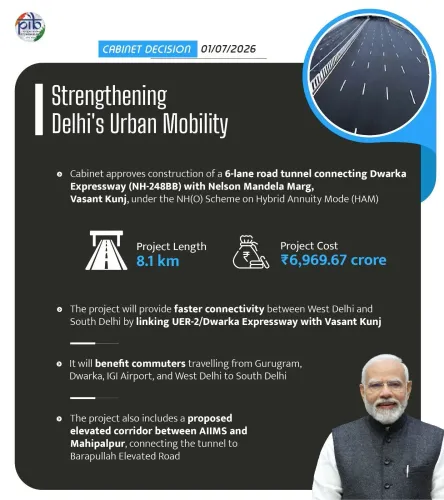
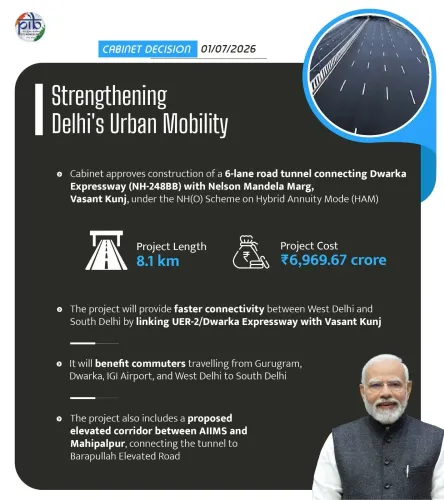
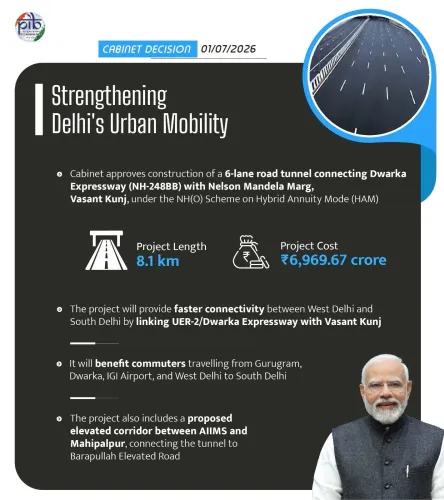
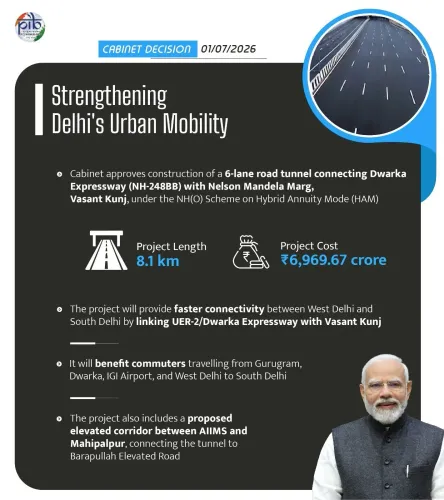
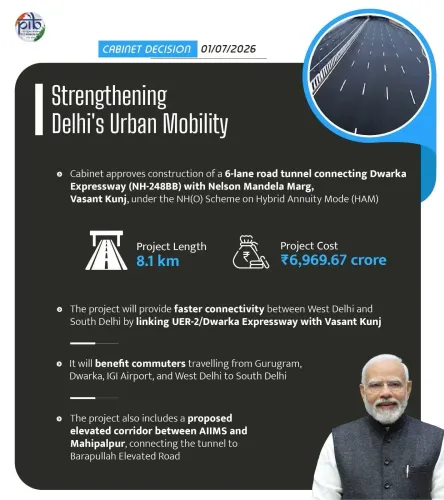
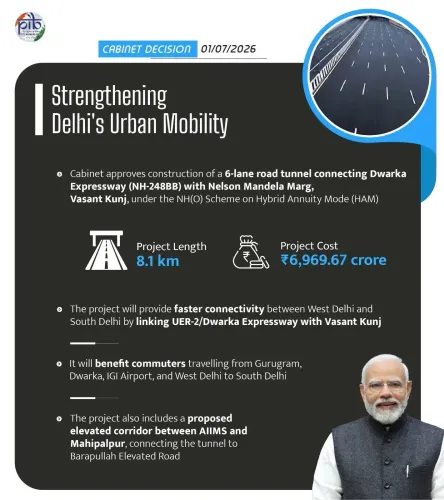
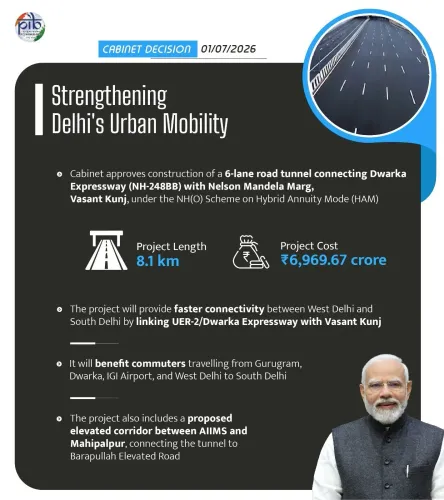
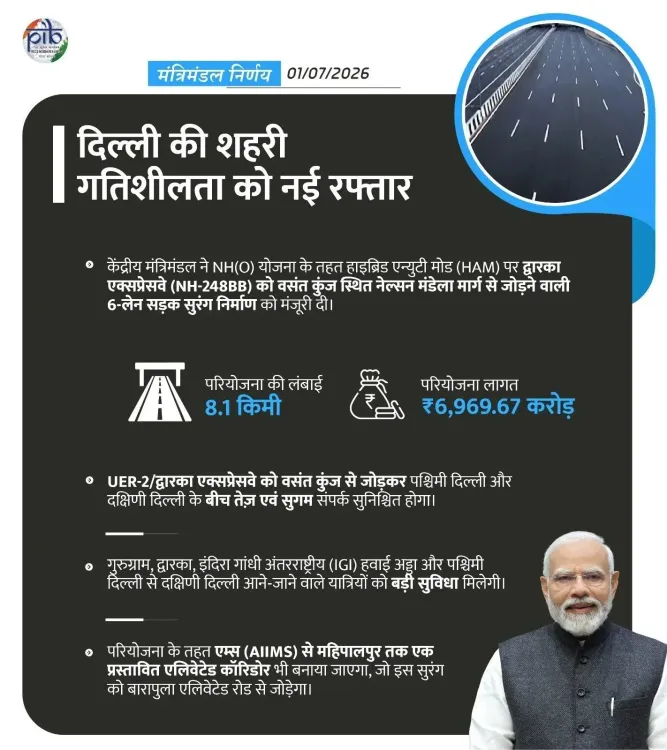
The Union Cabinet approved construction of a 6-lane road tunnel on NH-148AE connecting Dwarka Expressway (NH-248BB) to Nelson Mandela Marg, Vasant Kunj, New Delhi .
The project is estimated to cost ₹6,969.67 crore and will span 8.1 kilometres in total length.
It will be built under the NH(O) scheme using the Hybrid Annuity Model (HAM) , a public-private partnership framework.
The tunnel aims to provide seamless connectivity between west Delhi and south Delhi , benefiting commuters heading to Indira Gandhi International Airport and Gurugram .
BJP national president J.
Nadda credited PM Narendra Modi for the decision and congratulated all Delhi residents.
The project falls under the broader Bharatmala Pariyojana framework for national highway and urban expressway development.
Union Health Minister and BJP national president J. P. Nadda on Wednesday, 1 July 2026 welcomed the Union Cabinet's approval of a 6-lane road tunnel on NH-148AE, linking the Dwarka Expressway (NH-248BB) to Nelson Mandela Marg, Vasant Kunj, New Delhi — at an estimated cost of ₹6,969.67 crore and a total length of 8.1 kilometres.
Context
Nadda posted on X crediting the decision to Prime Minister Narendra Modi's leadership, saying the cabinet had granted approval under the NH(O) scheme using the Hybrid Annuity Model (HAM). Translated from Hindi, his post reads: 'The Union Cabinet, under the leadership of the respected Prime Minister Shri Narendra Modi ji, has today approved the construction of a 6-lane road tunnel on NH-148AE connecting Dwarka Expressway (NH-248BB) to Nelson Mandela Marg, Vasant Kunj, Delhi, under the NH(O) scheme on Hybrid Annuity Mode.'
Nadda extended congratulations to all residents of Delhi and expressed gratitude to PM Modi for what he described as a decision that will give 'new momentum and a modern character' to the national capital's urban transport system.
Policy Backdrop
The Hybrid Annuity Model, introduced in 2016, blends government and private funding — with the government contributing roughly 40 per cent of project cost during construction and the private concessionaire recovering the balance through annuity payments over the concession period. It was designed to revive stalled highway public-private partnership projects by reducing upfront risk for developers.
The tunnel falls under the broader Bharatmala Pariyojana, launched in 2015, which targets national highway development including urban expressways and grade-separated corridors. The NH(O) — National Highways (Other) — category covers urban connectivity projects within city limits, making this tunnel eligible for central funding despite being within Delhi.
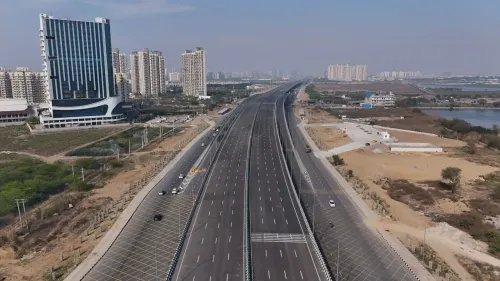
The Dwarka Expressway itself is an 8-lane access-controlled corridor connecting Delhi with Gurugram in Haryana and serving as a key feeder route to Indira Gandhi International Airport. The new tunnel is intended to extend seamless connectivity from this corridor into south Delhi via Vasant Kunj.
Stakeholders and Impact
According to Nadda's post, the tunnel will benefit 'lakhs of commuters' travelling between west Delhi and south Delhi, as well as passengers heading to and from Indira Gandhi International Airport and residents of Gurugram and Dwarka. The project promises 'seamless, faster and safer travel' along one of the NCR's most congested arterial routes.
Urban planners and commuters in the National Capital Region have long flagged the missing link between the Dwarka Expressway terminus and the south Delhi road network as a bottleneck, particularly for airport-bound traffic that currently must navigate surface roads through Vasant Kunj and Mahipalpur.
What's Next
The National Highways Authority of India (NHAI) will be expected to initiate tendering under the HAM framework, followed by land acquisition and environmental clearances specific to the tunnel alignment. Observers will watch whether the project is integrated with planned metro extensions or the Regional Rapid Transit System (RRTS) links proposed for southwest Delhi. Timely execution will be critical, given the corridor's role in airport connectivity ahead of major international events on India's calendar.
Point of View
Reinforcing a pattern of using the Hybrid Annuity Model to de-risk politically visible infrastructure. For the BJP, the timing — with Delhi having recently returned a new government — signals continued central investment in the capital's infrastructure as a governance credential. The project's success will hinge on NHAI's execution speed and coordination with Delhi's urban bodies, both historically friction-prone. Nadda's public endorsement, unusual for a health minister, underscores the BJP's effort to claim political credit for infrastructure decisions that cut across ministerial portfolios.
NationPress
1 Jul 2026
Frequently Asked Questions
What is the NH-148AE tunnel project approved by the Cabinet?
The Union Cabinet approved a 6-lane, 8.1-kilometre road tunnel on NH-148AE that will connect Dwarka Expressway (NH-248BB) to Nelson Mandela Marg in Vasant Kunj, New Delhi, at a cost of Rs 6,969.67 crore.
What is the Hybrid Annuity Model used for this tunnel?
The Hybrid Annuity Model (HAM) is a public-private partnership framework introduced in 2016 where the government funds about 40 per cent of project costs upfront and the private developer recovers the rest through annuity payments over the concession period.
How will the Dwarka Expressway tunnel help Delhi commuters?
The tunnel will provide a direct, grade-separated link between west Delhi and south Delhi, easing congestion for lakhs of commuters travelling to Indira Gandhi International Airport, Gurugram, and Dwarka without navigating surface traffic through Vasant Kunj.
What is the total cost and length of the Delhi tunnel project?
The tunnel project has an estimated cost of Rs 6,969.67 crore and a total length of 8.1 kilometres.
What is Bharatmala Pariyojana and how is this tunnel related?
Bharatmala Pariyojana is a central government scheme launched in 2015 to accelerate national highway development, including urban expressways. The NH-148AE tunnel falls under this broader programme and is categorised under the NH(O) — National Highways (Other) — urban connectivity scheme.