Nadda: Medical Education a Privilege, Doctors Owe Society
Synopsis
Union Health Minister J. P. Nadda reminded medical students on 21 November 2026 that a government-backed medical degree is a social privilege, not just a right, and called on future doctors to repay society through compassionate, dedicated service.
Key Takeaways
Nadda called professional medical education a 'privilege' underwritten by society and the government, not merely an individual right.
He urged future doctors to repay this privilege through compassion, dedication, and social responsibility .
India has expanded medical colleges and MBBS seats significantly since 2014 , sharpening questions about equitable service delivery.
The National Medical Commission Act, 2019 gave regulators stronger authority over medical education standards and professional ethics.
The remarks align with recurring policy debates around rural service bonds for government-trained medical graduates.
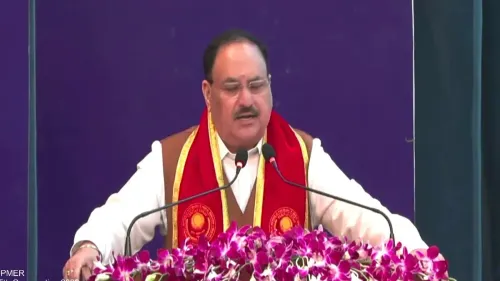
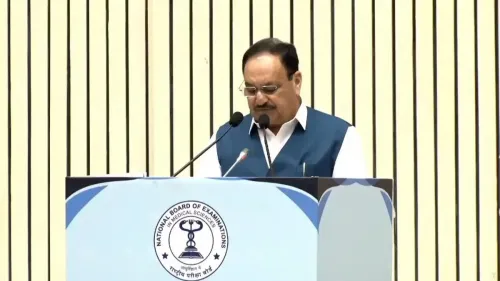
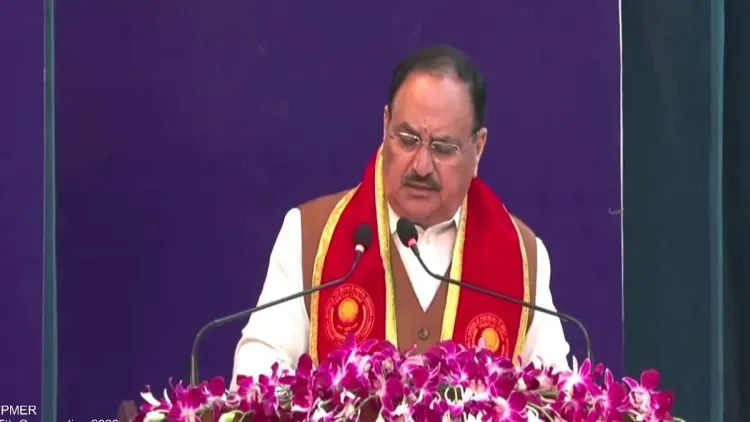
A medical degree, Union Health Minister J. P. Nadda reminded India's future doctors on Saturday, 21 November 2026, is not merely an academic credential — it is a social contract, funded and enabled by the very society those doctors will one day serve.
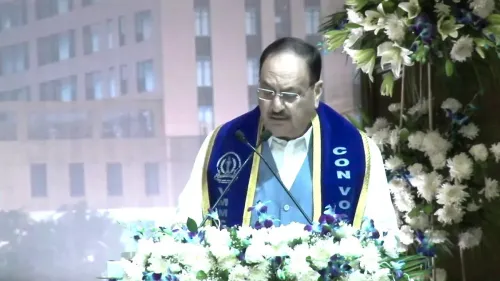
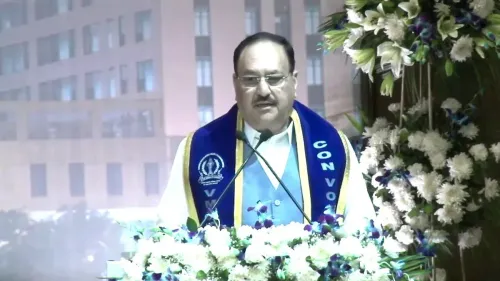
Addressing what appears to be a medical audience, Nadda drew a sharp distinction: 'Education is a birthright, but professional medical education is a privilege made possible by the support of society and the government.' The line cuts to the heart of a debate that has simmered in Indian health policy for decades — who owns the obligation that comes with a subsidised MBBS seat?
The Social Contract Behind Every Medical Seat
India's medical colleges, particularly government institutions, run on substantial public subsidy. Nadda's framing directly invokes that arithmetic: if society underwrites the cost of training a doctor, the graduate carries a reciprocal duty. 'We must recognize and value this privilege,' he said, before turning to the graduates themselves — 'As future doctors, we have a responsibility to give back to society by serving people with compassion, dedication, and a strong sense of social responsibility.'
The argument is not new, but the moment for making it is deliberate. Since 2014, India has significantly expanded the number of medical colleges and MBBS seats, broadening access to professional medical education. That expansion, however, has sharpened an old question: does more supply automatically translate into better coverage for underserved and rural populations, or does it require a stronger normative push — even regulatory compulsion?
NMC Ethics Code and the Rural Service Debate
The National Medical Commission Act, 2019 replaced the erstwhile Medical Council of India, giving regulators a sharper mandate over both medical education standards and professional ethics. Successive health ministers have used that framework to signal expectations around ethical practice and equitable service delivery.
The recurring policy conversation around rural service bonds — mandatory postings in underserved areas as a condition of completing or funding medical education — sits precisely in the space Nadda's remarks occupy. Whether his words foreshadow a formal policy move, or serve as a moral framing for existing obligations, is a question the National Medical Commission and state health departments will be watching closely.
For now, the minister's message is clear and pointed: compassion and dedication are not optional add-ons to a medical career. They are the repayment.
Point of View
He is laying ideological groundwork that could precede regulatory action — such as revisions to the NMC's ethics code or a renewed push for rural service bonds. The timing, amid an ongoing expansion of medical seats since 2014, suggests the government is conscious that scale alone does not solve the rural healthcare access problem. Whether rhetoric translates into binding policy will be the real test.
NationPress
21 Nov 2026
Frequently Asked Questions
What did JP Nadda say about medical education?
J. P. Nadda said that while education is a birthright, professional medical education is a privilege enabled by society and the government, and future doctors must repay that privilege through compassionate and dedicated service.
What is the social contract in Indian medical education?
The social contract refers to the idea that because the government heavily subsidises medical education, doctors have a reciprocal obligation to serve society, particularly in underserved and rural areas.
What is the National Medical Commission Act 2019?
The National Medical Commission Act, 2019 replaced the Medical Council of India and gave regulators a stronger mandate over medical education standards and professional ethics for doctors in India.
Are there rural service bonds for doctors in India?
Several state governments have implemented or proposed rural service bonds requiring medical graduates to serve in underserved areas as a condition of their subsidised education, though a uniform national policy does not yet exist.
How has India expanded medical education since 2014?
Since 2014, India has significantly increased the number of government and private medical colleges and MBBS seats, broadening access to professional medical education across the country.