Nadda highlights AIIMS Bibinagar's ₹64 cr research grants, community outreach
Synopsis
Union Health Minister J. P. Nadda has highlighted AIIMS Bibinagar's nearly ₹64 crore in research grants, 129 active projects, 1,156 faculty publications, and outreach to over 66,000 people — including India's first Community Radio Station at an AIIMS campus.
Key Takeaways
AIIMS Bibinagar has secured nearly ₹64 crore in research grants, according to Union Health Minister J.
The institute has 129 research projects underway and 1,156 faculty publications to its credit.
AIIMS Bibinagar hosts India's first Community Radio Station at any AIIMS campus.
The institute has adopted six villages and conducted 547 medical camps as part of its outreach mandate.
Over 66,000 people have been served through the institute's community healthcare initiatives.
AIIMS Bibinagar was established under the Pradhan Mantri Swasthya Suraksha Yojana , which aims to decentralise advanced medical care and education across India.
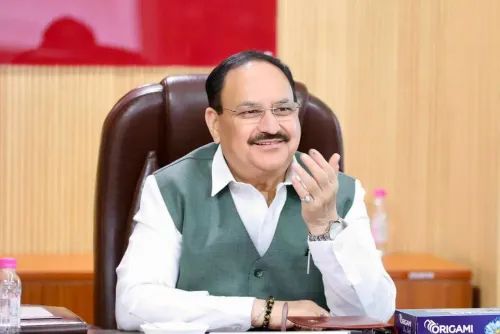
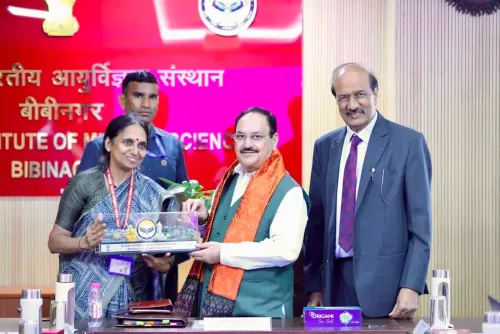
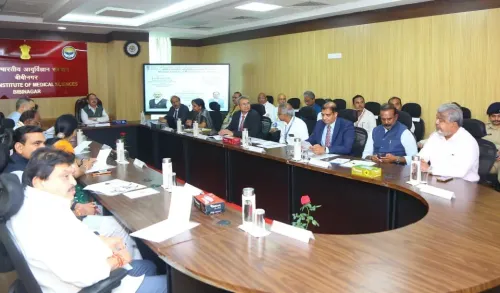
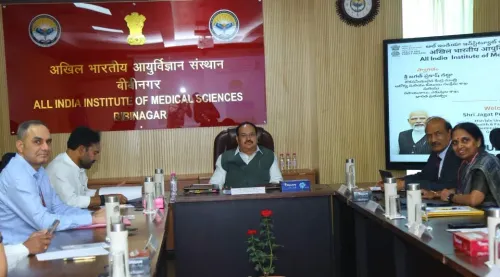
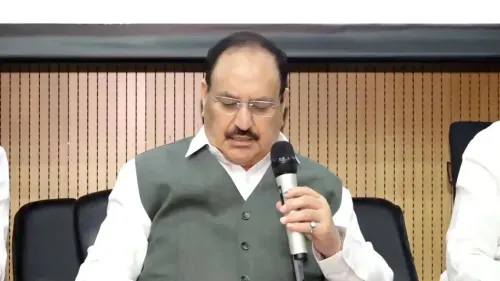
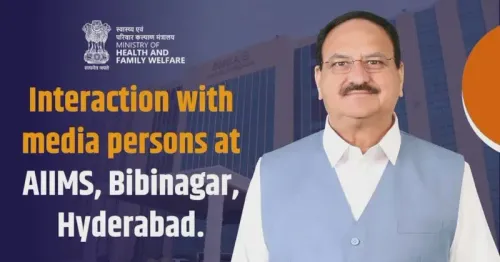
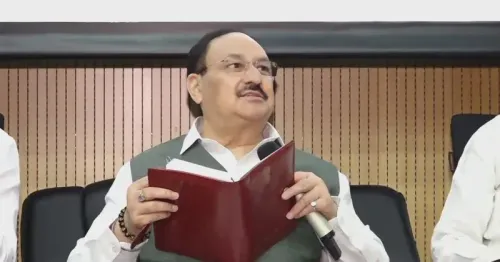
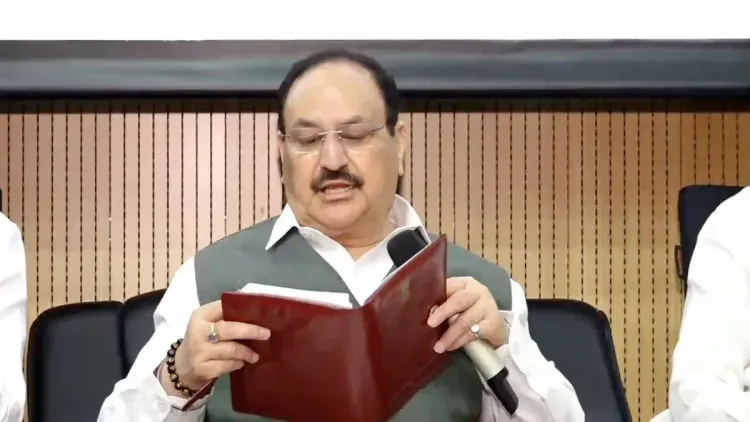
Union Health Minister J. P. Nadda on Thursday, 9 July 2026, highlighted the research and community healthcare achievements of AIIMS Bibinagar in Telangana, pointing to nearly ₹64 crore in research grants secured by the institute and its wide-ranging outreach to rural populations.
Context
In his post, Nadda noted that AIIMS Bibinagar has secured nearly ₹64 crore in research grants, with 129 research projects currently underway and 1,156 faculty publications to its credit. He described the institute as 'a centre of excellence in both patient care and research.' The minister also underscored its community health commitment, citing 547 medical camps conducted and over 66,000 people served through outreach initiatives.
Notably, Nadda pointed out that AIIMS Bibinagar hosts India's first Community Radio Station at an AIIMS campus, and has adopted six villages as part of its community engagement model.
Policy Backdrop
The establishment of AIIMS Bibinagar is part of the Pradhan Mantri Swasthya Suraksha Yojana (PMSSY), a central government scheme launched in 2003 to set up new AIIMS institutions across states and upgrade existing medical colleges. The scheme was designed to correct a long-standing imbalance in the availability of advanced medical education, research infrastructure, and tertiary care, which had historically been concentrated in major metropolitan centres.
The original All India Institute of Medical Sciences Act, 1956, established the flagship AIIMS New Delhi as the apex model. The newer AIIMS campuses, including the one at Bibinagar in Telangana, are mandated to replicate that model while extending its reach to underserved regions.
Stakeholders and Impact
The primary beneficiaries of AIIMS Bibinagar's outreach are rural and semi-urban populations in and around Telangana, who gain access to specialist medical care through the institute's camps and village adoption programme. The 66,000-plus people served through outreach initiatives represent a significant direct impact on communities that would otherwise have limited access to tertiary-level expertise.
For the medical research community, the institute's 1,156 faculty publications and 129 active research projects signal a growing academic output from a relatively young institution. The Community Radio Station — the first of its kind at any AIIMS — adds a health communication dimension, potentially enabling the institute to disseminate public health information to a broader audience in local languages.
What's Next
The spotlight on AIIMS Bibinagar's community radio and village adoption model may prompt the Union Health Ministry to examine whether similar outreach frameworks can be replicated across other new AIIMS campuses nationwide. Parliamentary questions and ministry performance reviews on research grant utilisation across the newer AIIMS network are also likely to follow. As the government continues to expand public-sector health infrastructure, the Bibinagar model — blending research output with grassroots outreach — could serve as a benchmark for what a decentralised AIIMS is expected to deliver.
Point of View
The ministry is framing AIIMS Bibinagar as proof that decentralisation of tertiary healthcare is delivering on multiple fronts simultaneously. The Community Radio Station detail is particularly pointed: it positions the institute not merely as a hospital or research body but as a public health communicator embedded in its region. This narrative is likely to gain traction as the government seeks to defend and expand the PMSSY model ahead of future budget cycles.
NationPress
8 Oct 2026
Frequently Asked Questions
What is AIIMS Bibinagar and where is it located?
AIIMS Bibinagar is a government medical institute located in Bibinagar, Telangana , established under the Pradhan Mantri Swasthya Suraksha Yojana to expand advanced medical education, research, and tertiary care to underserved regions of India.
How much research funding has AIIMS Bibinagar received?
According to Union Health Minister J. P. Nadda , AIIMS Bibinagar has secured nearly ₹64 crore in research grants, supporting 129 active research projects .
What is India's first Community Radio Station at an AIIMS?
AIIMS Bibinagar hosts India's first Community Radio Station at any AIIMS campus, a unique initiative aimed at disseminating public health information to local communities in the region.
How many people has AIIMS Bibinagar served through outreach?
AIIMS Bibinagar has served over 66,000 people through its outreach initiatives, which include 547 medical camps and the adoption of six villages .
What is the Pradhan Mantri Swasthya Suraksha Yojana?
The Pradhan Mantri Swasthya Suraksha Yojana (PMSSY) is a central government scheme launched in 2003 to establish new AIIMS campuses across Indian states and upgrade existing government medical colleges, with the goal of making advanced healthcare and medical education accessible beyond major cities.