Nadda hails Cabinet nod to 132nd Constitution Amendment Bill
Synopsis
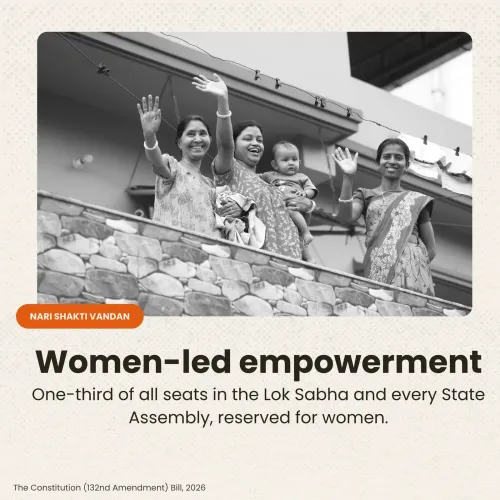
Union Health Minister J. P. Nadda on Saturday welcomed the Union Cabinet's approval of the Constitution (132nd Amendment) Bill, 2026, saying it would expand Lok Sabha and State Assembly representation while preserving inter-State balance. He appealed to all parties to support the Bill in Parliament.
Key Takeaways
Union Health Minister J.
Nadda on 28 November 2026 welcomed Union Cabinet approval of the Constitution (132nd Amendment) Bill, 2026.
He said the Bill would expand the Lok Sabha and State Assemblies so local needs and regional aspirations reach the House more directly.
He described a uniform proportional increase in seats as the way to preserve the balance between States.
Lok Sabha and Assembly strength has been frozen on the 1971 census; the 84th Amendment in 2001 extended that freeze until after the first census published after 2026.
Mr Nadda did not specify seat numbers or a legislative timetable; those details were not in his post.
He appealed to all political parties to support the Bill in both Houses of Parliament.
India's legislatures have been living inside a 1971 map. On Saturday, Union Health Minister J. P. Nadda said the Union Cabinet had just moved to redraw that map — by approving the Constitution (132nd Amendment) Bill, 2026. From New Delhi on 28 November 2026, he argued that more seats in the Lok Sabha and State Assemblies would bring villages and neighbourhoods closer to power, without breaking the balance among States.
In Hindi, Mr Nadda called the Cabinet decision an important step toward reshaping India's parliamentary landscape and strengthening democratic representation under Prime Minister Narendra Modi's leadership. The provision, he said, would open a new opportunity to expand representation while keeping the country's present geographical and political unity intact. More public representatives would carry regional aspirations and local needs into the House, making development plans more effective and people-centred.
He put the same case in English in one line: a democracy grows stronger when the concerns of a neighbourhood, the needs of a village and the aspirations of a region find a voice in its legislatures. Then came the political ask. He urged every party to rise above partisan lines and back what he termed a historic Bill.
The freeze locked to the 1971 census
Seat strength in the Lok Sabha and in State Assemblies has been frozen for decades on the basis of the 1971 census. The Constitution (Eighty-fourth Amendment) Act, 2001 pushed that freeze forward until after the first census published after 2026. Governments of different colours have treated the end of that freeze as the moment when legislatures could grow with India's population — without penalising States that had already lowered fertility.
Mr Nadda did not list seat numbers, a timetable, or clause-by-clause provisions. Those sit with the Bill itself. What he did stress is the architecture: a uniform proportional increase, designed to preserve the balance between States as the Houses expand.
More legislators, same relative weight among States
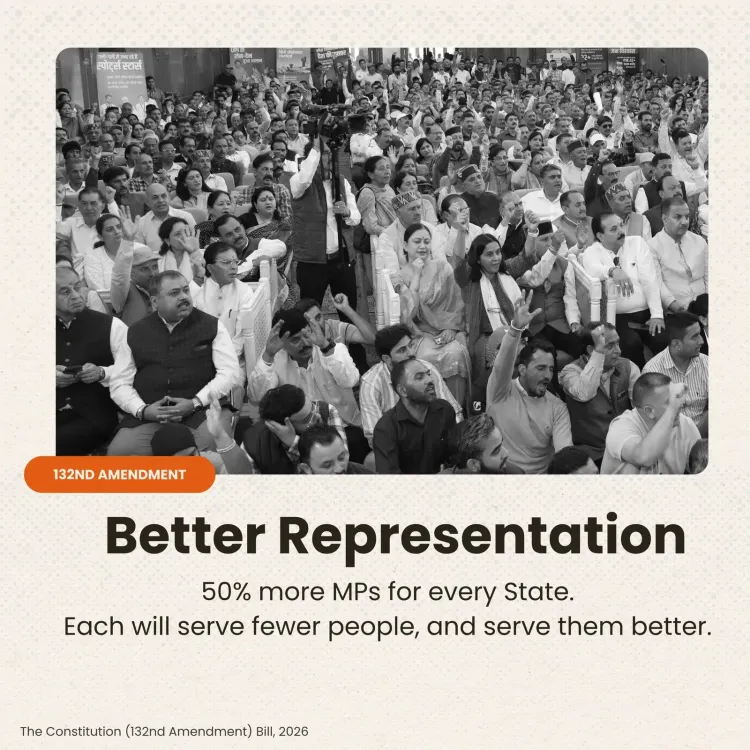
'The proposed expansion of the Lok Sabha and State Assemblies would create greater scope for representatives to attend to local needs, while a uniform proportional increase in seats is designed to preserve the balance between States,' he wrote. That is the bargain on offer. Every State would get more legislators. Relative shares would, on this design, stay put.
The politics will not stay put. Southern State governments have long feared that any unfreezing of seats could shrink their voice if population growth elsewhere is faster. A uniform proportional rise is the Centre's stated reply. Introduction of the Bill, debates in both Houses, and the stance of opposition parties and State governments will decide whether that reply is accepted.
Nadda's call across party lines
The Health Minister is also the BJP's national president. His closing lines were aimed as much at Opposition benches as at his own. He asked colleagues across parties to support the opportunity, and to keep the citizen's interests and the nation's future at the heart of the debate in both Houses.
Closer representation, he said, can help ensure that the decisions taken and the development pursued reflect the lives of the people served. The Cabinet has spoken. Parliament has not. How parties vote when this Bill reaches the floor will show whether seat expansion can still be treated as a federal compact — or whether it becomes a fight over who speaks for India.
Point of View
Especially in the South, of relative decline as numbers rise. The political test is no longer the Cabinet, which has already spoken, but the floor of both Houses and the State capitals that must live with the new arithmetic. How opposition parties and southern governments respond will show whether seat expansion can still be sold as a national compact.
NationPress
28 Nov 2026
Frequently Asked Questions
What is the Constitution (132nd Amendment) Bill, 2026?
It is a constitutional amendment proposal approved by the Union Cabinet that, according to Union Health Minister J. P. Nadda, would expand seats in the Lok Sabha and State Assemblies through a uniform proportional increase. His post did not set out exact seat numbers or detailed clauses.
Why are Lok Sabha and Assembly seats being increased?
Seat strength has been frozen on the 1971 census, a freeze extended by the Constitution (Eighty-fourth Amendment) Act, 2001 until after the first census published after 2026. Expansion is meant to reflect population change while trying not to penalise States that lowered fertility.
What did J. P. Nadda say about the 132nd Amendment Bill?
On 28 November 2026 he welcomed the Cabinet's approval, said it would bring citizens closer to their representatives, and appealed to all parties to support the Bill in both Houses. He framed it as a historic opportunity under Prime Minister Narendra Modi's leadership.
Will some States lose representation if seats increase?
Mr Nadda said a uniform proportional increase is designed to preserve the balance between States, so relative shares would, on that design, not shift even as absolute numbers rise. Southern governments have historically watched any unfreezing of seats closely.
What happens next after Cabinet approval of this Bill?
The Bill has to be introduced and debated in Parliament. Positions taken by opposition parties and State governments, including those in the South, will shape that debate.