Amit Shah hails Cabinet nod to lift Assembly seat cap
Synopsis
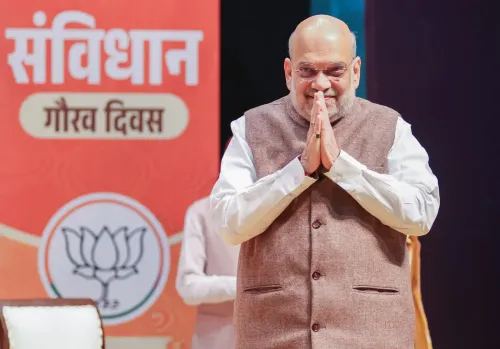
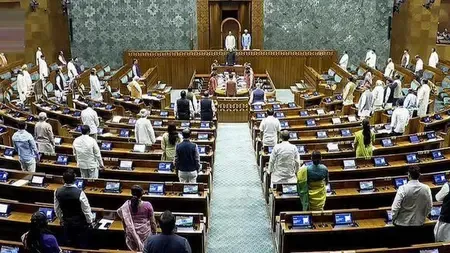
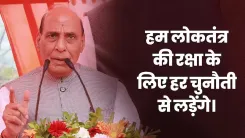
Union Home Minister Amit Shah said the Cabinet had approved the 132nd Constitutional Amendment Bill, lifting the assembly seat cap from 500 to about 650. He said undivided Uttar Pradesh could expand its House and women would gain their largest share yet. He urged all parties in the state to support the Bill.
Key Takeaways
Union Home Minister Amit Shah said on 28 November 2026 that the Cabinet had approved the 132nd Constitutional Amendment Bill.
He said the Bill would amend Article 170(1) to raise the assembly seat ceiling from 500 to about 650.
Shah argued undivided Uttar Pradesh could increase its Vidhan Sabha strength; the House now has 403 seats.
He linked the expansion to one-third reservation for women, saying they would get their largest representation yet in the state.
Assembly seat numbers have been frozen on the 1971 census under the 84th Amendment of 2001 until after 2026.
Shah called on all parties in Uttar Pradesh to welcome and support the Bill.
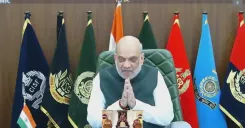
Union Home Minister Amit Shah on 28 November 2026 cast a Cabinet decision as a reset of how India will be represented in its state legislatures, with Uttar Pradesh at the centre of the argument. In a post on X, Shah said the Union Cabinet under Prime Minister Narendra Modi had approved the 132nd Constitutional Amendment Bill to expand public representation in every state and bring governance closer to the people.
He called the approval a bahut bada kadam (a very big step). Shah said the Bill also proposes to amend Article 170(1) and raise the maximum limit on seats in state legislative assemblies from 500 to about 650. That number is the hinge of the politics that follows.
The 500-seat ceiling and the freeze after 1971
For more than two decades, the strength of state assemblies has been held in place by the 84th Constitutional Amendment Act of 2001, which froze seat numbers on the basis of the 1971 census until after 2026. Shah's post lands as that freeze is scheduled to lift, opening the door to readjustment against later population figures.
He argued that a higher national ceiling would let more public representatives carry local priorities onto the floor of the House. That, he said, would help governments design schemes around local needs and give development more speed.
Undivided Uttar Pradesh and a 403-seat House
Shah's sharpest claim was about India's most populous state. With this provision, he said, Uttar Pradesh would be able to increase its assembly representation while remaining undivided. The state's Vidhan Sabha currently has 403 seats, already among the largest Houses in the country, yet still well below the proposed new outer limit of about 650.
More members, he said, would mean more voices from more pockets of a state that runs from the Terai to Bundelkhand. The practical question is delimitation: how any extra seats would be drawn, and which regions would gain.
One-third for women, and a message to every party
Shah tied the larger House to the one-third reservation for women already on the statute book, saying women in Uttar Pradesh would now receive their biggest representation yet. That framework comes from the Constitution (One Hundred and Twenty-Eighth Amendment) Bill, 2023, which provided for one-third reservation for women in the Lok Sabha and in state assemblies.
He closed with a direct appeal: all parties in Uttar Pradesh, he said, should welcome and support this historic Bill. If the proposal moves from Cabinet to Parliament, the tests will be introduction, debate, and any later delimitation of state Houses.
How Lucknow redraws its map after 2026 will decide whose voice grows in India's largest state, and how close the House really gets to the street.
Point of View
The 2023 women's reservation law that needs a larger House to bite at scale, and the old fear in Uttar Pradesh that more seats might be used as an argument for splitting the state. By stressing an undivided UP and asking every party to back the Bill, he is trying to lock rivals into a representation story they cannot easily oppose without looking anti-expansion. The contest, if it comes, will be less about a ceiling of 650 and more about who draws the new constituencies.
NationPress
28 Nov 2026
Frequently Asked Questions
What did Amit Shah say about the 132nd Constitutional Amendment Bill?
Shah said the Union Cabinet under Prime Minister Narendra Modi had approved the 132nd Constitutional Amendment Bill to increase public representation in all states and bring governance closer to the people. He posted the remarks on X on 28 November 2026.
What change to Article 170(1) did Shah mention?
He said the Bill proposes to amend Article 170(1) to raise the maximum number of seats in state legislative assemblies from 500 to about 650. That ceiling, in his telling, would apply across states.
How many seats are there in the Uttar Pradesh Assembly?
The Uttar Pradesh Legislative Assembly currently has 403 seats. Shah said the proposed higher national cap would let the state add members while remaining undivided.
How is women's reservation linked to this proposal?
Shah said that with one-third reservation for women, women in Uttar Pradesh would receive their largest representation so far. One-third reservation in the Lok Sabha and state assemblies was provided for in the Constitution (One Hundred and Twenty-Eighth Amendment) Bill, 2023.
Why have state assembly seats been frozen?
The 84th Constitutional Amendment Act of 2001 froze the number of seats in state legislative assemblies on the basis of the 1971 census until after 2026. Shah's post comes as that freeze is scheduled to end, which would allow readjustment based on later population.