Victoria election: Jess Wilson ends Labor's 12-year rule
Synopsis
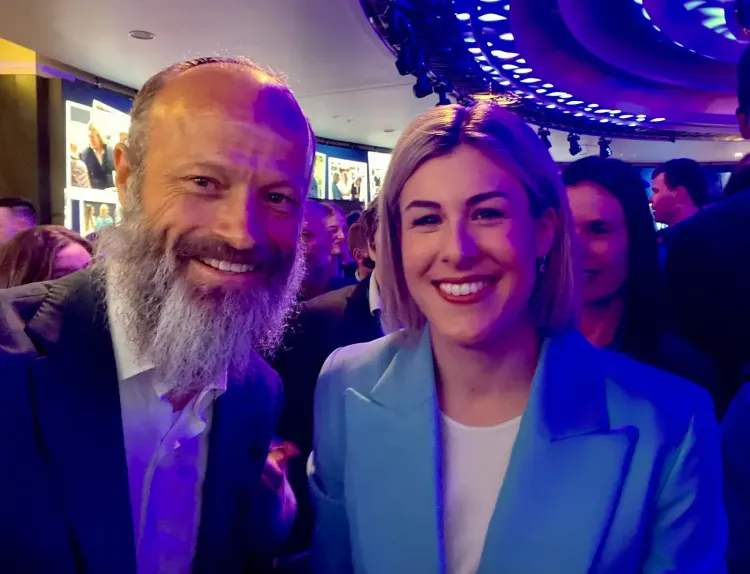
Jess Wilson, 36, is set to become Victoria's youngest premier since federation and the first woman to lead her party to a Victorian state election win. Her Liberal-National coalition ended 12 years of Labor rule in a traditional Labor stronghold. Australian inflation stands at a three-year high of 4.9 per cent.
Key Takeaways
The Liberal-National coalition won the Victoria state election on 28 November 2026 , ending 12 years of Labor rule.
The ABC called 48 of 88 lower house seats for the coalition, above the 45 needed for a majority.
Premier Ben Carroll conceded; Jess Wilson , 36 , is set to become Victoria's youngest premier since federation.
Labor faced criticism over debt, public safety and alleged corruption in infrastructure projects.
Australian inflation hit 4.9 per cent in October, a three-year high; the RBA cash rate stands at 4.85 per cent .
The opposition Liberal-National coalition has won the Victoria state election, ending 12 years of Labor rule in Australia's second-most populous state, according to local media reports on Saturday, 28 November 2026. Outgoing Premier Ben Carroll conceded defeat on Saturday evening. State Liberal leader Jess Wilson, 36, then delivered a victory speech in which she pledged to govern for all Victorians.
Key Developments
As of the latest count, the Australian Broadcasting Corporation (ABC) had called 48 of the 88 lower house seats for the coalition. That is above the 45 seats needed to form a majority government. Vote counting is still underway, so the final seat tally could change.
Wilson is set to become Victoria's youngest premier since the start of Australia's federation. She will also be the first woman to lead her party to victory in a Victorian state election.
Why Labor Lost Its Stronghold
The defeat is significant because Victoria has traditionally been a Labor stronghold. The state accounted for 27 of the 94 seats Labor won in the 2025 federal election, so losing it removes one of the party's most reliable power bases.
The outgoing Labor government faced criticism over three issues:
- Mounting state debt
- Public safety concerns
- Allegations of corruption in major infrastructure projects
Reports suggest these concerns shaped the campaign that delivered the coalition its majority.
Inflation Backdrop
The result comes amid rising living costs across Australia. Official data released on Wednesday, 25 November 2026, showed annual inflation climbing to a three-year high of 4.9 per cent in October.
According to the Australian Bureau of Statistics (ABS):
- The consumer price index rose 4.9 per cent in the 12 months to October, up from 4.3 per cent in September. This is the highest reading since October 2023.
- The reading exceeded forecasts from economists at Australia's Big Four banks, who had expected 4.7 or 4.8 per cent.
- The annual trimmed mean, the underlying inflation measure preferred by the Reserve Bank of Australia (RBA), rose from 3.6 per cent in September to 3.8 per cent in October.
Rachael McCririck, head of prices statistics at the ABS, said housing was the largest contributor to annual inflation in the year to October. Housing prices rose 6.4 per cent year-on-year, compared with 5.2 per cent in September.
What Happens Next
The RBA's Monetary Policy Board will hold its final meeting of 2026 in early December to consider adjusting interest rates. The board has already raised the cash rate target by 0.25 percentage points five times this year, taking it to an 18-year high of 4.85 per cent. The aim is to bring inflation back within the central bank's 2-3 per cent target range.
Wilson's incoming government will take office as households face rising housing costs and the possibility of further rate hikes. How it handles state debt and cost-of-living pressure will be the first test of its promise to govern for all Victorians.
Point of View
Which suggests cost-of-living anger is cutting through traditional party loyalty. Wilson inherits a tough position: inflation at 4.9 per cent, housing costs rising 6.4 per cent, and an RBA that has already hiked five times this year. The pledge to govern for all Victorians will be judged on whether she can fix debt and infrastructure governance without adding to household strain.
NationPress
28 Nov 2026
Frequently Asked Questions
Who won the 2026 Victoria state election?
The opposition Liberal-National coalition led by Jess Wilson won the Victoria state election, ending 12 years of Labor rule. Premier Ben Carroll conceded defeat on Saturday evening.
How many seats did the coalition win in Victoria?
The Australian Broadcasting Corporation had called 48 of the 88 lower house seats for the coalition, above the 45 needed for a majority. Vote counting is still underway.
Why did Labor lose power in Victoria?
The Labor government faced criticism over mounting debt, public safety concerns and allegations of corruption in major infrastructure projects. The defeat came in a state traditionally seen as a Labor stronghold.
What is Australia's current inflation rate?
Australia's annual inflation rose to 4.9 per cent in October, a three-year high, according to the Australian Bureau of Statistics. The RBA will meet in early December to consider rates, which currently stand at 4.85 per cent.