Defence Minister Rajnath Singh hails 132nd Constitution Bill
Synopsis
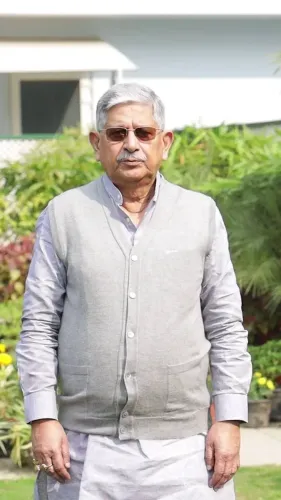
Defence Minister Rajnath Singh on 28 November 2026 welcomed the Union Cabinet's approval of the 132nd Constitutional Amendment Bill, calling one-third reservation for women in the Lok Sabha and state Assemblies a historic step to make Indian democracy more inclusive.
Key Takeaways
Union Defence Minister Rajnath Singh on 28 November 2026 welcomed Cabinet approval of the 132nd Constitutional Amendment Bill.
He said the Bill would reserve one-third of seats for women in the Lok Sabha and state legislative assemblies.
He credited Prime Minister Narendra Modi's leadership and expressed gratitude to him.
He argued the measure would make democratic institutions more empowered, participatory and accountable.
A women's reservation amendment was first introduced in 1996 as the 81st Constitutional Amendment Bill; a 2010 Rajya Sabha-passed version later lapsed.
Next steps include parliamentary passage, possible state ratification and delimitation of reserved seats.
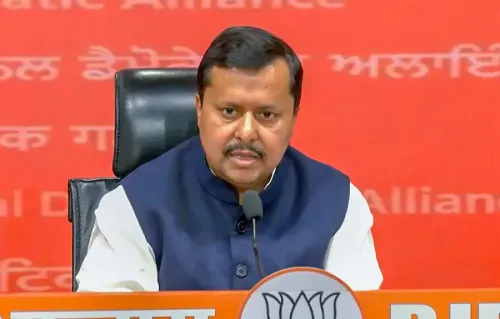
Union Defence Minister Rajnath Singh on Saturday, 28 November 2026 called the Union Cabinet's approval of the 132nd Constitutional Amendment Bill a historic decision that would reserve one-third of seats in the Lok Sabha and state Assemblies for women. Crediting Prime Minister Narendra Modi's leadership, he said the move would make Indian democracy more inclusive, expand people's representation and bring governance closer to citizens.
In a Hindi post, Singh termed the Cabinet nod an ऐतिहासिक निर्णय (historic decision). He wrote, “This decision will play an important role in making Indian democracy more inclusive, expanding people's representation and bringing the system of governance closer to the people.” One-third reservation for women in the Lok Sabha and state legislative assemblies, he added, would take their participation in law-making bodies to new heights.
Democratic institutions, he said, would become more empowered, participatory and accountable. He heartily welcomed the initiative for placing the capability, leadership and aspirations of Nari Shakti (women's power) at the centre of democracy, and expressed gratitude to the Prime Minister.
One-third seats in Lok Sabha and state Assemblies
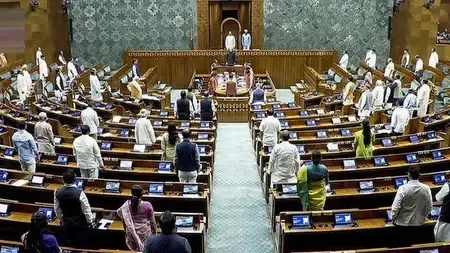
Singh's post is explicit on the architecture: one-third of seats, for women, in both the Lok Sabha, Parliament's lower house, and the Vidhan Sabhas of the states. He framed that quota as a structural shift, not a ceremonial flourish. More women in the houses that write law, he argued, would make those houses more representative and more answerable.
Women aspirants and political parties are the first to feel the change. Parties would have to recast tickets and candidate lists around a much larger reserved map. Voters would see a legislature whose composition sits closer to the country it claims to represent.
Women's reservation: the long road from 1996
The idea is not new. The Women's Reservation Bill was first introduced in 1996 as the 81st Constitutional Amendment Bill. The Rajya Sabha passed a later version in 2010, but that measure lapsed before it became law.
Indian governments have used constitutional amendments to widen representation for historically under-represented groups, including existing reservations for Scheduled Castes and Scheduled Tribes. A gender quota in the two law-making houses sits in that same lineage: incremental, contested, and aimed at who actually occupies the bench.
Parliament, state ratification and delimitation
Cabinet approval is the opening move. A constitutional amendment still has to be introduced in Parliament, debated and passed by a special majority, and may need ratification by state legislatures. How seats are identified as reserved would then depend on delimitation, the redrawing of constituencies.
That sequence will decide how quickly the one-third map appears on the ground. Parties will watch the calendar. Women candidates will watch the maps.
Singh's welcome was unambiguous: he wants Nari Shakti written into the architecture of the Republic. The test now is whether the Bill completes the long walk from the Cabinet table to the statute book.
Point of View
After earlier attempts in 1996 and 2010 stalled short of becoming law. Singh's public welcome, coming from a senior Union minister, underlines the political weight the government is attaching to the measure. The binding constraints remain parliamentary special majority, any required state ratification, and delimitation that will decide which seats are reserved. How parties recast tickets for women candidates will show whether the quota redistributes power or merely rearranges it.
NationPress
28 Nov 2026
Frequently Asked Questions
What did Rajnath Singh say about the 132nd Constitutional Amendment Bill?
Union Defence Minister Rajnath Singh called the Union Cabinet's approval of the 132nd Constitutional Amendment Bill a historic decision. He said it would make Indian democracy more inclusive, expand representation and bring governance closer to the people.
What reservation does the Bill propose for women?
According to Singh, the Bill provides for one-third reservation for women in the Lok Sabha and in state legislative assemblies. He said that would take women's participation in legislative institutions to new heights.
When was a women's reservation constitutional amendment first introduced in India?
The Women's Reservation Bill was first introduced in 1996 as the 81st Constitutional Amendment Bill. A later version was passed by the Rajya Sabha in 2010 but lapsed before it became law.
Does the proposed reservation cover state Assemblies as well as the Lok Sabha?
Yes. Singh said the one-third reservation for women would apply in both the Lok Sabha and state legislative assemblies.
What steps remain after Cabinet approval of a constitutional amendment bill?
The Bill must still be introduced in Parliament, passed by a special majority, and may require ratification by state legislatures. Delimitation would then determine how reserved seats are allocated.