Defence Minister Rajnath Singh hails J&K after Article 370
Synopsis
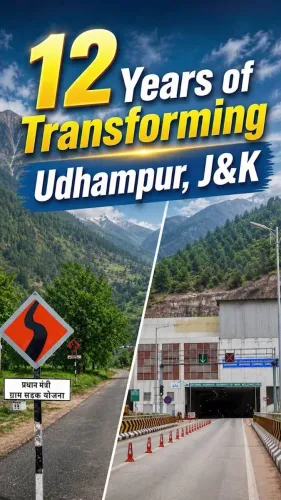
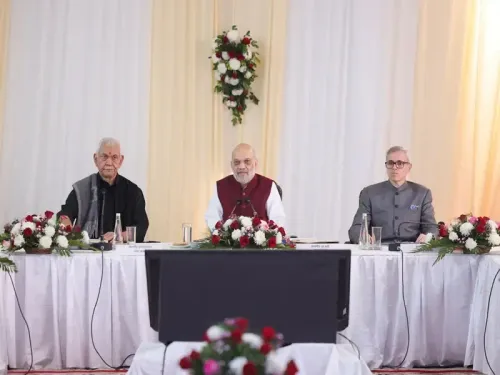
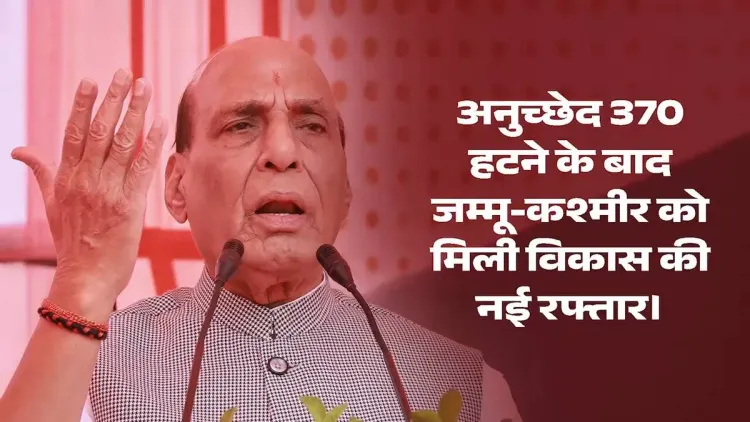
Union Defence Minister Rajnath Singh said Jammu and Kashmir has gained new momentum in development, health, tourism and infrastructure since Article 370 was removed, with more jobs and fewer violent incidents, calling it the new picture of the Union Territory under Prime Minister Narendra Modi.
Key Takeaways
Union Defence Minister Rajnath Singh on 28 November 2026 said Jammu and Kashmir has gained new momentum in development, health, tourism and infrastructure after Article 370 was removed.
He claimed new development and employment opportunities are growing while violence and stone-pelting incidents have declined.
Singh credited Prime Minister Narendra Modi's visionary leadership for what he called a changing and developing Jammu and Kashmir.
Article 370 was abrogated in August 2019 and the former state was reorganised as a Union Territory.
The post restates the Centre's long-running narrative linking the 2019 decision to security and development; it did not announce a new scheme.
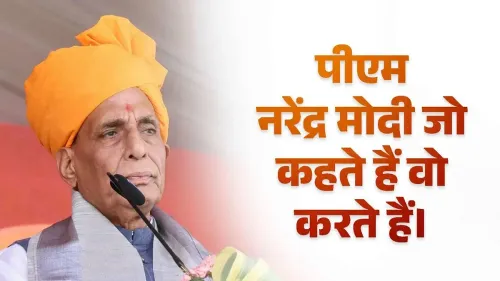
Union Defence Minister Rajnath Singh on 28 November 2026 presented Jammu and Kashmir as a region picking up speed — arguing that since Article 370 was removed, development, health facilities, tourism and infrastructure have gained fresh momentum, while violence and stone-pelting have fallen.
Posting on X, Singh said that after the provision's removal, development, health services, tourism and basic infrastructure in Jammu and Kashmir have received nai gati (new momentum). He added that new opportunities for development and employment are growing, even as incidents of violence and stone-pelting have declined. That, he wrote, is the new picture of a changing and developing Jammu and Kashmir under the visionary leadership of Prime Minister Narendra Modi.
Development, health, tourism and jobs — Singh's four claims
The Defence Minister did not unveil a fresh scheme. He restated a political balance sheet: more growth and work on one side, fewer violent and stone-pelting episodes on the other. Those are his characterisations of conditions in late 2026, not independently verified counts in this report.
He grouped health facilities with roads and tourism — a reminder that the Centre's pitch in the Union Territory has long mixed hospitals and highways with the visitor economy. Residents and the tourism trade are the audience that argument is meant to reach.
The August 2019 decision that still frames every speech
In August 2019, a presidential order and parliamentary legislation ended the special status Article 370 had conferred on the former state and reorganised it into Union Territories. National laws were extended; New Delhi took a more direct administrative hand.
Singh was Union Home Minister when that reset went through. He remains one of the BJP's most senior public defenders of the move. Saturday's post fits a pattern in which Cabinet leaders treat improved security talk and faster infrastructure as the proof of integration under Prime Minister Modi.
Seven years on, the same causal chain
Since 2019 the central government has consistently linked the end of special status to quieter streets, more tourists and bigger public works. Singh's message keeps that chain intact: remove Article 370, then watch development and employment rise as stone-pelting recedes.
What to watch is concrete — progress on announced infrastructure and tourism projects, and any movement on local governance or an assembly. The political claim is settled in the ruling party's telling. Delivery on the ground is the unfinished test.
New Delhi's argument on Jammu and Kashmir no longer turns on a clause in the Constitution. It turns on whether the Union Territory feels as changed as the Defence Minister says it looks.
Point of View
Singh is restating the government's preferred causal story — special status out, roads, hospitals, tourists and quieter streets in. The sharper political question is whether residents experience that story as daily life, especially on jobs and local governance. Watch the gap between Cabinet messaging and on-ground delivery of infrastructure and tourism projects.
NationPress
28 Nov 2026
Frequently Asked Questions
What did Rajnath Singh say about Jammu and Kashmir after Article 370?
Union Defence Minister Rajnath Singh said that after Article 370 was removed, development, health facilities, tourism and infrastructure in Jammu and Kashmir gained new momentum. He also said new employment opportunities are rising while violence and stone-pelting have declined, crediting Prime Minister Narendra Modi's leadership.
When was Article 370 removed from Jammu and Kashmir?
Article 370 was abrogated in August 2019 through a presidential order and parliamentary legislation. The former state was reorganised into Union Territories, and national laws were extended more fully.
Did Rajnath Singh announce a new scheme for J&K?
No. His 28 November 2026 post restated the government's development and security narrative; it did not launch a new programme. He pointed to existing claims of faster growth, better health access, tourism and infrastructure.
Who is Rajnath Singh?
Rajnath Singh is India's Union Defence Minister and a senior BJP leader. He previously served as Union Home Minister and as Chief Minister of Uttar Pradesh, and was in the Cabinet when Article 370 was abrogated in 2019.
What is the government's stand on J&K since 2019?
The BJP-led central government has consistently argued that ending special status improved security conditions and sped up infrastructure and tourism in the Union Territory. Singh's post continues that established line under Prime Minister Narendra Modi's leadership.