US Embassy in Dhaka faces Jamaat-e-Islami infiltration claims
Synopsis
A former Pentagon official alleges the US Embassy in Dhaka may have let Jamaat-e-Islami into its ranks through poorly vetted local hires. Some diplomats may even have sought out party-linked individuals, he claims. Michael Rubin likens the situation to Hamas inside UNRWA, as the US Congress weighs treating the group as a terrorist front.
Key Takeaways
Analyst Michael Rubin alleged in Firstpost that the US Embassy in Dhaka failed to vet local staff against Jamaat-e-Islami infiltration.
The report claims some US diplomats may have actively sought out individuals linked to the party.
A 2020 State Department Inspector General report listed 511 locally employed staff and 139 authorised direct hires at the embassy.
Rubin compared the situation to Hamas's alleged penetration of UNRWA .
He said the US Congress is preparing to treat Jamaat-e-Islami as a terrorist front, even as the State Department allegedly accommodates the group.
The US Embassy in Dhaka has come under scrutiny over allegations that its recruitment of local staff may have opened the door to infiltration by Bangladesh's radical Islamist party Jamaat-e-Islami, according to a report published on 28 November 2026. The claims were made by US foreign policy and security analyst Michael Rubin, a former Pentagon official, in an article for Firstpost. He questioned whether the US State Department adequately vetted local candidates.
The report goes further. It alleges that some US diplomats may have actively sought out individuals linked to the party.
Key Allegations Against the Embassy
Rubin alleged that the embassy appears willing to accommodate Jamaat-e-Islami despite the party's anti-American stance and its association with terrorism. He also alleged that the embassy may be allowing the party's influence to reach into embassy functions.
He cited a 2020 report by the State Department's Inspector General. According to that report, the Dhaka mission had 511 locally employed staff and another 139 authorised direct hires. These personnel worked for the State Department, the US Agency for International Development and other agencies.
Jamaat-e-Islami's Contested Record
The analyst pointed to the party's role during the 1971 Bangladesh Liberation War. He wrote that the party openly sided with the Pakistan Army and with militias responsible for atrocities and genocide against Bangladeshi Bengalis.
Rubin also cited more recent statements. “More recently, Jamaat-e-Islami has openly apologised for terrorism. For example, the party called Bin Laden a ‘warrior of Islam’ and a martyr,” he wrote.
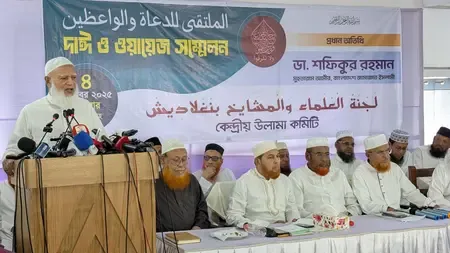
He further highlighted that Jamaat-e-Islami leader Shafiqur Rahman eulogised Hamas leader Yahya Sinwar after his death. According to Rubin, Rahman said: “He sacrificed his life by fighting till the last breath as a hero for the freedom of Palestine.”
The UNRWA Comparison
Rubin compared the situation in Dhaka to the alleged penetration of the United Nations Relief and Works Agency (UNRWA) by Hamas. “UNRWA failed—and tens of thousands died—because it remained blind to Hamas members in its midst who worked their way into the bureaucracy to corrupt and control it,” he said.
He argued that the same pattern is repeating “even in Secretary of State Marco Rubio’s State Department.” In his view, US embassies rely on local nationals more than many Americans realise. He added that these hires are often made “with minimal political vetting, enabling foreign political grouping to skew analysis and ultimately politics.”
Washington's Contradictory Signals
Rubin described what he sees as a policy contradiction within the US government. “Indeed, one of the greatest ironies is that as the US Congress prepares to treat Jamaat-e-Islami as a terrorist front, if not terrorist group, Rubio’s State Department in general and the US Embassy in Dhaka specifically seek to launder the group and allow it to shape their agenda,” he said.
Neither the State Department nor the US Embassy in Dhaka is quoted in the report as responding to the allegations. The claims have not been independently verified.
The allegations are likely to sharpen debate in Washington over how US missions vet locally employed staff, particularly in politically volatile countries such as Bangladesh.
Point of View
Not findings from an investigation. That gap matters, because the charge of diplomats 'laundering' an Islamist party is a weighty one. Still, the underlying vulnerability is real: missions that rely on hundreds of local hires with light political screening can have their ground-level analysis shaped by partisan networks. For India, which watches Jamaat-e-Islami's rise in Bangladesh closely, the question is whether Washington's view of Dhaka is being filtered through the very group New Delhi views with deep suspicion.
NationPress
28 Nov 2026
Frequently Asked Questions
What are the allegations against the US Embassy in Dhaka?
Analyst Michael Rubin alleged that the US Embassy in Dhaka may not have adequately vetted local staff to prevent infiltration by Jamaat-e-Islami. He also claimed some US diplomats may have actively sought out individuals linked to the party.
Who is Michael Rubin?
Michael Rubin is a US foreign policy and security analyst and a former Pentagon official. He made the allegations in an article published by Firstpost.
How many local staff work at the US Embassy in Dhaka?
According to a 2020 US State Department Inspector General report cited by Rubin, the embassy had 511 locally employed staff. It also had 139 authorised direct hires across the State Department, USAID and other agencies.
Why is Jamaat-e-Islami considered controversial?
Jamaat-e-Islami sided with the Pakistan Army and militias accused of atrocities during the 1971 Bangladesh Liberation War, Rubin wrote. He also cited the party's praise of Osama bin Laden and its leader Shafiqur Rahman's eulogy for Hamas leader Yahya Sinwar.
How does the US Congress view Jamaat-e-Islami?
According to Rubin, the US Congress is preparing to treat Jamaat-e-Islami as a terrorist front, if not a terrorist group. He argued this contrasts with the State Department's alleged accommodation of the party.