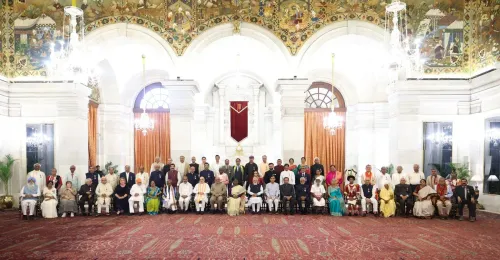
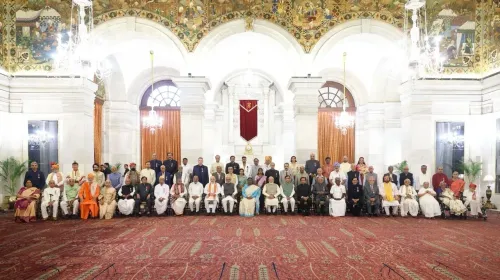
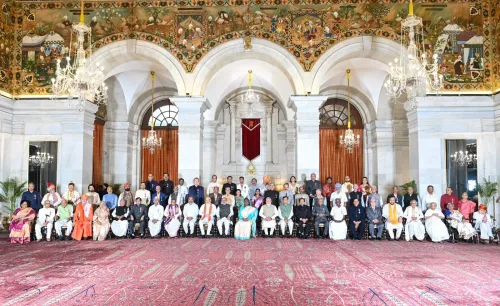
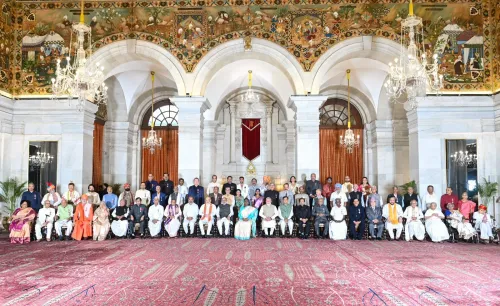
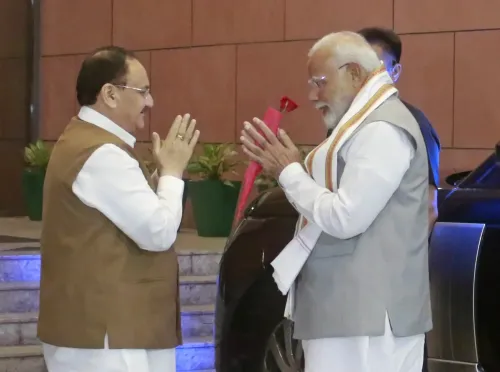
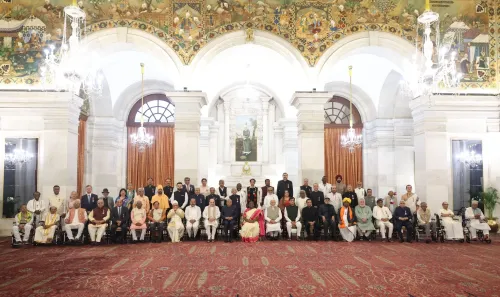
Nadda Congratulates Padma Awards Recipients, Lauds PM Modi
Synopsis
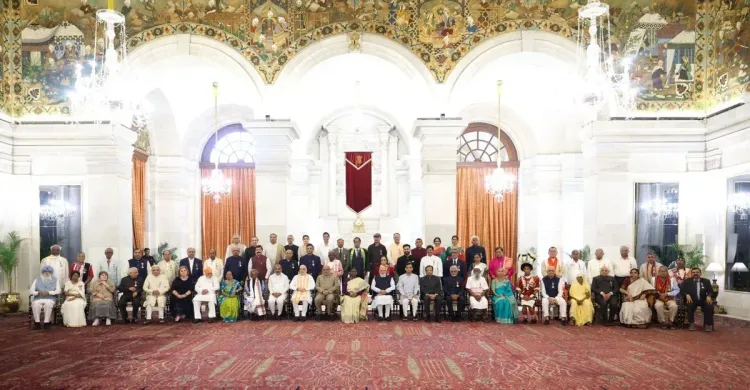
Union Health Minister J. P. Nadda on June 23, 2026, congratulated Padma Awards recipients, praising artists, social workers, and changemakers. He credited PM Modi's leadership with broadening the awards to honour unsung contributors and foster public participation in national development.
Key Takeaways
Nadda extended congratulations to all Padma Awards recipients on June 23, 2026 .
Nadda described the awardees as artists, social workers, and changemakers who have 'touched many lives.' He credited PM Narendra Modi 's leadership with transforming the Padma Awards into a platform for those working for societal betterment.
Since 2014 , the government has pursued a policy of recognising grassroots and rural contributors through the Padma system.
The awards comprise three tiers: Padma Vibhushan , Padma Bhushan , and Padma Shri , administered by the Ministry of Home Affairs .
The next Padma Awards list is expected around Republic Day 2027 .
Union Health Minister J. P. Nadda on Tuesday, June 23, 2026, extended his congratulations to the recipients of the Padma Awards, calling their work an example for others to follow and linking the honours to Prime Minister Narendra Modi's vision of inclusive national development.
Context
In his post, Nadda wrote that the awardees — spanning artists, social workers, and changemakers — have 'touched many lives' and 'devoted themselves to making a difference.' He credited the Modi government with transforming the Padma Awards into a platform that uplifts stories of those working 'tirelessly for the betterment of society.'
The Padma Awards are India's highest civilian honours, comprising three tiers — Padma Vibhushan, Padma Bhushan, and Padma Shri — conferred annually for distinguished service across diverse fields including arts, science, public affairs, and social work.
Policy Backdrop
Since 2014, the government has publicly stated its intent to broaden the Padma Awards beyond urban and institutional elites, with a deliberate push to recognise grassroots contributors in fields such as health, education, and social reform. This shift has been framed as part of a wider effort to make state honours more representative of India's diverse population.
Successive administrations have used the annual Padma list to project national priorities. The present government has accelerated the recognition of unsung contributors, and Nadda's message explicitly ties this tradition to Prime Minister Modi's stated goal of fostering wider citizen participation in national development.
Stakeholders and Impact
The primary beneficiaries of the Padma Awards cycle are the awardees themselves — social workers, artists, and civil society figures whose contributions often go unnoticed at the national level. Recognition through the Padma system brings institutional visibility, public legitimacy, and in many cases, greater access to resources for the causes they champion.
Civil society organisations and grassroots movements also stand to benefit indirectly. When the government spotlights community-level changemakers, it signals policy alignment with ground-up development models, potentially influencing funding priorities and public discourse around volunteerism and social entrepreneurship.
What's Next
The next major milestone in the Padma Awards calendar will be the announcement of the list around Republic Day 2027, typically released on the eve of January 26. Any revisions to selection guidelines by the Ministry of Home Affairs, which administers the awards, will be closely watched by civil society groups and state governments that nominate candidates.
Nadda's message reinforces a broader political narrative linking state honours to the ruling party's development agenda — a pattern likely to continue as the government approaches the next awards cycle and seeks to highlight inclusive governance ahead of future electoral contests.
Point of View
The message doubles as a soft branding exercise for the BJP's grassroots-recognition agenda. The framing — linking civilian honours to 'public participation' and 'national development' — reflects a consistent effort to align institutional ceremonies with the party's broader political communication strategy. Analysts will note that such messaging tends to intensify ahead of electoral cycles, using cultural legitimacy to consolidate the government's image as a champion of ordinary citizens.
NationPress
22 Sept 2026
Frequently Asked Questions
Who are the Padma Awards given to in India?
The Padma Awards — comprising Padma Vibhushan, Padma Bhushan, and Padma Shri — are conferred annually by the Government of India for distinguished service in fields such as arts, science, social work, public affairs, and more. Since 2014, the government has actively sought to include grassroots and rural contributors alongside established institutional figures.
What did J. P. Nadda say about the Padma Awards?
J. P. Nadda congratulated all Padma Awards recipients on June 23, 2026, calling their work an example for others to follow. He credited PM Narendra Modi's leadership with making the awards a platform to honour those working tirelessly for the betterment of society and to encourage public participation in national development.
When is the next Padma Awards list announced?
The Padma Awards list is traditionally announced on the eve of Republic Day, around January 26 each year. The next list is expected around Republic Day 2027, with nominations administered by the Ministry of Home Affairs.
How has the Modi government changed the Padma Awards?
Since 2014, the Modi government has publicly stated its intent to broaden the Padma Awards beyond urban elites, with a focus on recognising unsung contributors from rural areas and grassroots fields such as health, education, and social reform. This shift has been presented as making the honours more representative of India's diverse population.
What is J. P. Nadda's current role in the government?
J. P. Nadda currently serves as Union Minister of Health and Family Welfare and Minister of Chemicals and Fertilizers. He is also the national president of the Bharatiya Janata Party (BJP).