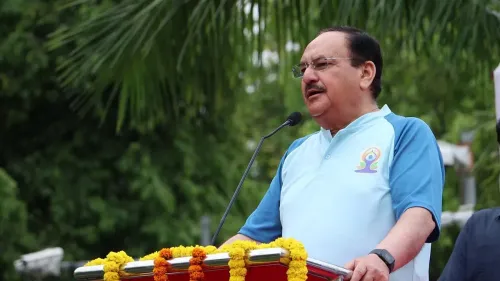
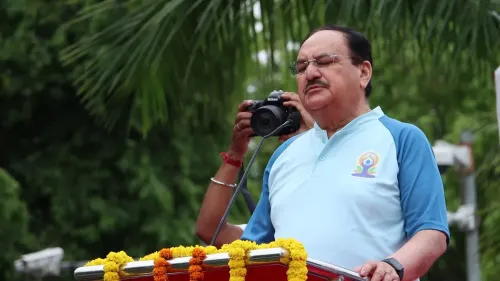
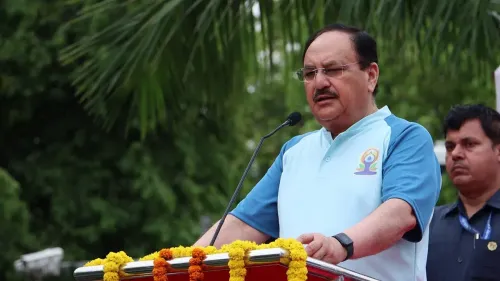
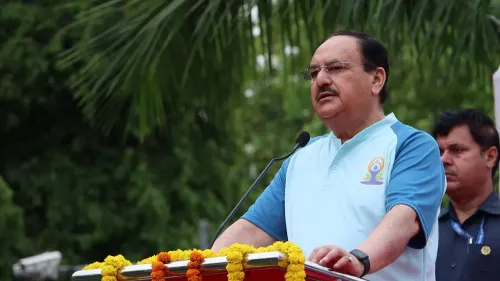
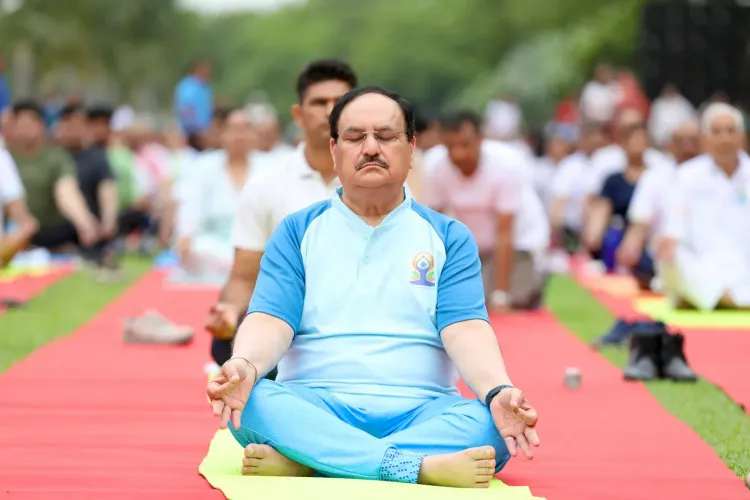
Nadda joins Yoga Day session at Shanti Path, Delhi
Synopsis
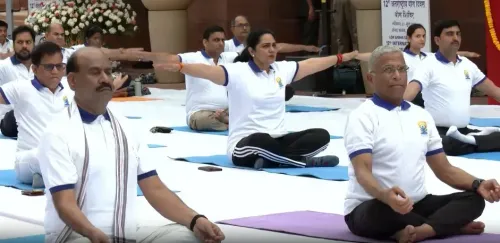
Union Health Minister J. P. Nadda joined yoga practitioners at Shanti Path, New Delhi, on the 12th International Yoga Day, highlighting the 'Yoga for Healthy Ageing' theme and tracing the observance to PM Modi's 2014 UN General Assembly appeal.
Key Takeaways
Nadda participated in a yoga session at Shanti Path, New Delhi on 21 June 2026 to mark the 12th International Yoga Day .
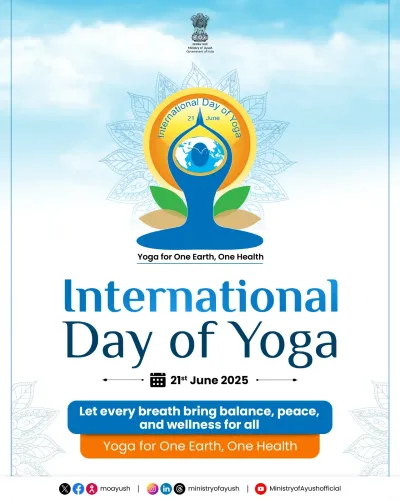
This year's theme is 'Yoga for Healthy Ageing' , focusing on keeping elderly citizens physically capable and mentally calm.
PM Narendra Modi first proposed global recognition of yoga at the UN General Assembly in September 2014 .
The United Nations passed its resolution on 11 December 2014 , designating 21 June as International Yoga Day annually.
Nadda called on citizens to make yoga a daily habit and contribute to building a 'Viksit Bharat' (Developed India).
India has integrated yoga into its AYUSH national wellness framework as a preventive health tool against non-communicable diseases.
Union Health Minister J. P. Nadda joined yoga practitioners at Shanti Path, New Delhi, on Sunday, 21 June 2026, to mark the 12th International Yoga Day, reaffirming a national commitment to health and balanced living through the ancient practice.
Context
Posting on X, Nadda wrote: 'aaj 12ve Antarrashtriya Yoga Diwas ke avsar par Nai Dilli sthit Shanti Path par yoga sadhkon ke saath yogabhyas kiya' — ('Today, on the occasion of the 12th International Yoga Day, I practised yoga with fellow practitioners at Shanti Path, New Delhi'). He renewed his resolve, he said, to lead a healthy and balanced life through yoga. He described yoga not merely as a system of physical exercise but as 'the path to the union of body, mind, soul, and the divine.'
This year's theme — 'Yoga for Healthy Ageing' — carries the message that regular yoga practice can keep individuals physically capable, mentally calm, and intellectually alert even in advancing years, according to Nadda's post.
Policy backdrop
The origins of International Yoga Day lie in a September 2014 appeal by Prime Minister Narendra Modi at the United Nations General Assembly, where he called on the world community to recognise yoga's universal value. The appeal drew broad international support, and on 11 December 2014 the United Nations passed a resolution declaring 21 June as International Yoga Day, to be observed annually beginning 2015.
Nadda's post specifically credited Modi's initiative, calling it a 'sadprayas' ('noble effort') for the well-being of humanity that won wide global backing. India has since embedded yoga within its AYUSH-led national wellness framework as a low-cost, preventive tool to address non-communicable diseases and the health burdens associated with an ageing population.
Stakeholders and impact
The 'Yoga for Healthy Ageing' theme directly targets elderly citizens and public health practitioners, signalling a policy intent to integrate yoga modules into senior citizen programmes and national health missions. Yoga's positioning as a preventive health tool has given India a dual advantage: domestic wellness outreach and soft-power cultural diplomacy on the global stage.
Nadda's Shanti Path participation, alongside yoga practitioners in the capital, underscores the government's use of annual Yoga Day observances as a recurring platform to link ministerial visibility with public health messaging. The Health Ministry's involvement also signals continued alignment between the AYUSH framework and mainstream public health priorities.
What's next
Nadda closed his post with a call to action — urging citizens to make yoga an inseparable part of daily life and to contribute with 'positive energy' to the building of a 'Viksit Bharat' (Developed India). Going forward, the integration of structured yoga modules into national health missions and state-level senior citizen programmes is expected to be a focus area over the coming months, as the government seeks to translate the annual observance into sustained behavioural change at the community level.
Point of View
The Health Minister reinforces the party's ownership of the global yoga moment ahead of any domestic political messaging cycle. The 'Yoga for Healthy Ageing' theme also signals a deliberate pivot toward the growing electoral and policy salience of India's senior citizen demographic. The call to link yoga with 'Viksit Bharat' neatly stitches a wellness message to the government's overarching development narrative.
NationPress
21 Jun 2026
Frequently Asked Questions
What is International Yoga Day and when is it celebrated?
International Yoga Day is a global observance held every year on 21 June . It was established by a United Nations resolution passed on 11 December 2014 , following an appeal by PM Narendra Modi at the UN General Assembly in September 2014. The first observance was held in 2015 .
What is the theme of International Yoga Day 2026?
The theme for International Yoga Day 2026 is 'Yoga for Healthy Ageing' , emphasising that regular yoga practice can help people remain physically capable, mentally calm, and intellectually alert as they grow older.
Where did J. P. Nadda celebrate Yoga Day 2026?
Union Health Minister J. P. Nadda participated in a yoga session at Shanti Path, New Delhi on 21 June 2026 , alongside fellow yoga practitioners, to mark the 12th International Yoga Day.
Who proposed International Yoga Day at the United Nations?
Prime Minister Narendra Modi proposed global recognition of yoga at the UN General Assembly in September 2014 . The United Nations responded by passing a resolution on 11 December 2014 to observe 21 June as International Yoga Day every year.
What is Viksit Bharat and how does it relate to Yoga Day?
'Viksit Bharat' means 'Developed India' and is the BJP government's overarching vision for India's development by 2047. On Yoga Day 2026, Nadda urged citizens to practise yoga daily and contribute with positive energy to the building of a Viksit Bharat, linking personal wellness to national progress.