Nadda Reviews Kerala Health Schemes in Virtual Meet with Muraleedharan
Synopsis
Union Health Minister J. P. Nadda held a virtual review with Kerala Health Minister K. Muraleedharan on 7 July 2026, assessing progress on NHM, TB-Mukt Bharat Abhiyaan, free drugs and diagnostics, medical education, drug regulation, and food safety, reaffirming central support through cooperative federalism.
Key Takeaways
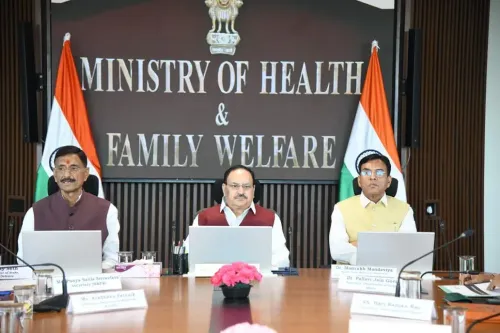
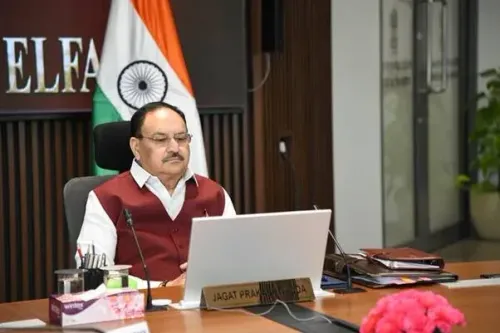
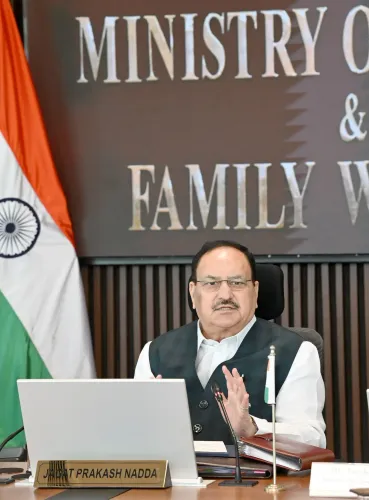
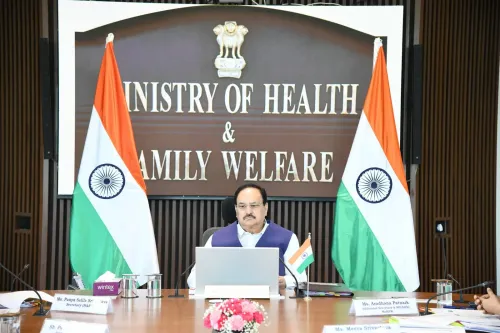
Nadda chaired a virtual review meeting with Kerala Health Minister K.
Muraleedharan on 7 July 2026 .
Programmes reviewed included the TB-Mukt Bharat Abhiyaan , National Health Mission , Free Drugs Service Initiative , and Free Diagnostic Service Initiative .
The agenda also covered Medical Education , Drug Regulation , and Food Safety in Kerala.
The Central Government reaffirmed its commitment to supporting Kerala through the principle of cooperative federalism .
The TB-Mukt Bharat Abhiyaan targets a tuberculosis-free India by 2025 under the National TB Elimination Programme.
NHM sub-schemes on free drugs and diagnostics are designed to reduce out-of-pocket health expenditure at public facilities.
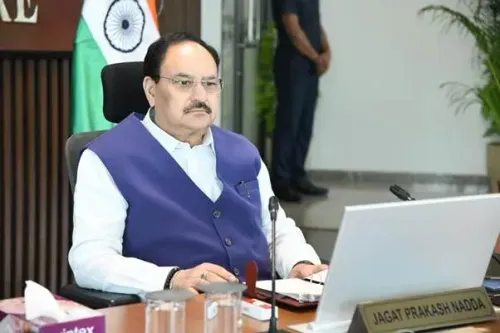
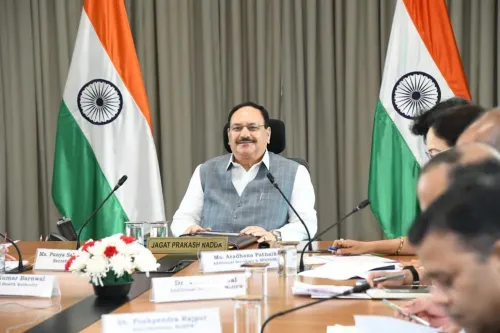
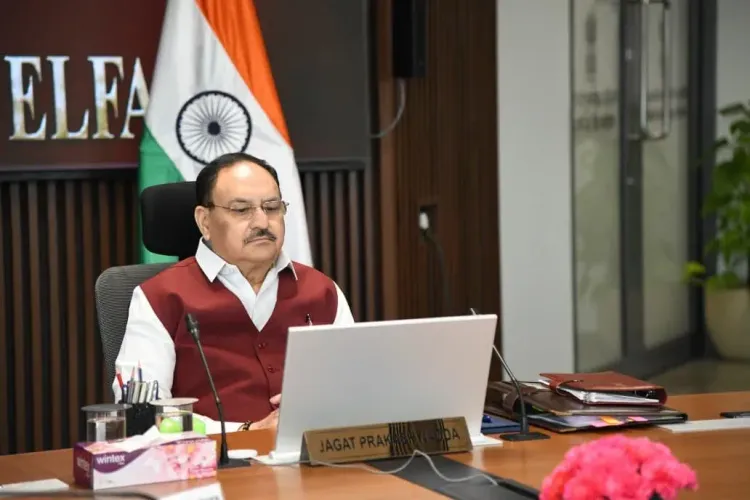
Union Health Minister J. P. Nadda chaired a virtual review meeting on Tuesday, 7 July 2026, with Kerala Health Minister K. Muraleedharan to assess the implementation and progress of key central health initiatives across the southern state.
Context
The meeting covered a broad slate of flagship programmes, including the TB-Mukt Bharat Abhiyaan, the National Health Mission (NHM), the Free Drugs Service Initiative, the Free Diagnostic Service Initiative, Medical Education, Drug Regulation, and Food Safety. Nadda posted about the interaction on X, stating that the Central Government reaffirmed its 'commitment to extending all necessary support to Keralam in strengthening healthcare delivery through cooperative federalism.'
Kerala has historically maintained above-national-average public health indicators, including high literacy rates and strong primary care infrastructure, while remaining an active participant in centrally sponsored health schemes.
Policy Backdrop
The National Health Mission, launched in 2013 by integrating the earlier National Rural Health Mission (launched 2005) with urban health components, forms the backbone of India's primary care financing for states. The Free Drugs Service Initiative and the Free Diagnostic Service Initiative are NHM sub-components designed to reduce out-of-pocket health expenditure at public facilities.
The TB-Mukt Bharat Abhiyaan operates under the National TB Elimination Programme, which was intensified through a 2017–2025 National Strategic Plan with the goal of making India tuberculosis-free by 2025. Centre-state review meetings of this nature are a standard mechanism in India's health governance architecture to monitor fund utilisation, identify implementation gaps, and align state-level delivery with national targets.
Stakeholders and Impact
The primary beneficiaries of the programmes reviewed are Kerala's residents who access public health facilities — particularly those dependent on free medicines and diagnostics under NHM sub-schemes. State health departments and district-level public health facilities are the key implementation nodes whose performance was under the lens.
Drug regulation and food safety discussions indicate the meeting extended beyond hospital-level care to encompass the broader regulatory environment, reflecting the Centre's dual mandate under the Ministry of Health and Family Welfare and the Ministry of Chemicals and Fertilizers, both held by Nadda.
What's Next
State-level NHM progress reports and TB elimination milestone updates are expected to feed into upcoming parliamentary review cycles and ministry-level assessments. The reaffirmation of cooperative federalism signals that the Centre intends to maintain active oversight of scheme implementation in Kerala rather than treating it as a high-performing state requiring less attention. Health outcome data from this review may inform resource allocation decisions in subsequent NHM funding tranches.
Point of View
But politically significant given that Kerala is governed by a Left-led administration while the Centre is BJP-led. The fact that the meeting covered drug regulation and food safety alongside NHM programmes suggests the Centre is using these interactions to assert a broad oversight role that extends well beyond hospital funding. For Nadda, who holds the dual portfolio of Health and Chemicals and Fertilizers, such bilateral reviews also serve to demonstrate active stewardship of centrally sponsored schemes ahead of parliamentary scrutiny. The reaffirmation of 'all necessary support' is a standard diplomatic signal, but in the context of ongoing NHM fund utilisation debates, it carries implicit pressure on states to improve absorption and outcome reporting.
NationPress
7 Jul 2026
Frequently Asked Questions
What was discussed in JP Nadda's meeting with Kerala Health Minister in July 2026?
The meeting reviewed flagship health programmes including the TB-Mukt Bharat Abhiyaan, National Health Mission, Free Drugs Service Initiative, Free Diagnostic Service Initiative, Medical Education, Drug Regulation, and Food Safety in Kerala.
What is the TB-Mukt Bharat Abhiyaan?
TB-Mukt Bharat Abhiyaan is a national campaign under India's National TB Elimination Programme, backed by a 2017–2025 National Strategic Plan, aimed at making India tuberculosis-free by 2025.
What is the National Health Mission (NHM)?
The National Health Mission is a Central government scheme launched in 2013 that integrates rural and urban health missions to strengthen primary healthcare delivery across Indian states, with sub-components including free drugs and free diagnostics.
Who is K. Muraleedharan?
K. Muraleedharan is the Health Minister of Kerala, who participated in the virtual review meeting with Union Health Minister J. P. Nadda on 7 July 2026.
What does cooperative federalism mean in India's health sector?
Cooperative federalism in India's health sector refers to the collaborative framework through which the Central government funds and monitors health schemes while state governments implement them, with regular review meetings serving as the primary coordination mechanism.