JP Nadda slams Congress on Samvidhan Gaurav Diwas over Emergency
Synopsis
On Constitution Day, JP Nadda turned the Congress's 'save the Constitution' campaign back on itself — citing the Emergency, over 90 uses of Article 356 and Ambedkar's electoral defeats, and recalling being arrested twice from his own classroom in 1975.
Key Takeaways
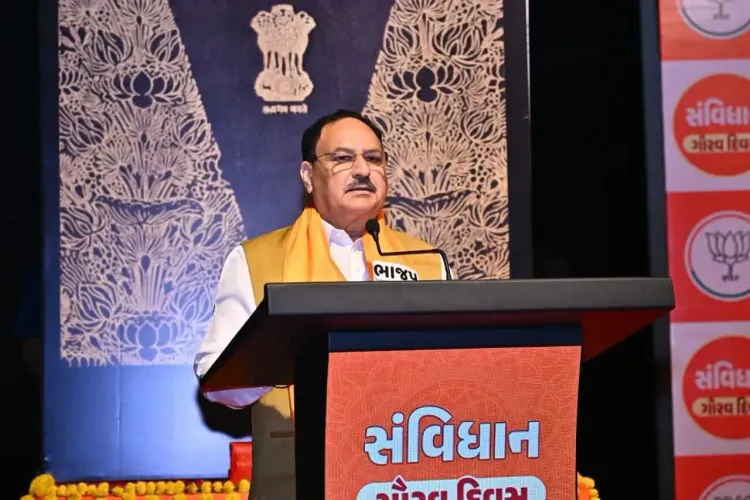
J P Nadda attacked the Congress at Tagore Hall, Ahmedabad , on Samvidhan Gaurav Diwas , 26 November 2026 .
He alleged Article 356 was invoked more than 90 times during Congress rule.
Nadda called the 25 June 1975 Emergency the Congress's “biggest assault” on democracy and said he was arrested twice from his classroom.
He said the Congress opposed Ambedkar in the 1952 Lok Sabha polls and the 1954 Bhandara by-election.
He rejected Rahul Gandhi's description of the Indian economy as dead.
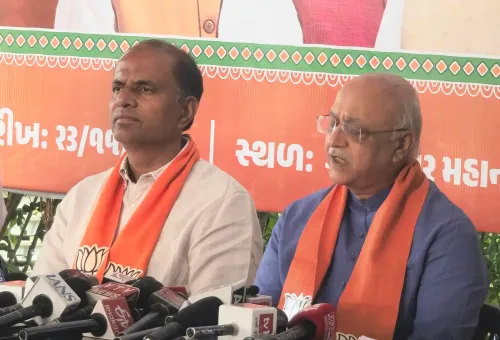
CM Bhupendra Patel and state BJP chief Jagdish Vishwakarma also addressed the event.
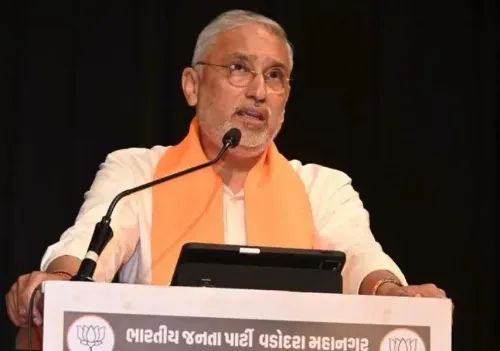
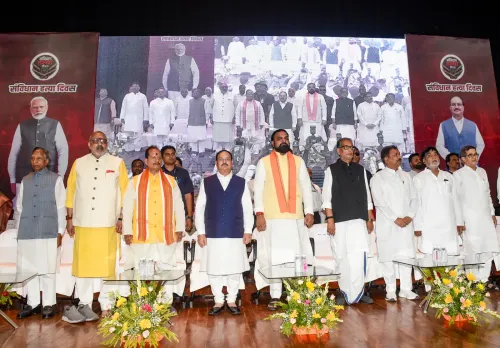
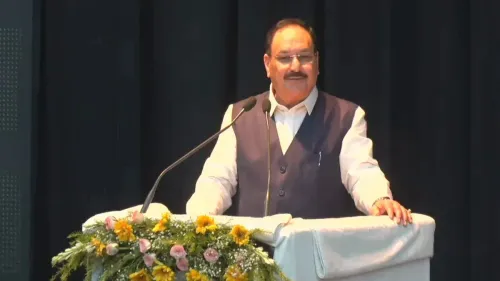
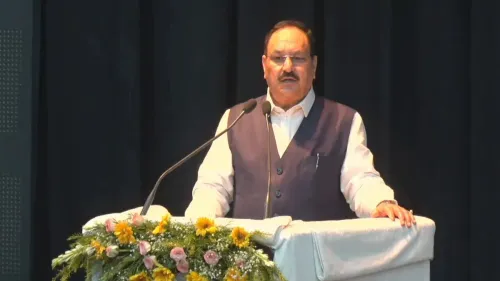
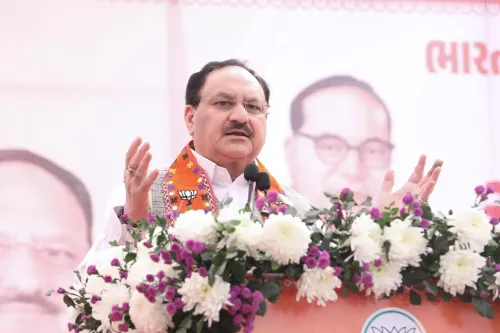
Union Health Minister and former Bharatiya Janata Party (BJP) national president J P Nadda on Thursday, 26 November 2026, attacked the Indian National Congress over its campaign to protect the Constitution, saying an “immature child” of the party is carrying a red copy of the Constitution while the Congress itself has a history of repeatedly insulting and misusing it. Speaking at a citizens' interaction programme in Ahmedabad on Samvidhan Gaurav Diwas, Nadda cited the Emergency, the use of Article 356 and the party's treatment of Dr Bhimrao Ambedkar.
The event was held at Tagore Hall in the presence of Gujarat Chief Minister Bhupendra Patel and state BJP president Jagdish Vishwakarma.
Nadda's Charges on Ambedkar
Nadda alleged that the Congress had consistently opposed Ambedkar and failed to respect constitutional values during its years in power. “The Congress has always insulted Babasaheb,” he said, arguing that India's first Prime Minister, Jawaharlal Nehru, and the Congress leadership had opposed Ambedkar at several stages of his political career.
He said attempts were made to prevent Ambedkar from being elected to the Constituent Assembly. “The Congress also fielded a candidate against him in the 1952 Lok Sabha elections, in which he was defeated. Nehru campaigned against Ambedkar in the 1954 Bhandara by-election as well,” he said.
Nadda further alleged that the Nehru government did not accept a proposal for an Ambedkar memorial after his death. “In contrast, a national memorial was built at 26 Alipur Road during Prime Minister Narendra Modi's tenure and inaugurated in 2018,” he said. He also noted that Ambedkar was awarded the Bharat Ratna in 1990 under the V. P. Singh government, which had BJP support.
Emergency and Article 356 at the Centre of the Attack
Questioning the Congress's constitutional record, Nadda referred to the first Constitutional Amendment, restrictions on freedom of expression, the dismissal of Kerala's elected government in 1959 and the repeated use of Article 356 to remove elected state governments. He alleged the provision was invoked more than 90 times during Congress rule, including repeatedly by Indira Gandhi's government.
“The Congress speaks about protecting the Constitution today, but during its rule, it repeatedly insulted constitutional values,” he said. He described the Emergency imposed on 25 June 1975 as the “Congress's biggest assault” on Indian democracy.
“Thousands of people and Opposition leaders were jailed, media freedom was curtailed, and civil liberties were taken away during the period,” Nadda said. Recounting his own experience, he added: “I had been arrested twice from my classroom during the Emergency. Even songs by Kishore Kumar were removed from All India Radio.”
From 1984 to the UPA Years
Nadda also referred to the 1984 anti-Sikh riots and former Prime Minister Rajiv Gandhi's controversial remark, “When a big tree falls, the earth shakes.” He cited the Shah Bano case, in which a Supreme Court verdict was overturned through a legislative amendment, and questioned the role of the National Advisory Council headed by Sonia Gandhi during the UPA government.
Referring to an attack on him in West Bengal in 2020, he said: “Those accused in the incident had recently been arrested, and they were associated with the Trinamool Congress.”
Nadda said Ambedkar had issued three key warnings: that abandoning constitutional methods for anarchy was dangerous for democracy; that no individual or family should be placed above the nation and the Constitution; and that a Constitution's quality depended on those implementing it. He contrasted governments before and after 2014, saying constitutional institutions, national interest and development had received priority under PM Modi. He also rejected Leader of the Opposition in Lok Sabha Rahul Gandhi's description of the Indian economy as dead, saying India is among the world's fastest-growing major economies.
What Gujarat Leaders Said
Earlier, Chief Minister Patel said the Constitution was the foundation of democracy, national unity, social justice and citizens' dignity. “The Constituent Assembly adopted it on November 26, 1949, and it came into force on January 26, 1950,” he said.
State BJP president Vishwakarma accused the Congress of repeatedly insulting the Constitution drafted by Ambedkar to retain power. “The BJP's Antyodaya approach and welfare schemes, including the Pradhan Mantri Awas Yojana, Ujjwala Yojana, Ayushman Bharat, Swachh Bharat Mission and Pradhan Mantri Garib Kalyan Anna Yojana, were aimed at ensuring a dignified life for the last person in society,” he said.
With both the BJP and the Congress staking claim to Ambedkar's legacy, the Constitution is set to remain a central battleground in national political messaging in the months ahead.
Point of View
Which has proved politically potent since 2024 — the BJP clearly sees ceding the Ambedkar narrative as a risk it cannot afford. The historical charges on the Emergency and Article 356 are well documented, but history-based rebuttals do little to answer present-day concerns about institutional autonomy that the Opposition raises. Notably, President's Rule has been invoked by non-Congress governments too, which makes the numbers game less decisive than it sounds. Both parties are fighting over Ambedkar's legacy; voters would be better served by a debate over how his three warnings apply to governance today.
NationPress
27 Nov 2026
Frequently Asked Questions
What did JP Nadda say about the Congress on Samvidhan Gaurav Diwas?
Nadda accused the Congress of repeatedly insulting and misusing the Constitution, citing the 1975 Emergency, over 90 uses of Article 356 and its treatment of Dr Ambedkar. He said an “immature child” of the party is carrying a red copy of the Constitution.
How many times was Article 356 used under Congress rule according to Nadda?
Nadda alleged Article 356 was invoked more than 90 times during Congress rule. He said Indira Gandhi's government repeatedly used it to dismiss elected state governments.
What did Nadda say about the Emergency?
Nadda described the Emergency imposed on 25 June 1975 as the Congress's biggest assault on democracy. He said he was arrested twice from his classroom and that even Kishore Kumar's songs were removed from All India Radio.
Where was the Samvidhan Gaurav Diwas event held?
The citizens' interaction programme was held at Tagore Hall in Ahmedabad, Gujarat. Chief Minister Bhupendra Patel and state BJP president Jagdish Vishwakarma were present.
Why is Samvidhan Gaurav Diwas observed on 26 November?
It marks the day the Constituent Assembly adopted the Constitution on 26 November 1949. The Constitution came into force on 26 January 1950.