Nadda Slams Opposition's 'Negative' Role in Parliament
Synopsis
Union Health Minister and BJP president J. P. Nadda on July 30, 2026 sharply condemned the opposition's conduct in Parliament, calling it 'entirely negative and irresponsible' and accusing it of being 'issueless' while disrupting proceedings since the session began.
Key Takeaways
Nadda , Union Health Minister and BJP national president, posted a sharp condemnation of the opposition on July 30, 2026 .
He accused the opposition of having a 'sole objective' of disrupting parliamentary proceedings since the session began.
Nadda described the opposition as muddavihin — 'completely issueless.' He asserted that the Modi government is 'always ready for discussion on every subject.' He claimed the opposition has 'eaten humble pie' every time a substantive debate has taken place in the House.
Nadda concluded with a formal 'strong condemnation and censure' of the opposition's parliamentary role.
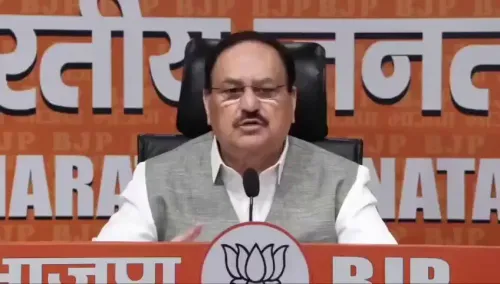
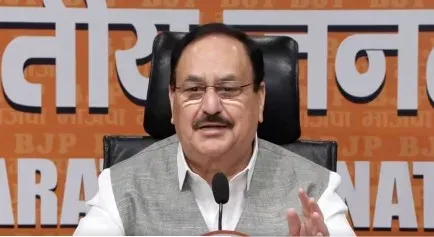
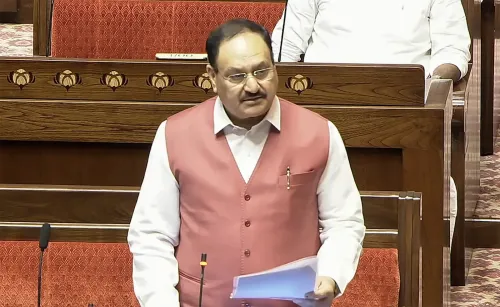
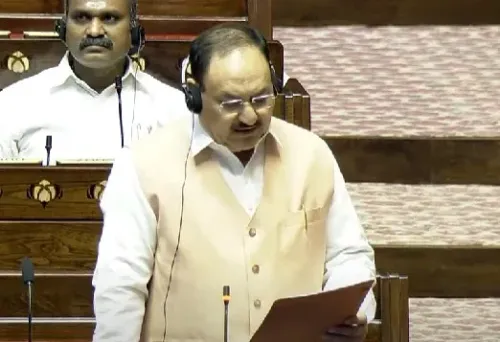
The floor of Parliament has become a battleground — and Union Health Minister and BJP national president J. P. Nadda is not holding back. On Thursday, July 30, 2026, Nadda launched a sharp broadside against the opposition, accusing it of deliberately wrecking parliamentary proceedings since the session began.
Posting in Hindi on X, Nadda declared: 'The role of the opposition in Parliament has been entirely negative and irresponsible. Since the session began, their sole objective has been to disrupt the proceedings of the House. The opposition is completely issueless.' He went further, stating that every time a debate has taken place in the House, 'the opposition has eaten humble pie — they have received a fitting reply.' He closed with an unambiguous line: 'I strongly condemn and censure the role of the opposition.'
Prime Minister Narendra Modi's government, Nadda added, 'is always ready for discussion on every subject under his leadership.'
A Charge Sheet the BJP Has Filed Before
The accusation is not new — but its sharpness signals a session under real strain. Ruling-party charges of opposition obstruction have been a fixture of Indian parliamentary politics since 2014, with both sides trading claims of disruption versus readiness for debate across monsoon and winter sessions alike. Walkouts, adjournments, and megaphone accusations have become the grammar of these exchanges. What Nadda's post crystallises is the BJP's current framing: that the government arrives at the House with an agenda and a willingness to defend it, while the opposition arrives with placards and noise. Whether that framing holds up is precisely what the coming sittings will test.What the Opposition's Silence on Issues Means for the Session
Nadda's charge that the opposition is muddavihin — 'issueless' — is a pointed political epithet. It is designed to shift the narrative from whatever disruption is happening on the floor to a broader question of opposition credibility. If the government can sustain that framing through Speaker's rulings and resumed listed business, it gains the optics of a working legislature against a stonewalling minority. The opposition, predictably, will contest every word of that picture. Their rebuttal in subsequent sittings will determine whether Nadda's condemnation lands as a decisive political moment or merely as one more volley in a long parliamentary war of words. The session's real verdict will be written not in tweets, but in the bills passed — or stalled — before the gavel falls.Point of View
Since that is the only evidence that ultimately settles the argument. If the session ends with key bills passed and debates on record, Nadda's framing gains retrospective credibility; if it ends in repeated adjournments, both sides share the blame regardless of who threw the first placard.
NationPress
30 Jul 2026
Frequently Asked Questions
Why did JP Nadda criticise the opposition in Parliament?
Nadda accused the opposition of being 'entirely negative and irresponsible,' saying its sole aim since the session began has been to disrupt parliamentary proceedings rather than engage in substantive debate.
What did JP Nadda mean by calling the opposition 'issueless'?
Nadda used the term muddavihin — meaning 'without issues' or 'issueless' — to argue that the opposition has no genuine policy grievances and is disrupting the House purely for political reasons.
What is the current Parliament session about?
The specific session referenced in Nadda's July 30, 2026 post is an ongoing sitting of the Indian Parliament; the research background does not confirm the session's specific agenda items from that date.
Has the BJP made similar accusations against the opposition before?
Yes. Ruling-party charges of opposition obstruction have been a recurring feature of Indian parliamentary sessions since 2014, with both sides regularly trading accusations of disruption versus readiness for debate.
What happens next after Nadda's condemnation?
The immediate focus shifts to the Speaker's rulings on disruptions and whether listed legislative business resumes; the opposition is expected to issue rebuttals in subsequent sittings.